My Houston House Has Foundation Problems: A Step-by-Step Guide on What to Do Next
Reviewed by Mark Lee
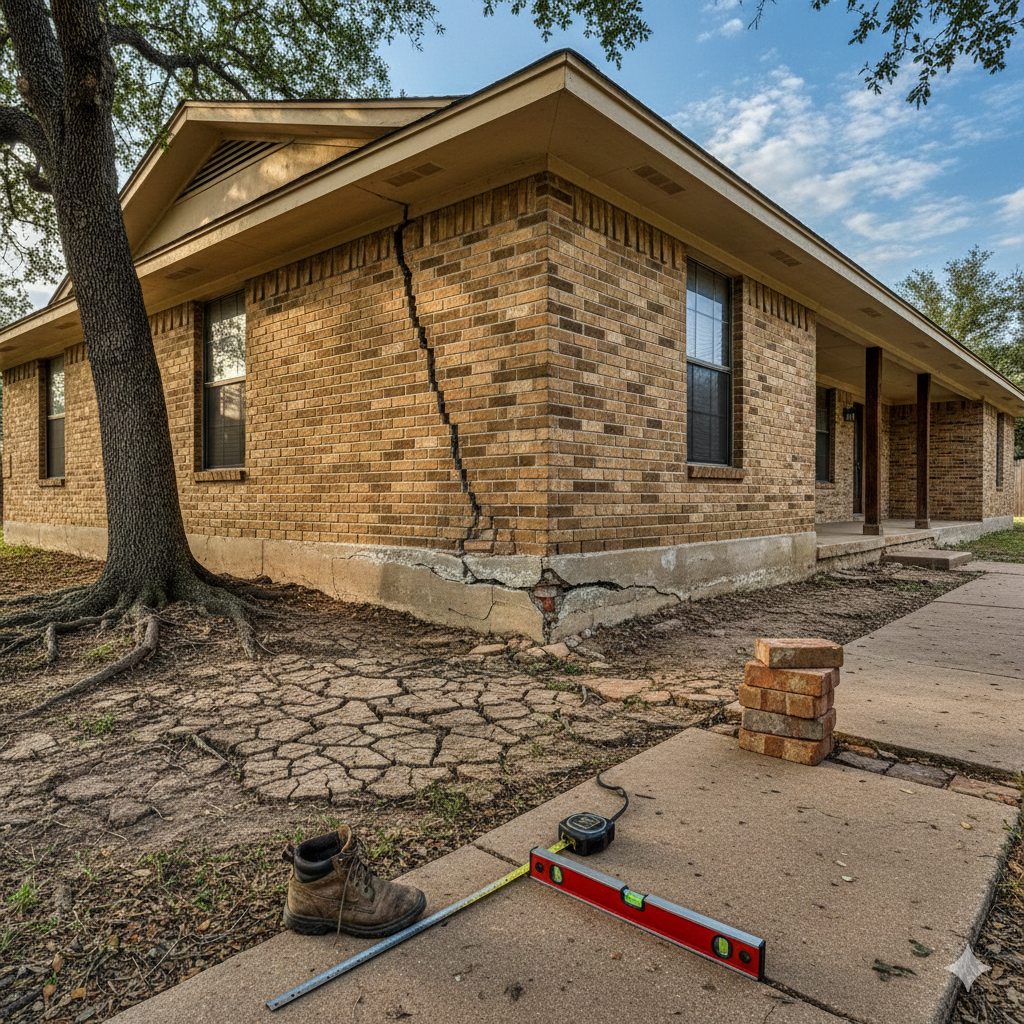
Discovering a crack in your drywall or noticing a door that suddenly won't latch is a rite of passage for many homeowners in the Lone Star State. If you are sitting in your living room wondering why your floors feel like a gentle rolling hill, you aren't alone. Texas soil is notorious for its "shrink-swell" capacity, which can wreak havoc on even the sturdiest builds.
If you are feeling overwhelmed and thinking, "I just need to sell my house fast Houston and walk away," take a deep breath. While foundation issues are serious, they are manageable if you follow a logical, step-by-step process. This foundation guide will walk you through everything from identifying the early warning signs to navigating the complexities of Texas insurance and repair options for foundation problems.
Identifying the Signs of Foundation Failure in Texas Homes
Before you panic and call a repair crew, it is essential to distinguish between "settling" and "failing." Every house settles over time, especially in the first few years after construction. However, in Texas, the high concentration of bentonite clay in the soil means that movement is often ongoing and aggressive.
Interior Warning Signs
The most common interior signs involve structural shifts that manifest in the finishes of your home. Look for diagonal cracks emanating from the corners of door frames or window headers. These are often referred to as "stair-step" cracks. You should also pay attention to:
Doors and Windows: If they stick, swing open on their own, or have large gaps at the top, the frame is likely out of square.
Flooring Issues: Cracks in ceramic tile, wood planks pulling apart, or a noticeable slope in the floor (which you can test with a simple marble or level) are red flags.
Cabinet Separation: In kitchens and bathrooms, look for a gap forming between the cabinets and the wall or ceiling.
Exterior Warning Signs
Walk around the perimeter of your home during a dry spell. You are looking for more than just aesthetics; you are looking for structural integrity.
Frieze Board Gaps: Look at the corner where your siding or brick meets the trim at the top of the wall. If there is a visible gap, the wall may be leaning outward.
Brick Cracks: Zig-zag cracks through the mortar are common, but cracks that slice directly through the bricks themselves indicate significant stress.
Foundation Exposure: If you see the concrete perimeter of your slab flaking off (spalling) or showing deep horizontal cracks, the steel reinforcement inside may be compromised.
Understanding Why Texas Soil is So Destructive
To fix the problem, you have to understand the "why." Most of Texas sits on expansive clay soil. This soil acts like a sponge. When it rains (or during a Houston hurricane season), the clay absorbs water and expands with immense force, pushing upward on your foundation. This is known as heaving.
Conversely, during a brutal Texas summer or a prolonged drought, the moisture evaporates. The clay shrinks, leaving voids beneath your concrete slab. Without support, the heavy concrete collapses into these voids. This is known as subsidence.
The Impact of Vegetation
In Texas, a large oak tree can drink hundreds of gallons of water a day. If you have large trees close to your foundation, they may be sucking the moisture out of the soil on one side of the house while the other side remains moist. This creates "differential settlement," which is the leading cause of foundation cracks. Proper landscaping and root barriers are often just as important as the foundation repair itself.
Step 1: Get a Third-Party Engineering Report
The biggest mistake Texas homeowners make is calling a foundation repair company first. Most repair companies offer free inspections, but they are also incentivized to sell you a repair job.
Why You Need a Structural Engineer
A licensed structural engineer (P.E.) does not sell repair services; they sell unbiased data. For a fee (usually ranging from $500 to $800), an engineer will:
Perform a floor level survey using a digital manometer.
Identify the root cause of the movement (drainage, plumbing leaks, or vegetation).
Provide a signed and sealed report that outlines exactly where piers are needed—or if they are needed at all.
Protecting Your Investment
Having this report is vital if you plan to sell your home later. It proves to a buyer that the repairs were done based on professional calculations rather than a salesperson's "best guess." You can find reputable engineers through the Texas Board of Professional Engineers.
Step 2: Rule Out Under-Slab Plumbing Leaks
In many cases, foundation movement isn't caused by the weather, but by a "hydrostatic" issue. If a sewer line or fresh-water pipe leaks beneath your slab, it creates a localized area of perpetually wet soil. This causes that specific part of the house to heave upward while the rest stays put.
The Static Pressure Test
Before you spend $20,000 on piers, hire a plumber to perform a "hydrostatic pressure test." They will plug your sewer lines and see if the water level drops. If you have a leak, fixing the pipe may actually allow the soil to dry out and the house to settle back into place without the need for expensive structural piers.
Step 3: Navigating Foundation Repair Methods
If the engineer confirms that your foundation needs help, you will likely be presented with several different repair methods. In Texas, two methods dominate the market.
Pressed Concrete Pilings
This is the most common method in Texas due to its cost-effectiveness and speed. Large concrete cylinders are driven into the ground using the weight of the house as a hydraulic ram. They are pushed until they hit "refusal" (dense soil that won't move).
Pros: Lower cost, fast installation.
Cons: They can occasionally shift if the soil becomes exceptionally dry or wet.
Steel Piers
Steel piers are considered the "gold standard" of foundation repair. These are hollow steel tubes driven deep into the earth until they reach bedrock or a truly stable load-bearing strata.
Pros: Extremely stable, less invasive to the landscape, long-term reliability.
Cons: Significantly more expensive than concrete pilings.
Helical Piers
These look like giant screws and are twisted into the ground. These are often used for lighter structures or in areas with very specific soil compositions where traditional pressing isn't feasible.
Step 4: Reviewing Your Insurance and Warranty Options
One of the first questions homeowners ask is, "Will my insurance cover this?" In the state of Texas, the answer is usually no.
Standard Homeowners Policies
Most standard HO-3 policies specifically exclude "earth movement" or "settlement." However, there is a silver lining. If your foundation movement was caused by a "sudden and accidental" plumbing leak, your insurance might cover the access to the leak (tearing up the slab) and the repair of the pipe, even if they don't cover the foundation piers themselves.
Foundation Warranties
If you are buying a home, check if it has a transferable foundation warranty. Most reputable Texas companies offer a "Lifetime Transferable Warranty." Be sure to read the fine print; many require a transfer fee to be paid within 30 days of a real estate closing, or the warranty becomes void.
Step 5: Post-Repair Maintenance and Prevention
Once your foundation is stabilized, your job isn't over. In Texas, foundation maintenance is a year-round commitment.
Installing a Soaker Hose System
To prevent the soil from shrinking away from your slab during a drought, you should install a soaker hose system. Position the hoses about 12 to 18 inches away from the foundation. The goal is not to "water the house" but to keep the moisture level of the soil consistent.
Improving Drainage
Water pooling against your foundation is just as dangerous as a drought. Ensure that your gutters are clean and that downspouts carry water at least 5 feet away from the base of the home. Your yard should ideally slope away from the house at a grade of at least 6 inches every 10 feet. For more on Texas-specific building standards, the Texas Real Estate Commission (TREC) provides excellent resources on home inspection standards.
FAQ: Frequently Asked Questions About Texas Foundations
Does a foundation repair decrease the value of my home?
Actually, it is often the opposite. A home with unrepaired foundation issues is very difficult to sell and won't qualify for traditional FHA or VA financing. A home with a professional repair, a transferable warranty, and an engineer's "passing" report offers peace of mind to a buyer.
How much does foundation repair cost in Texas?
The cost varies wildly based on the number of piers needed. On average, Texas homeowners spend between $5,000 and $15,000. However, if the entire perimeter and interior need support, costs can exceed $30,000. Concrete piers typically cost $300-$500 per pier, while steel can be double that.
Should I fix my foundation before selling?
It depends on your timeline. If you want top dollar and are selling to a traditional family buyer, you should fix it. If you need to sell quickly and don't have the cash for repairs, you might consider selling to an investor who specializes in "as-is" purchases.
How long does the repair process take?
Most residential foundation repairs can be completed in 2 to 5 days. The process involves digging holes around the perimeter, driving the piers, lifting the house (the "jacking" phase), and then backfilling the holes.
Can I live in the house during foundation repair?
Yes, in almost all cases, you can stay in the home. It will be noisy, and you may experience some minor interior shaking, but it is rarely necessary to move out.
Will my interior cracks close up after the lift?
While many cracks will close or narrow significantly during the lifting process, they rarely disappear entirely. You should wait 4-8 weeks after the foundation repair before patching and painting to allow the house to "breathe" and settle into its new position.
Summary of the Texas Homeowner's Action Plan
Dealing with a shifting house is a marathon, not a sprint. To recap the most effective strategy for Texas residents:
Monitor: Keep a log of cracks and door issues for 3-6 months to see if they are active.
Consult: Hire an independent structural engineer to get a neutral opinion.
Test: Have a plumber perform a hydrostatic test to rule out leaks.
Repair: Choose a reputable contractor who offers a lifetime transferable warranty.
Maintain: Implement a watering and drainage plan to prevent future movement.
Texas soil is powerful, but with the right engineering and maintenance, your home can remain a stable and valuable asset for decades to come.

How Absolute Properties Helps Houston Sellers
Absolute Properties makes it easy for Houston homeowners to sell fast - even when facing challenges like financial difficulties, inherited properties, troublesome tenants, or repairs.
If you’re thinking, “I need to sell my house fast in Houston…” We buy houses in Houston in any situation or condition!
As-is, fast cash offers with clear terms
Many closing costs covered; no realtor commissions in most cases
You choose the closing date (as little as 7 days, case-dependent)
Coordination with experienced title company for a compliant sale process
Call or text: (713) 230-8059
Email address: info@absolutepropertieshtx.com
Share your street address and timeline for a free consultation and a straightforward number no pressure.
Helpful Houston Blog Articles
How To Sell Your House in Houston Without Sinking Any More Money Into It
6 Tips For First Time Home Sellers in Houston
Hiring an Agent Vs. A Direct Sale to Absolute Properties When Selling Your House in Houston
Who Pays Closing Costs in Texas
The True Costs of An FSBO Listing for Houston Investors
What To Do With Your Expired Listing in Houston
Also check out our Free Guides & Education & FAQ for more education on how to sell your house for cash quickly to a local home buyer.