Why Houston’s 'Black Gumbo' Soil is Destroying Your Foundation (And How to Stop It)
Reviewed by Mark Lee
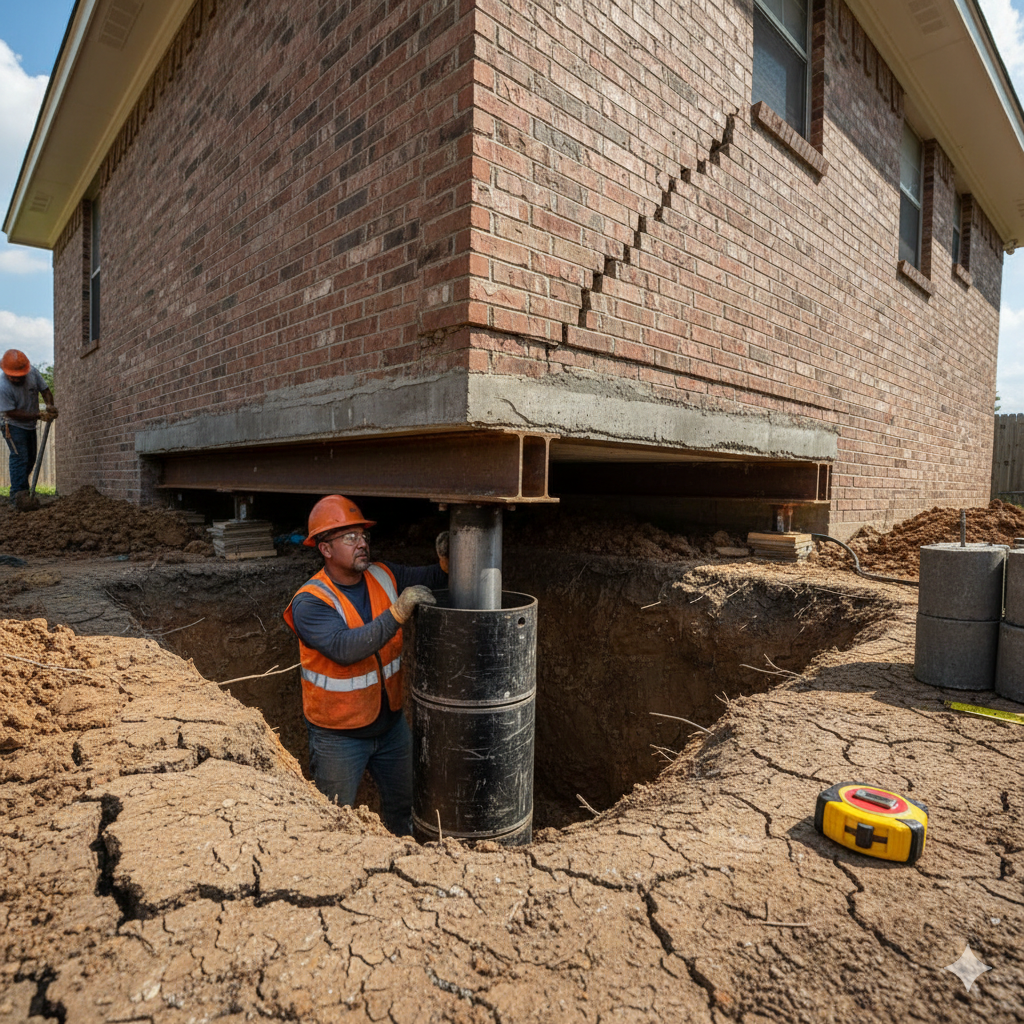
If you live in Southeast Texas, you have likely heard the term "Black Gumbo." To a chef, gumbo is a delicious staple of Gulf Coast culture. To a Houston homeowner, however, "Gumbo" refers to a treacherous, dark, heavy clay soil that acts more like a living, breathing entity than solid ground. This soil is responsible for more structural insurance claims and repair bills in the Bayou City than almost any other environmental factor.
When the cracks start spiderwebbing across your ceiling or your bedroom door suddenly refuses to latch, the culprit is almost certainly the ground beneath you. For many, the frustration leads to a search for a way to Sell my house fast Houston and find a property on more stable terrain. But before you pack your bags, it is essential to understand why this soil is so destructive and, more importantly, what you can do to stabilize it.
What Exactly is 'Black Gumbo' Soil?
"Black Gumbo" is the colloquial name for the Houston Black soil series, which was officially designated as the State Soil of Texas in 1997. While it is incredibly fertile for agriculture, its engineering properties are a nightmare for residential construction.
The Science of Smectite Clay
The primary ingredient in Black Gumbo is a mineral called smectite. Smectite clay is "expansive," meaning it has a high shrink-swell capacity. On a microscopic level, these clay particles are shaped like thin sheets. When water is introduced, it wedges between these sheets, causing the soil to expand significantly in volume.
The Dr. Jekyll and Mr. Hyde of Dirt
In Houston, we experience a "Jekyll and Hyde" soil cycle. During our humid, rainy seasons, the ground absorbs water like a sponge and can swell up to 10-15% in volume. This creates massive upward pressure, known as "heave," which can literally lift a concrete slab. Conversely, during a brutal August drought, the moisture evaporates, and the soil shrinks, leaving large voids (hollow spaces) beneath your foundation. Without the soil there to support the weight of the house, the concrete snaps under its own gravity.
Why Houston is the Epicenter of Foundation Failure
Houston’s geography and climate create the "perfect storm" for foundation issues. Unlike cities built on rock or stable sand, Houston sits on a massive delta of ancient river deposits and coastal marshes.
The Impact of the Gulf Coast Climate
Our weather doesn't help. Houston's climate is characterized by extreme swings between heavy rainfall and intense heat. This constant cycle of wetting and drying keeps the Black Gumbo in a perpetual state of motion. If the soil moved uniformly, it might not be a problem. However, different parts of your yard hold moisture differently.
The north side of your house might stay damp in the shade.
The south side might bake in the sun, causing the soil there to shrink much faster. This "differential settlement" is what causes the structural frame of your home to twist and crack.
Vegetation: The Silent Water Thieves
In Houston, we love our live oaks and magnolias. However, a single mature live oak can consume over 200 gallons of water per day. During a drought, those roots will reach deep under your foundation to find moisture. As the tree "drinks" the water out of the clay beneath your slab, it accelerates the shrinkage process, causing one corner of your home to sink faster than the rest. According to the Texas Real Estate Commission (TREC), vegetation management is one of the most overlooked aspects of home maintenance in the state.
Signs Your Foundation is Fighting the Gumbo
The damage caused by Black Gumbo isn't always immediate. It is often a "slow-motion car crash" that happens over several seasons. Homeowners should perform a perimeter walk at least twice a year to look for these red flags.
1. Exterior Brick Cracks
Look for "stair-step" cracks in the mortar between your bricks. While small hairline cracks can be normal settling, any gap large enough to fit a coin is a sign of active movement. If the crack cuts through the actual bricks rather than just the mortar, the stress on the foundation is severe.
2. Interior Drywall Separation
Check the corners of your door frames and window headers. Diagonal cracks starting at these corners are classic indicators that the house is "racking" (twisting out of square). You might also notice the molding or baseboards pulling away from the floor or ceiling.
3. Sticking Doors and Windows
When the foundation shifts, the rectangular frames of your doors and windows become parallelograms. If you have to "shoulder" a door to get it open, or if a window that used to slide easily is now stuck, the Black Gumbo has likely moved beneath that section of the house.
4. Horizontal Foundation Cracks
If you see horizontal cracks in the visible concrete "beam" of your foundation (the part you can see from the yard), this often indicates that the steel reinforcement inside the concrete is under extreme tension.
How to Stop the Damage: Prevention Strategies
The key to surviving Black Gumbo isn't trying to stop the soil from moving—that is impossible. The key is to keep the moisture levels in the soil consistent year-round.
Implement a Foundation Watering Program
In Houston, "watering your house" is just as important as watering your grass. During dry spells, use a soaker hose system.
Placement: Lay the hose 12 to 18 inches away from the foundation.
Frequency: Run the hose for 15-20 minutes a few times a week during the summer.
Goal: You want the soil to be moist, not muddy. If you see a gap opening up between the dirt and the concrete slab, you aren't watering enough.
Install Root Barriers
If you have large trees within 10 to 20 feet of your home, a root barrier may be necessary. This involves digging a narrow trench and installing a specialized heavy-duty plastic or chemical shield that prevents roots from growing under the slab. This forces the tree to find water further out in the yard, protecting the moisture balance beneath your home.
Improve Drainage and Grading
While drought is a major threat, standing water is equally dangerous. If water pools against your foundation after a rainstorm, it causes localized swelling.
Gutters: Ensure your gutters are clear and that downspouts carry water at least 5 feet away from the base of the house.
Grading: The ground should slope away from your home at a rate of 6 inches for every 10 feet. If your yard is flat, you may need to install a French drain system to whisk water away.
Advanced Stabilization: When Maintenance Isn't Enough
If the damage is already done, simple watering won't reverse the cracks. In these cases, you need professional intervention to bypass the Black Gumbo entirely.
Pier and Beam Stabilization
For older Houston homes with crawl spaces, this often involves resetting the concrete blocks or adding new "helper" piers to support sagging joists.
Slab-on-Grade Underpinning
For modern concrete slabs, repair companies drive piers deep into the earth. The goal is to reach the "stable zone"—the depth where the soil moisture remains constant and is unaffected by surface weather. In Houston, this stable zone can be anywhere from 12 to 25 feet deep.
Concrete Pressed Pilings: Economical and effective for most residential needs.
Steel Piers: Driven much deeper and usually come with a more robust lifetime warranty, though they are more expensive.
To find reputable engineering standards for these repairs, homeowners can consult the Texas Board of Professional Engineers, which provides guidelines on structural integrity and licensing.
FAQ: Living with Houston's Black Gumbo
Does Black Gumbo soil ever stop moving?
No. Because it is a chemical property of the clay particles, the soil will continue to shrink and swell as long as there is moisture and air. This is why "lifetime warranties" are so common in the Houston foundation repair industry.
Can I just fill the cracks in my yard with sand?
During a drought, you might see cracks in your lawn large enough to stick your arm into. Filling these with sand can actually make the problem worse. When it rains, the sand prevents the clay from expanding back into its original space, which can put even more pressure on your foundation. It is better to water the cracks shut naturally.
Will a sprinkler system protect my foundation?
Standard sprinklers are designed for grass, not foundations. They often don't put enough water deep into the soil where it matters most. A dedicated soaker hose or a "drip" system specifically for the foundation is much more effective.
How much does it cost to fix foundation damage in Houston?
Depending on the number of piers needed, costs can range from $3,000 for a minor corner lift to $20,000+ for a full-scale stabilization. Prevention via watering and drainage is always the cheaper option.
Should I fix my foundation before a hurricane?
If you have major structural gaps, floodwaters can enter those cracks and erode the soil underneath your house much faster. If you know you have issues, it is best to address the drainage and structural integrity before the peak of the Atlantic hurricane season.
Summary: A Homeowner’s Checklist for Houston Soil
Living in Houston means accepting the reality of Black Gumbo. To protect your investment:
Monitor: Check for "stair-step" cracks in brick and sticking doors.
Water: Use soaker hoses during the summer to prevent the soil from pulling away from the slab.
Drain: Ensure water never pools within 5 feet of your house.
Audit: Evaluate the distance of your trees and consider root barriers.
Consult: If movement is active, hire an independent structural engineer before calling a repair company.
By understanding the science of the soil, you can prevent the "Black Gumbo" from turning your home into a costly structural project.

How Absolute Properties Helps Houston Sellers
Absolute Properties makes it easy for Houston homeowners to sell fast - even when facing challenges like financial difficulties, inherited properties, troublesome tenants, or repairs.
If you’re thinking, “I need to sell my house fast in Houston…” We buy houses in Houston in any situation or condition!
As-is, fast cash offers with clear terms
Many closing costs covered; no realtor commissions in most cases
You choose the closing date (as little as 7 days, case-dependent)
Coordination with experienced title company for a compliant sale process
Call or text: (713) 230-8059
Email address: info@absolutepropertieshtx.com
Share your street address and timeline for a free consultation and a straightforward number no pressure.
Helpful Houston Blog Articles
How To Sell Your House in Houston Without Sinking Any More Money Into It
6 Tips For First Time Home Sellers in Houston
Hiring an Agent Vs. A Direct Sale to Absolute Properties When Selling Your House in Houston
Who Pays Closing Costs in Texas
The True Costs of An FSBO Listing for Houston Investors
What To Do With Your Expired Listing in Houston
Also check out our Free Guides & Education & FAQ for more education on how to sell your house for cash quickly to a local home buyer.