How Much Does It Cost to Repair a Foundation in Texas? (2025 Guide)
Reviewed by Mark Lee
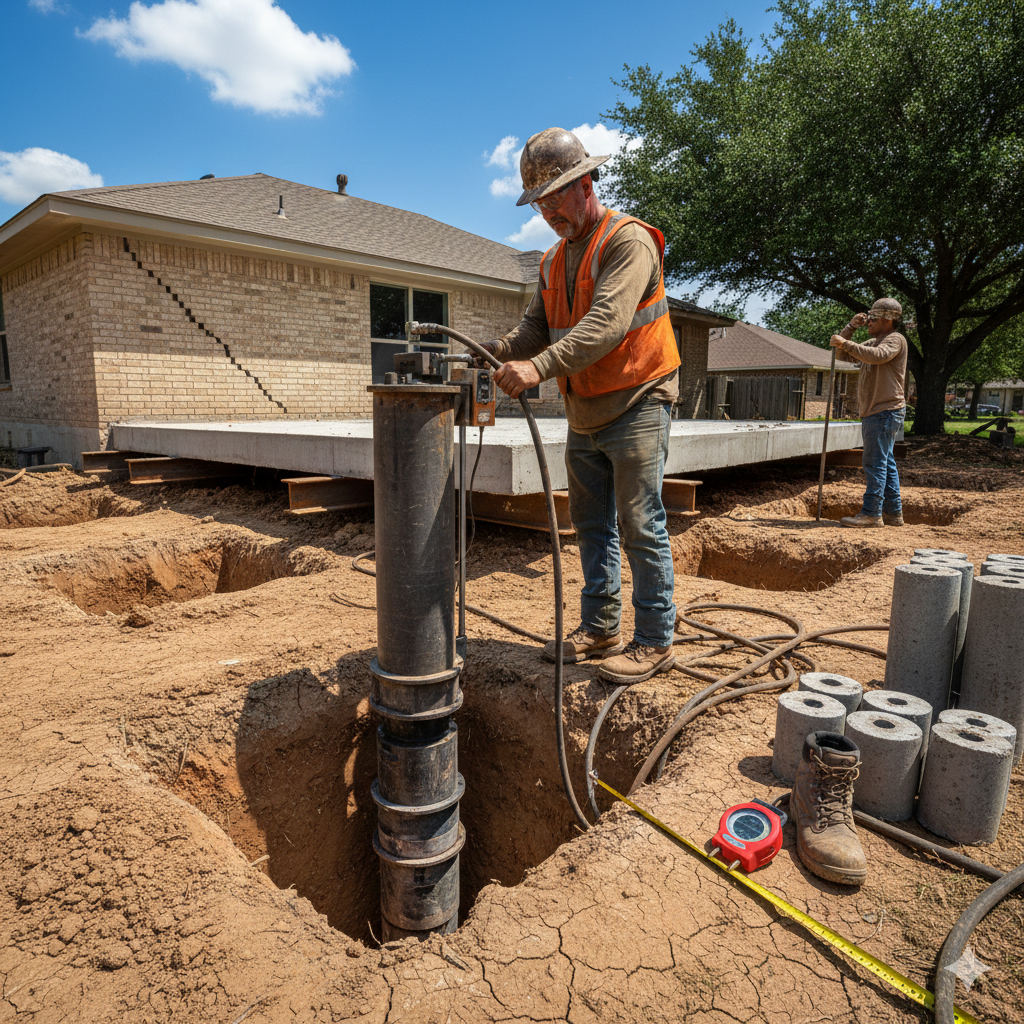
If you are a Texas homeowner, you likely already know that the ground beneath your feet isn't as stable as it looks. From the humid expanses of the Gulf Coast to the arid plains of West Texas, the state’s infamous expansive clay soil is a constant threat to residential structures. When the first cracks appear in your drywall or your front door starts sticking, the very first question that comes to mind is: "How much is this foundation repair going to cost me?"
As a homeowner, you may be tempted to simply we buy houses Houston and let a professional investor deal with the structural headache. However, if you plan to stay and fight the shifting soil, understanding the financial landscape of foundation repair is essential. In 2025, foundation repair costs in Texas typically range from $3,500 to $12,000, though severe structural failures can easily exceed $30,000 for a full-scale stabilization.
This guide provides a comprehensive breakdown of the factors, methods, and hidden expenses that dictate the final price of a foundation project in the Lone Star State.
The Primary Cost Drivers for Texas Foundation Repair
Confirming the body content must be 1500-2000 words ensures that every variable is accounted for. In Texas, no two foundation jobs are identical because the soil conditions in Dallas differ wildly from those in San Antonio or Houston.
1. Number of Piers or Pilings
Most foundation repair companies in Texas price their services "per pier." A pier is a structural support driven deep into the earth to bypass the unstable surface clay and reach more competent soil or bedrock.
Pressed Concrete Piers: Generally cost between $450 and $900 per pier.
Steel Piers: These are the premium option, costing $950 to $1,800 per pier. An average-sized Texas home needing partial stabilization might require 10 to 15 piers, while a full perimeter job could require 40 or more.
2. Type of Foundation: Slab vs. Pier and Beam
Texas homes predominantly use two types of foundations. Slab-on-grade foundations are the most common in modern subdivisions. They are generally cheaper to repair because the process is standardized. Conversely, Pier and Beam (or crawl space) foundations, common in historic neighborhoods like those in Austin or Houston’s Heights, involve wood rot, shim adjustments, and beam replacements. Repairing a crawl space foundation often requires more manual labor, which can drive costs higher despite fewer "piers" being used.
3. Soil Composition and Depth to Refusal
In North Texas, the clay is incredibly dense and deep. To properly stabilize a home, piers must be driven to "refusal"—the point where the soil can no longer be penetrated. If the stable soil is 30 feet deep instead of 15 feet, the material costs and labor time increase significantly.
Breaking Down Costs by Repair Method
The method your contractor recommends will be the biggest variable in your final quote. Each method has a specific price point and a specific "best use" case.
Pressed Concrete Pilings
This is the "standard" Texas repair. Concrete cylinders are hydraulically pressed into the ground using the weight of the house as a jack.
Average Cost: $5,000 – $10,000.
Why choose it: It is the most cost-effective way to stabilize a standard slab.
Steel Piers
Steel piers are hollow tubes that are driven until they hit bedrock. They are less invasive than concrete because the equipment is smaller, and they offer a more permanent solution for homes on exceptionally volatile soil.
Average Cost: $12,000 – $25,000.
Why choose it: Recommended for high-value homes or areas where concrete piers have previously failed.
Helical Piers
These look like giant screws and are twisted into the ground. They are excellent for lighter structures or areas where the weight of the house isn't sufficient to "press" a concrete piling.
Average Cost: $1,500 – $3,000 per pier.
Polyurethane Foam Injection (Slab Jacking)
If your foundation isn't "failing" but has settled or has "voids" (hollow spots) beneath the concrete, foam injection can lift the slab back into place without heavy excavation.
Average Cost: $2,500 – $6,500.
Why choose it: Ideal for sinking driveways, garage floors, or minor interior slab settlement.
Regional Price Variations Across Texas
Costs fluctuate based on local labor markets and the specific geology of the region.
Houston and the Gulf Coast
Houston is known for its "gumbo" soil—a wet, heavy clay. Because the water table is so high, drainage is often a major component of foundation repair. Houston homeowners frequently pay for French drains or root barriers in addition to piers.
Market Average (2025): $4,500 – $9,000.
Dallas-Fort Worth (DFW)
The DFW Metroplex sits on some of the most expansive clay in the country. Because the soil movement here is so aggressive, DFW foundation companies are among the most experienced in the world. However, the depth to reach stable soil is often greater here, leading to higher per-pier costs.
Market Average (2025): $6,000 – $15,000.
Austin and Central Texas
Austin's limestone "Hill Country" geology presents a different challenge. While some areas have thin soil over rock, others have deep pockets of clay. If your home is built on a slope (common in Austin), you may need specialized retaining walls or deeper piers on one side of the house.
Market Average (2025): $5,500 – $12,000.
Hidden Costs: What the Initial Quote Often Misses
When you receive a quote for $8,000, that is rarely the total amount you will spend. There are several "ancillary" costs that Texas homeowners must budget for.
The Structural Engineering Report
Before hiring a repair company, you should hire an independent structural engineer. They provide an unbiased "Plan of Repair."
Cost: $500 – $1,200. For more information on why this is necessary, you can visit the Texas Board of Professional Engineers and Land Surveyors to find licensed professionals.
Plumbing Tests and Repairs
When a house is lifted several inches, the plumbing pipes beneath the slab are put under immense stress. It is standard practice (and often required by city code) to perform a "hydrostatic pressure test" after the lift.
Plumbing Test Cost: $350 – $600.
Actual Plumbing Repairs: If a pipe breaks during the lift, repairs can cost $2,000 to $5,000 depending on the location of the break.
Cosmetic Interior Repairs
Foundation companies stabilize the structure, not the finishes. Once your house is level, you will still have cracked drywall, popped tiles, and misaligned cabinets.
Estimated Cost: $1,500 – $5,000+. Pro tip: Wait at least 6-8 weeks after the foundation repair before fixing drywall to allow the house to "settle" into its new position.
Landscaping and Tree Removal
If a large oak tree is the cause of your foundation movement, an engineer may require its removal or the installation of a "root barrier."
Root Barrier Cost: $1,500 – $3,000.
Tree Removal: $800 – $2,500 per tree.
FAQ: Common Questions About Texas Foundation Costs
Does home insurance cover foundation repair in Texas?
In 95% of cases, the answer is no. Standard Texas homeowners' insurance policies (HO-3) exclude "earth movement." The only exception is if the foundation damage was caused by a "sudden and accidental" plumbing leak, and even then, many policies only cover the "access" to the leak, not the structural piers.
Is foundation repair tax-deductible?
If the house is your primary residence, foundation repair is considered a "capital improvement" rather than a deductible expense. It increases your "basis" in the home, which can help reduce capital gains taxes when you sell. If the property is a rental, you can usually depreciate the cost over several years.
How long does the repair last?
Most reputable Texas companies offer a "Lifetime Transferable Warranty." However, this warranty only covers the piers installed. If the house shifts in an area where piers were not installed, you will have to pay for additional work.
Can I sell a house with foundation problems in Texas?
Yes, but you must disclose it. In Texas, the Texas Real Estate Commission (TREC) requires a Seller's Disclosure Notice. If you haven't fixed the foundation, expect buyers to ask for a significant price reduction—often double the actual cost of the repair to account for the "risk" they are taking.
Should I choose the cheapest quote?
In foundation repair, you get what you pay for. A "cheap" company might not drive the piers deep enough, or they may use low-grade concrete. Always check the company's BBB rating and ensure they have been in business longer than their warranty period.
Conclusion: Is the Investment Worth It?
Foundation repair is never an "exciting" home improvement. Unlike a kitchen remodel or a new deck, you can't even see the results of your $10,000 investment once the holes are filled. However, in Texas, foundation health is the bedrock of property value.
Ignoring a 1-inch slope today can lead to a 4-inch slope and a $40,000 repair bill three years from now. By catching the signs early, hiring an independent engineer, and choosing a proven repair method, you can protect your home's equity and ensure it stands strong against the volatile Texas terrain.

How Absolute Properties Helps Houston Sellers
Absolute Properties makes it easy for Houston homeowners to sell fast - even when facing challenges like financial difficulties, inherited properties, troublesome tenants, or repairs.
If you’re thinking, “I need to sell my house fast in Houston…” We buy houses in Houston in any situation or condition!
As-is, fast cash offers with clear terms
Many closing costs covered; no realtor commissions in most cases
You choose the closing date (as little as 7 days, case-dependent)
Coordination with experienced title company for a compliant sale process
Call or text: (713) 230-8059
Email address: info@absolutepropertieshtx.com
Share your street address and timeline for a free consultation and a straightforward number no pressure.
Helpful Houston Blog Articles
How To Sell Your House in Houston Without Sinking Any More Money Into It
6 Tips For First Time Home Sellers in Houston
Hiring an Agent Vs. A Direct Sale to Absolute Properties When Selling Your House in Houston
Who Pays Closing Costs in Texas
The True Costs of An FSBO Listing for Houston Investors
What To Do With Your Expired Listing in Houston
Also check out our Free Guides & Education & FAQ for more education on how to sell your house for cash quickly to a local home buyer.