The Toxic Truth: Why Smoke Damage is a Major Health Risk
Reviewed by Mark Lee
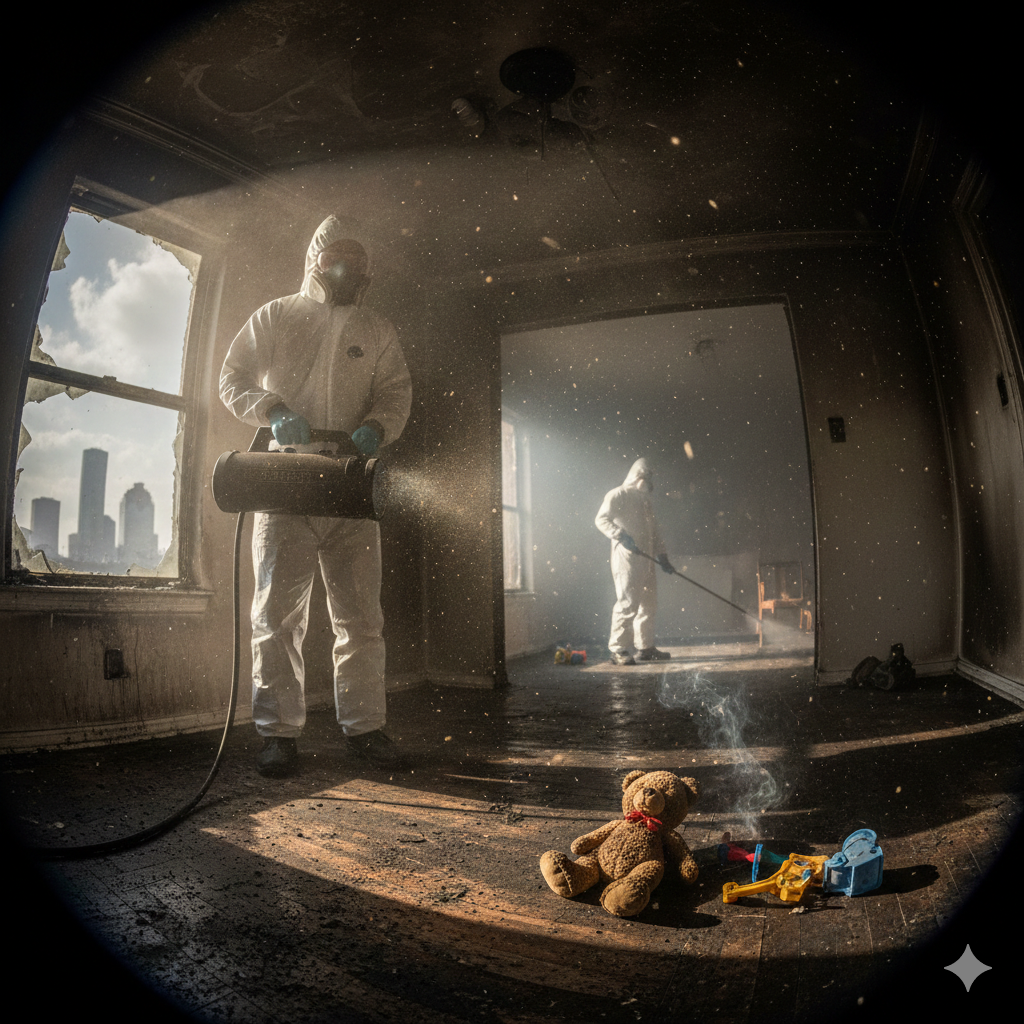
Look, we’ve all been there—standing in the driveway after a kitchen flare-up or a localized garage fire, thinking, "The fire’s out, the house is still standing, we’re fine." But as someone who’s spent years navigating the Houston real estate market and seeing the literal guts of homes, I’m here to tell you that the flames are often the least of your worries. The real predator is the smoke. It doesn't just sit on the surface; it’s a microscopic cocktail of toxins that weaves itself into the very fabric of your home and your health.
In our humid Bayou City climate, smoke damage behaves differently. The moisture in the air acts like a carrier, helping soot and chemicals latch onto everything from your drywall to your AC ducts. If the remediation feels like a mountain you can't climb and you'd rather just sell my house fast Houston to an investor who can handle the toxic cleanup, you aren't alone. But if you're planning to stay or restore, you need to understand the toxic truth about what you're breathing.
The Microscopic Cocktail: What’s Actually in That Smoke?
When a house burns, it isn't just wood and paper going up in flames. Modern homes are essentially giant boxes of plastic, synthetic resins, chemical flame retardants, and treated fabrics. When these things combust, they don't just disappear; they transform into a "toxic soup" of gases and particulate matter.
The biggest threat is something called PM2.5—particulate matter that is 2.5 microns or smaller. To give you some perspective, a human hair is about 70 microns wide. These particles are so small they bypass your body’s natural filters (like your nose and throat) and head straight for the deep tissue of your lungs. From there, they can actually enter your bloodstream.
The Heavy Hitters of Smoke Toxicity
It’s not just "dust." Inside that smoke, you’re often dealing with:
Carbon Monoxide (CO): An odorless killer that displaces oxygen in your blood.
Hydrogen Cyanide: Produced when synthetic materials like insulation or upholstery burn. It interferes with cellular respiration.
Formaldehyde: A known carcinogen found in the glues of your kitchen cabinets and flooring.
Volatile Organic Compounds (VOCs): These stay in the air for weeks, causing that "lingering fire smell" that’s actually a sign of off-gassing chemicals.
Why Houston's Humidity Makes Smoke Damage More Dangerous
In a dry climate, soot is often a dry powder that you can vacuum up (with a HEPA filter, of course). But this is Houston. Our relative humidity levels often hover between 60% and 90%. This moisture mixes with the acidic components of the smoke—like sulfur and chlorides—to create a corrosive paste.
This acidic moisture doesn't just sit on your walls; it eats into them. It can corrode the copper wiring behind your outlets and the metal components of your HVAC system. More importantly for your health, the humidity keeps these particles "sticky" and active. Instead of settling, they can react with the moisture in your lungs even more aggressively. According to the Environmental Protection Agency (EPA), high humidity can significantly increase the concentration of indoor pollutants, making the post-fire environment a literal breeding ground for respiratory distress.
The HVAC "Super-Spreader"
In Houston, our AC runs almost 365 days a year. If you turn on your air conditioner after a fire without a deep, professional cleaning, you are essentially turning your home into a toxic convection oven. The system sucks up the soot from one room and blasts it into every other corner of the house, embedding those toxins into the carpets and bedding of rooms that weren't even near the fire.
Long-Term Health Risks of Residual Smoke Exposure
The danger doesn't end when the air clears. If you don't properly remediate the smoke, you’re looking at a "chronic exposure" scenario. This is where the real health risks kick in for you and your family.
Respiratory and Cardiovascular Impact
Short-term, you’ll notice the coughing, stinging eyes, and runny nose. But long-term exposure to residual soot can lead to chronic bronchitis, reduced lung function, and even an increased risk of heart attacks. The Houston Methodist health system has noted that fine particulate matter (PM2.5) is linked to systemic inflammation, which sets off a chain reaction in the body affecting everything from your heart to your metabolism.
The Risk to Vulnerable Populations
If you have kids, elderly parents, or anyone with asthma living in the home, the stakes are exponentially higher. Children breathe more air per pound of body weight than adults, meaning they take in a higher "dose" of these toxins. For someone with a pre-existing condition like COPD, even a faint lingering odor of smoke can trigger a life-threatening episode.
The "Silent" Corrosive: Smoke vs. Your Home’s Structural Health
We often talk about health in terms of biology, but the "health" of your home’s structure also impacts your well-being. Smoke is highly acidic. Within minutes of a fire, it starts to discolor plastics and marble. Within hours, it can permanently stain grout and tarnish metal.
If this acidity is left to sit, it can weaken the structural integrity of certain materials. If your home’s "bones" are compromised and start to degrade or off-gas, the indoor air quality will never return to a safe baseline. This is why "surface cleaning" is a myth. You can't just wipe away the toxic truth; you often have to remove and replace materials that have been "deep-soaked" in smoke.
Why Professional Remediation (and Not DIY) is Mandatory
I see a lot of "weekend warriors" trying to clean up smoke damage with a bucket of bleach and a sponge. Please, don't do this. Bleach is mostly water, and as we discussed, adding moisture to acidic soot can actually make the damage worse. Plus, the physical act of scrubbing can push the microscopic particles deeper into the pores of your drywall.
Professional restoration teams use specialized equipment:
Ozone Generators and Hydroxyl Generators: These break down the actual chemical bonds of the odors rather than just masking them.
Thermal Fogging: This opens up the "pores" of the building materials to neutralize embedded smoke.
Industrial HEPA Air Scrubbers: These pull the PM2.5 particles out of the air so you aren't just moving them around.
If the cost of this professional work exceeds your insurance payout—or if you simply don't have the stomach for a months-long toxic cleanup—that’s when many Houstonians look for a "Cash Home Buyer" to take the property off their hands. It’s often the fastest way to protect your family's health and your financial future.
FAQ: Smoke Damage and Your Health
Is it safe to stay in my house if I only smell a "little" smoke?
Probably not. If you can smell it, you are inhaling VOCs and particulate matter. Even a "little" smell indicates that there is residual soot off-gassing in your home. For healthy adults, short-term exposure might just be irritating, but for those with respiratory issues or children, it’s a significant risk.
Can I just paint over smoke-damaged walls?
No! This is one of the biggest mistakes people make. If you paint over soot, the acidic residue will eventually bleed through the paint, and the smell will continue to off-gas from behind the new layer. You must use a specialized "smoke-sealing" primer after a deep chemical cleaning, or better yet, replace the drywall entirely.
Does my homeowners insurance cover toxic smoke cleaning?
Generally, yes. Most standard Texas policies cover "fire and smoke" damage. This includes the professional cleaning of your textiles, walls, and ductwork. However, you often have to fight to ensure they pay for replacement instead of just a cheap cleaning if the toxins are deeply embedded.
How do I know if the air in my home is safe after a fire?
The only way to be 100% sure is to have an Industrial Hygienist perform an indoor air quality (IAQ) test. They can measure the levels of soot, VOCs, and other particulates to give you a "clear" certificate. This is also a huge selling point if you ever decide to list the home on the market.
Will a regular air purifier help with smoke damage?
A standard store-bought air purifier might help with some of the larger particles, but unless it has a high-grade HEPA filter and a substantial activated carbon stage, it won't touch the microscopic PM2.5 or the chemical gases. You need industrial-grade equipment for true remediation.
Conclusion: Putting Your Health First
At the end of the day, a house is just bricks and sticks. Your lungs, however, are irreplaceable. If you’ve experienced a fire in your Houston home, don't underestimate the "invisible" damage. The toxic truth is that smoke is a persistent, chemical-heavy invader that requires a serious, professional response.
Whether you decide to go through the grueling process of professional remediation or choose to walk away and start fresh elsewhere, make sure you aren't compromising your long-term health for a short-term fix.

How Absolute Properties Helps Houston Sellers
Absolute Properties makes it easy for Houston homeowners to sell fast - even when facing challenges like financial difficulties, inherited properties, troublesome tenants, or repairs.
If you’re thinking, “I need to sell my house fast in Houston…” We buy houses in Houston in any situation or condition!
As-is, fast cash offers with clear terms
Many closing costs covered; no realtor commissions in most cases
You choose the closing date (as little as 7 days, case-dependent)
Coordination with experienced title company for a compliant sale process
Call or text: (713) 230-8059
Email address: info@absolutepropertieshtx.com
Share your street address and timeline for a free consultation and a straightforward number no pressure.
Helpful Houston Blog Articles
How To Sell Your House in Houston Without Sinking Any More Money Into It
6 Tips For First Time Home Sellers in Houston
Hiring an Agent Vs. A Direct Sale to Absolute Properties When Selling Your House in Houston
Who Pays Closing Costs in Texas
The True Costs of An FSBO Listing for Houston Investors
What To Do With Your Expired Listing in Houston
Also check out our Free Guides & Education & FAQ for more education on how to sell your house for cash quickly to a local home buyer.