Restore or Rebuild? How to Tell if Your House is a Total Loss
Reviewed by Mark Lee
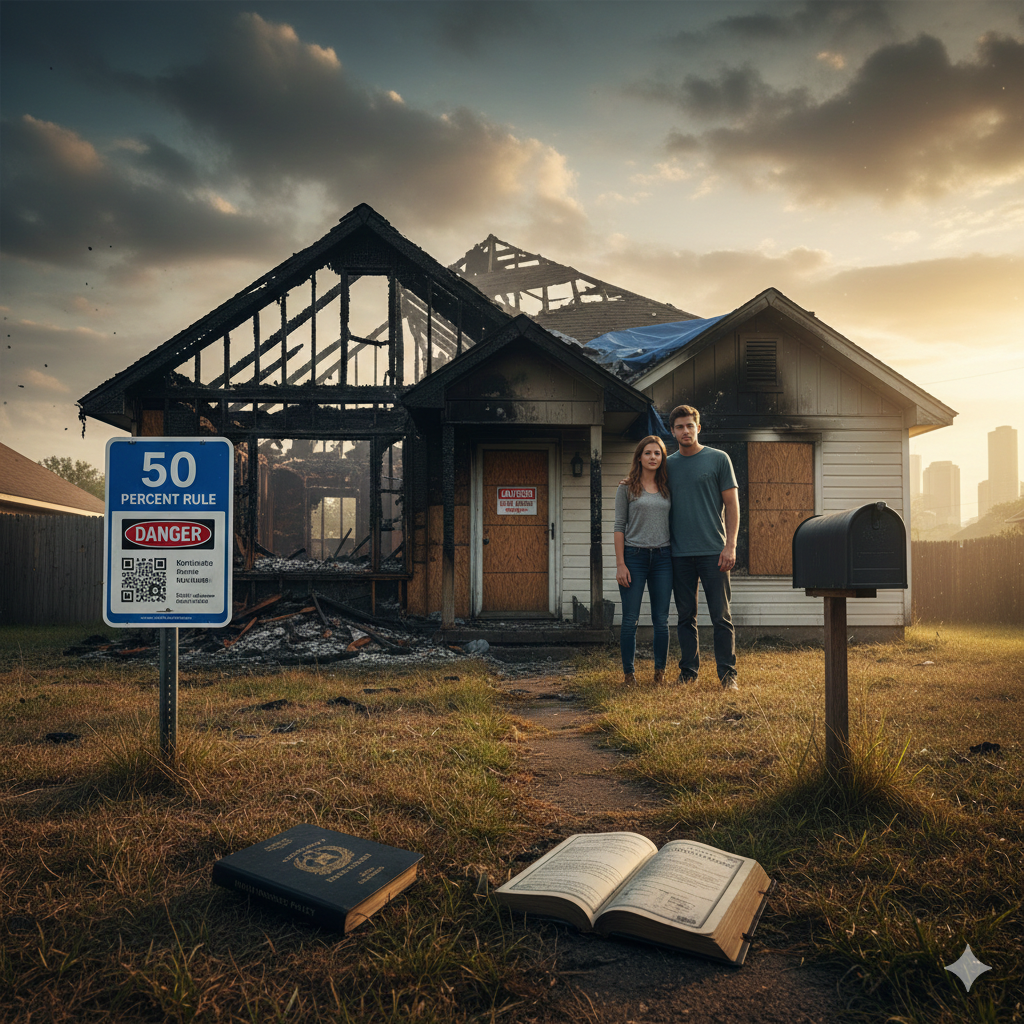
When a fire tears through your home, the immediate aftermath is a blur of red lights, insurance calls, and heavy soot. Once the smoke clears, you’re left with a massive question: Can this place be saved, or are we looking at a total loss? In the Houston real estate world, the answer isn't always as obvious as a pile of ash. I've seen homes that looked like goners be restored to their former glory, and others that looked "fine" from the curb get slapped with a demolition order.
Deciding whether to restore or rebuild is a high-stakes game. It involves insurance adjusters, city inspectors, and the cold, hard math of construction costs. If you're standing in your living room wondering if you should fight for a rebuild or if it’s time to just sell my house fast Houston and walk away, you need to understand the triggers that turn a partial loss into a total one.
The Legal Definition of a Total Loss in Texas
In Texas, we have specific legal standards for what constitutes a "total loss." It isn't just about whether the house is gone; it’s about whether a "reasonably prudent" uninsured owner would use the remaining structure to rebuild. If the "remnant" of the house—the parts that didn't burn—isn't a solid enough foundation to restore the building to its original state, Texas law generally considers it a total loss.
Under Texas Insurance Code § 862.053, a total loss by fire on real property (the house itself, not your stuff) is considered a "liquidated demand." This is a fancy legal way of saying the insurance company has to pay you the full limit of your policy, no questions asked. They don't get to haggle over the price of drywall or carpet if the house is truly gone.
However, insurance companies hate paying out full policy limits. They will often argue that a house is "repairable" even when it’s structurally compromised. This is where the battle lines are usually drawn between "Restore" and "Rebuild."
The "50 Percent Rule" and Substantial Damage
If you live in a flood-prone area of Houston—which, let's be real, is a huge chunk of the city—you need to know about the FEMA "50 Percent Rule." This rule is a major factor in determining if you are even allowed to restore your home.
The rule states that if the cost to repair your home (from any cause, including fire) is 50% or more of the market value of the structure before the damage, it is considered "Substantially Damaged."
The Reconstruction Requirement
Once a home is deemed substantially damaged, the City of Houston requires it to be brought up to current building codes and floodplain management standards. This often means:
Elevating the entire house above the Base Flood Elevation (BFE).
Upgrading all electrical, plumbing, and HVAC systems to 2026 standards.
Installing modern fire-resistant materials.
For many older homes in neighborhoods like Meyerland or Braeswood, the cost of elevating and upgrading can actually exceed the cost of just tearing it down and starting over. In these cases, even if the fire only damaged half the house, the "50 Percent Rule" effectively forces a rebuild.
Structural Red Flags: When Restoration Isn't Safe
Sometimes the math says you can restore, but the "bones" of the house say otherwise. Fire changes the molecular structure of building materials. It isn't just about what's charred; it's about what was cooked.
Concrete and Foundation Issues
Concrete is tough, but it isn't invincible. Intense heat (above 1,100°F) can cause "spalling," where the moisture inside the concrete expands so fast it causes the surface to pop and crack. If the fire was hot enough to damage the slab, the structural integrity of the entire home is at risk. According to the National Fire Protection Association (NFPA), heat can also weaken the steel reinforcement (rebar) inside the concrete, leading to foundation failure years down the road.
Steel and Wood Framing
Steel beams can warp and lose their load-bearing capacity at high temperatures. Similarly, wood trusses in your attic can be "charred" but still standing. While some charring is acceptable (as it can actually insulate the core of the wood), any significant loss of the wood's cross-section means the roof is no longer safe. If your rafters look like charcoal briquettes, a "patch job" isn't going to cut it.
The Financial Crossroad: Rebuild Costs vs. Market Value
In 2026, construction costs in Houston have stayed stubbornly high. Between labor shortages and the price of materials, rebuilding a home from scratch can cost anywhere from $180 to $450 per square foot depending on the finishes.
Restoration, on the other hand, usually costs between $4 and $7 per square foot for basic cleanup and minor repairs. But when you get into "Complex Restoration"—which involves structural work, full electrical rewiring, and smoke remediation—those costs can easily hit $100+ per square foot.
The Tipping Point
Most real estate experts use a simple rule of thumb: If the cost of professional restoration exceeds 70% of the cost to build new, you are almost always better off rebuilding. Why? Because a "restored" house with a fire history on its CLUE report (the insurance version of a Carfax) will almost always sell for less than a brand-new home. You want to avoid spending 90% of a new-build's price on a house that will always carry the "fire damage" stigma.
Permitting and Code Compliance in Houston
The City of Houston doesn't make it easy to rebuild. If you decide to go the "Restore" route, you still need permits for almost everything: electrical, plumbing, mechanical (HVAC), and structural.
If the damage is significant, the Houston Permitting Center will likely require a structural engineer's report before they even issue a repair permit. If that engineer finds that the remaining structure doesn't meet current wind-load requirements or seismic codes, your "simple repair" just turned into a massive reconstruction project.
This "code creep" is the silent killer of restoration budgets. You start off fixing a kitchen fire and end up rewiring the entire house because the city inspector says the 1970s wiring is no longer legal.
FAQ: Rebuilding vs. Restoring After a Fire
Can I choose to rebuild even if the insurance company says "Restore"?
You can, but the insurance company is only obligated to pay for what they deem "necessary" repairs. If they say it costs $100,000 to fix and you want to spend $300,000 to rebuild, you are responsible for the $200,000 difference. However, if you can prove the house is a total loss under Texas law, they must pay the full policy limit.
Does a total loss payout include the value of my land?
No. Insurance covers the structure and personal property. The land still belongs to you and retains its value. This is why many people in high-value areas like the Heights or River Oaks take the insurance check, sell the charred lot to a developer, and go buy a move-in-ready home elsewhere.
How does the 50 Percent Rule affect my insurance payout?
If the city declares your home "Substantially Damaged" and won't let you repair it unless you elevate it, your insurance should cover the cost of that elevation if you have "Ordinance or Law" coverage. If you don't have that rider, you might be stuck in a "Catch-22" where you can't afford to repair to code and can't afford to rebuild.
What is a "Liquidated Demand" in Texas?
In Texas, for a total loss of real property caused by fire, the policy is treated as a liquidated demand for the full amount of insurance. Essentially, it's a statutory rule that prevents insurance companies from lowballing you on the value of a house that has been completely destroyed.
How long do I have to decide between restoring or rebuilding?
Your policy will have a "Proof of Loss" deadline, usually 60 days after the incident (though this can be extended). You don't have to have the house finished by then, but you do need a solid estimate of the total damage. Don't rush this decision—get your own independent inspections before signing anything.
Conclusion: Making the Hard Call
Deciding to walk away from a home you love is painful. Deciding to spend a year living in a rental while you manage a complex rebuild is also painful. There are no easy answers here, only trade-offs.
If your home has deep structural damage, fails the 50 Percent Rule, or would cost nearly as much to fix as it would to replace, rebuilding is the logically sound choice. It protects your long-term resale value and ensures your family is living in a house that meets modern safety standards.
If you're feeling stuck between a lowball insurance offer and a mountain of repair quotes, remember that you don't have to navigate this alone. Whether you hire a public adjuster to fight the insurance company or look for a quick exit by selling to an investor, make sure you're basing your decision on data, not just emotion.

How Absolute Properties Helps Houston Sellers
Absolute Properties makes it easy for Houston homeowners to sell fast - even when facing challenges like financial difficulties, inherited properties, troublesome tenants, or repairs.
If you’re thinking, “I need to sell my house fast in Houston…” We buy houses in Houston in any situation or condition!
As-is, fast cash offers with clear terms
Many closing costs covered; no realtor commissions in most cases
You choose the closing date (as little as 7 days, case-dependent)
Coordination with experienced title company for a compliant sale process
Call or text: (713) 230-8059
Email address: info@absolutepropertieshtx.com
Share your street address and timeline for a free consultation and a straightforward number no pressure.
Helpful Houston Blog Articles
How To Sell Your House in Houston Without Sinking Any More Money Into It
6 Tips For First Time Home Sellers in Houston
Hiring an Agent Vs. A Direct Sale to Absolute Properties When Selling Your House in Houston
Who Pays Closing Costs in Texas
The True Costs of An FSBO Listing for Houston Investors
What To Do With Your Expired Listing in Houston
Also check out our Free Guides & Education & FAQ for more education on how to sell your house for cash quickly to a local home buyer.