Reviewed by Mark Lee
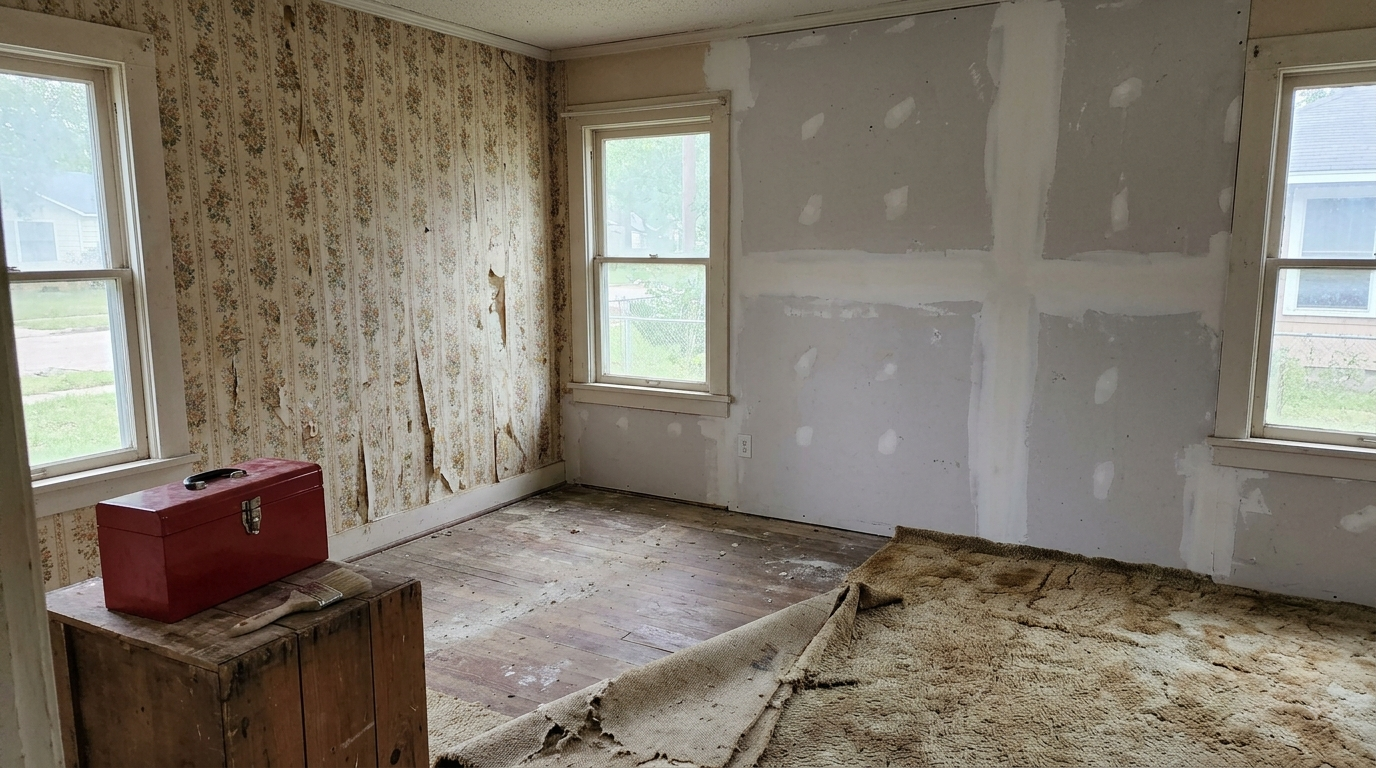
You are scrolling through online property listings, desperately trying to find a decent deal in the current Houston market. Suddenly, a house catches your eye. The price is surprisingly low. The neighborhood is fantastic. The curb appeal is decent. Then, you read the property description, and there it is, buried right at the end of the paragraph: "Great bones! Just needs a little TLC."
Those three little letters—TLC (Tender Loving Care)—are the most notorious euphemism in real estate. As an investor or a traditional homebuyer, reading that phrase should immediately trigger your internal radar. What exactly does the listing agent mean by TLC? Are we talking about peeling wallpaper and a weird odor from a 1990s shag carpet, or are we talking about a crumbling foundation and an active termite colony?
When a property sits in that gray area between a light weekend project and a complete teardown, figuring out your next step is incredibly stressful. If the project turns out to be way over your head, your budget will completely evaporate. If you find yourself holding a money pit and need an out, working with we buy houses Houston investors is often the safest parachute. But ideally, you want to know exactly what you are walking into before you sign the closing papers.
Let’s break down the fuzzy, confusing area between a simple TLC fixer-upper and a massive gut job in the Houston real estate market.
What Exactly Does "Needs TLC" Mean in Houston Real Estate?
In a perfect world, "needs TLC" would have a strict, legal definition. In reality, it is a subjective marketing term used to soften the blow of a neglected property. Real estate agents use it to attract bargain hunters while simultaneously warning retail buyers that the house isn't ready for a magazine cover.
The Cosmetic Fixer-Upper (The True TLC)
When real estate professionals talk about a genuine TLC property, they are usually referring to cosmetic defects. The home’s critical systems are functioning perfectly fine, but the aesthetics are trapped in a different decade.
In a cosmetic TLC house, the roof keeps the rain out, the air conditioner blows cold (an absolute necessity in Southeast Texas), and the foundation is solid. The problems are entirely on the surface. You might walk into a kitchen featuring laminate countertops from 1985, honey-oak cabinets, and a broken dishwasher. The bathrooms might sport Pepto-Bismol pink tiles. The walls might have scuff marks, bad paint jobs, or outdated wood paneling.
These are the golden opportunities. You can fix a cosmetic TLC house with a few trips to a home improvement store, a reliable handyman, and a weekend of elbow grease. You aren't ripping down walls; you are simply applying a thick layer of modern makeup to a structurally sound house.
The Deferred Maintenance Trap
The gray area starts to emerge when TLC crosses over from ugly aesthetics to deferred maintenance. Deferred maintenance means the previous owner simply stopped caring for the house. They didn’t change the HVAC filters, they let the gutters back up and rot the fascia boards, and they ignored the slow drip under the bathroom sink for three years.
This is where the line between a quick fix and a gut job starts getting incredibly blurry. That slow drip under the sink might have rotted out the bottom of the vanity, soaked into the subfloor, and invited a massive mold problem. What started as a $50 plumbing fix has suddenly evolved into a $5,000 bathroom remediation project. When touring a TLC property, you have to look past the ugly paint and actively hunt for signs of long-term neglect.
The Danger Zone: When a Little TLC Becomes a Total Gut Job
A gut job means exactly what it sounds like. You are buying a shell. You will need to strip the interior all the way down to the wooden studs, replace the critical systems, and rebuild the home from the inside out. In Houston, there are a few specific red flags that instantly push a property out of the "TLC" category and straight into gut-job territory.
Foundation Issues (The Houston Special)
Houston is built on expansive clay soil. When it rains heavily, the soil swells like a sponge. During our blistering, drought-heavy summers, that soil shrinks and cracks. This constant expansion and contraction absolutely wrecks concrete slab foundations.
If a listing mentions "foundation needs work" or "TLC," you need to look at the exterior brickwork. Do you see stair-step cracks running up the mortar? Inside the house, do the doors stick in their frames? Are there massive diagonal cracks shooting out from the corners of the window frames?
Fixing a foundation in Houston can range from $5,000 for a few support piers to upwards of $30,000 for a massive overhaul. Furthermore, lifting a sunken foundation often snaps plumbing lines hidden beneath the concrete slab and cracks the interior drywall, creating a domino effect of massive repair bills.
The Hidden Horrors Behind the Walls
You cannot easily see the plumbing and electrical systems, which makes them the most dangerous elements of a gray-area property. If you are looking at a home in older Houston neighborhoods like Meyerland, Spring Branch, or the East End, you must pay attention to when the house was built.
Homes built in the 1970s and 1980s might still have aluminum wiring or outdated electrical panels (like the notorious Federal Pacific panels) that are known fire hazards and will need to be completely replaced before a modern insurance company will touch the house.
Plumbing is equally treacherous. Older homes often feature galvanized steel pipes that corrode from the inside out, restricting water pressure and eventually bursting. Rerouting plumbing through an attic or tunneling under a slab to replace rotting cast-iron sewer lines is a massive undertaking. If a house needs a full electrical rewire and a total plumbing repipe, it is not a TLC project. It is a gut job.
Calculating the True Cost of "Tender Loving Care"
The biggest mistake buyers make when purchasing a distressed property is severely underestimating the cost of materials and labor. You might watch a popular home renovation show and think you can flip a kitchen for a few thousand dollars in just three days. Reality is much more expensive and much slower.
Budgeting for the Unknown
When you buy a house that needs work, you have to budget for the surprises hidden behind the drywall. Experienced real estate investors typically build a 20% contingency buffer into their renovation budgets. If they calculate that a house needs $40,000 worth of work, they secure $48,000 in funding.
Why? Because when you open up a wall to replace a dated shower insert, you might discover termite damage in the studs. When you pull up that ugly 1970s carpet, you might find a massive crack in the concrete slab that requires immediate attention. A true gut job requires a massive cash reserve to handle the inevitable emergencies that pop up during the demolition phase. According to the Remodeling Cost vs. Value Report, major overhauls like an upscale kitchen remodel or a primary suite addition rarely recoup 100% of their costs at resale, making strict budgeting absolutely critical.
The Time and Energy Factor
Time is money, especially in real estate. If you are buying a TLC house with the intention of living in it while you renovate, you need to be prepared for the mental toll. Living in a construction zone is exhausting. Waking up to a layer of drywall dust on your kitchen counters every morning for six months will test your patience and your relationships.
If you are an investor buying a property to flip, every day the house sits empty costs you money in holding costs (property taxes, insurance, utility bills, and loan interest). A simple cosmetic TLC job might take three to four weeks to turn around. A massive gut job involving city permits, foundation repair, and structural framing could take six to eight months. You have to accurately calculate those holding costs before deciding if a project is actually worth your time.
Is Buying a TLC Property Worth It Right Now?
Given the current economic climate, high mortgage rates, and fluctuating material costs, you have to be highly strategic about buying distressed real estate. The days of buying any cheap house on the block, throwing a coat of paint on it, and making a massive profit are largely over.
The Flipper's Perspective
For real estate flippers, the fuzzy area between TLC and a gut job is where the money is actually made. Most amateur investors are terrified of big structural issues. They only want the easy cosmetic houses. Because there is so much competition for the easy cosmetic houses, the prices are driven up, leaving very little room for profit.
Professional investors who have reliable contractors, deep pockets, and experience pulling permits with the City of Houston are willing to tackle the gut jobs. By taking on the massive risks that scare away the amateurs, they secure the property at a rock-bottom price and force enough appreciation through the renovation to make a hefty profit.
The Traditional Buyer's Dilemma
If you are a traditional homebuyer looking for a primary residence, you should generally stay far away from gut jobs unless you have extensive construction experience. Securing a traditional 30-year conventional or FHA mortgage on a gutted house is nearly impossible because the property must meet strict livability standards to qualify for the loan.
However, a true cosmetic TLC house is the perfect way for a traditional buyer to break into a highly desirable Houston neighborhood that they otherwise couldn't afford. Buying an ugly house on a great street allows you to build instant sweat equity. You can update the kitchen and bathrooms at your own pace, slowly increasing the home's value while enjoying a lower initial purchase price.
How to Spot the Difference Before Making an Offer
You don't want to find out you bought a gut job after you already own the house. You have to do your due diligence during the brief option period (usually 7 to 10 days in Texas) before your earnest money becomes non-refundable.
Hire a Rock-Star Inspector
Never, ever waive your right to a professional home inspection when buying a property that needs work. You need a licensed, highly experienced inspector who will crawl through the 120-degree attic, walk the roof, and test every single outlet.
Furthermore, you shouldn't rely solely on a general inspector. If the house was built before 1990, spend the extra money to hire a specialized plumber to run a camera down the main sewer line to check for blockages, collapsed pipes, or tree root intrusions. If the house shows signs of shifting, pay a structural engineer to evaluate the foundation. Spending $1,000 on specialized inspections during your option period can easily save you from a $40,000 nightmare later. Always ensure your inspector is licensed through the Texas Real Estate Commission (TREC), which sets the strict standards for property evaluations in the state.
Trust Your Nose and Eyes
When you walk into a potential project house, use all your senses. Does the house smell distinctly like bleach? The seller might have recently tried to scrub away a massive mold problem. Does the floor feel bouncy or uneven when you walk across it? That points to severe subfloor rot or foundation failure.
Look closely at the ceilings. Are there fresh patches of bright white paint that don't quite match the rest of the ceiling? The seller might be trying to hide an active roof leak. If a house needs TLC, the seller shouldn't be actively trying to hide the flaws. If you suspect they are covering up major issues with cheap, cosmetic fixes, walk away immediately.
Navigating the gray area between a simple fixer-upper and a devastating gut job requires patience, healthy skepticism, and a solid team of professionals. By understanding the true cost of renovations in Houston and knowing exactly what red flags to look for, you can safely turn a neglected property into a highly profitable investment or a beautiful forever home.
FAQ: Understanding TLC vs. Gut Jobs
What is the typical discount for a TLC home in Houston?
There is no set percentage, but generally, a home requiring mild cosmetic TLC will sell for 10% to 15% below the market value of a fully updated home in the exact same neighborhood. If the home is a complete gut job requiring structural, plumbing, and electrical overhauls, it often needs to be priced 30% to 50% below the After Repair Value (ARV) to attract a cash investor.
Can I get a traditional mortgage for a gut job?
Typically, no. Traditional lenders (conventional, FHA, VA) require a home to be safe, sound, and secure. If a house is missing a functioning kitchen, lacks working plumbing, or has exposed wiring, a traditional lender will deny the loan. To finance a gut job, you usually need to use a hard money loan, a specialized renovation loan (like an FHA 203k), or purchase the property entirely with cash.
How long does a cosmetic TLC renovation usually take?
If you are hiring a professional crew and have all your materials (flooring, cabinets, fixtures) delivered and ready to go before demolition begins, a full cosmetic update on an average-sized Houston home can take roughly 4 to 6 weeks. If you are doing the work yourself on nights and weekends, a cosmetic overhaul can easily drag on for 6 to 12 months.
Should I pull permits for simple TLC work?
If you are only doing cosmetic work—such as painting, installing new carpet, replacing baseboards, or swapping out light fixtures on existing electrical boxes—you generally do not need a permit in Houston. However, if your "TLC" project expands into moving walls, running new electrical circuits, or altering the plumbing layout, you absolutely must pull the proper municipal permits to ensure the work is legal and up to code.

How Absolute Properties Helps Houston Sellers
Absolute Properties makes it easy for Houston homeowners to sell fast - even when facing challenges like financial difficulties, inherited properties, troublesome tenants, or repairs.
If you’re thinking, “I need to sell my house fast in Houston…” We buy houses in Houston in any situation or condition!
As-is, fast cash offers with clear terms
Many closing costs covered; no realtor commissions in most cases
You choose the closing date (as little as 7 days, case-dependent)
Coordination with experienced title company for a compliant sale process
Call or text: (713) 230-8059
Email address: info@absolutepropertieshtx.com
Share your street address and timeline for a free consultation and a straightforward number no pressure.
Know someone else who needs to sell? We Also Pay a $1000 Referral Fee!
Helpful Houston Blog Articles
How To Sell Your House in Houston Without Sinking Any More Money Into It
6 Tips For First Time Home Sellers in Houston
Hiring an Agent Vs. A Direct Sale to Absolute Properties When Selling Your House in Houston
Who Pays Closing Costs in Texas
The True Costs of An FSBO Listing for Houston Investors
What To Do With Your Expired Listing in Houston
Also check out our Free Guides & Education & FAQ for more education on how to sell your house for cash quickly to a local home buyer.