The Squatter Prevention Checklist: Protecting Your Vacant Houston Property
Reviewed by Mark Lee
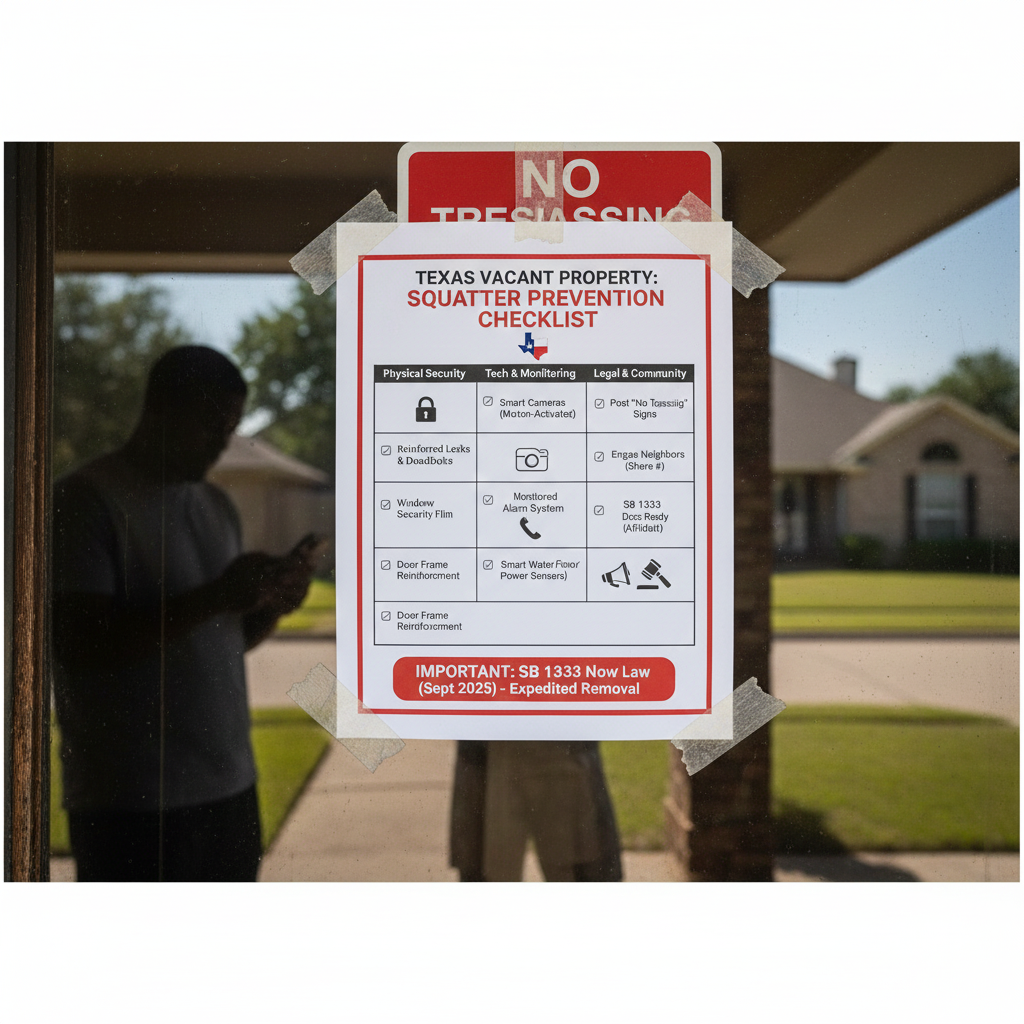
Owning a vacant property in the Houston metro area can be a significant financial asset, but it also carries a unique set of vulnerabilities. Whether you have an inherited family estate in the Heights or a rental property in Katy that is between tenants, an empty home is a primary target for unauthorized occupants. In the local real estate market, the "squatter nightmare" is a frequent topic of concern for landlords and homeowners alike.
Dealing with squatters is not just a logistical headache; it can lead to thousands of dollars in property damage, legal fees, and lost time. If the stress of monitoring a vacant home is becoming too much, many owners find that working with professional we buy houses Houston experts is the most efficient way to liquidate the property and avoid the risks of illegal occupation entirely. However, if you plan to hold onto your vacant property, you must be proactive.
In late 2025, the landscape for Texas property owners shifted dramatically with the implementation of Senate Bill 1333. This landmark legislation provides a "fast-track" for law enforcement to remove unauthorized occupants, but it places a high burden of proof on the owner. To utilize these new legal tools, you must maintain a secure property and a clear paper trail. This 2000-word guide and checklist provides everything you need to know about protecting your Houston property.
1. Physical Security: Hardening the Perimeter
The first line of defense is making it physically difficult for someone to enter the home. Squatters typically look for the path of least resistance—unlocked windows, flimsy back doors, or broken garage entry points.
Upgrade Your Locks and Deadbolts
Don't rely on the basic locks that came with the house. In Houston's humid climate, cheap locks can seize or become easy to pick. Install Grade 1 heavy-duty deadbolts on all exterior doors. If you are a landlord, consider a smart lock system like Schlage Encode or Yale. These allow you to change access codes remotely and monitor exactly when a door is opened. This prevents former tenants or contractors from using old keys to gain entry.
Secure All Windows and Sliding Doors
Windows are the most common entry point for squatters in Harris County. Ensure all window locks are functional. For sliding glass doors, which are notoriously easy to pop off their tracks, place a heavy wooden dowel or a "charley bar" in the track. You should also consider applying security film to ground-floor windows. This film makes the glass shatter-resistant, preventing a quick "smash and grab" entry.
Reinforced Door Frames and Strike Plates
A strong lock is useless if the door frame itself is weak. Most standard door frames are held together with half-inch screws that don't even reach the wall stud. Use three-inch hardened steel screws in the strike plates of your exterior doors so they bite deep into the structural framing. This makes the door significantly harder to kick in or pry open with a crowbar.
2. The Illusion of Occupancy: Deterrence Through Appearance
Squatters choose properties that look abandoned. If a house appears lived-in, it becomes a much riskier target for them.
Professional Landscape Management
Nothing screams "vacant" like a Houston lawn that hasn't been mowed in three weeks. In our climate, grass can grow an inch a day during the rainy season. Overgrown grass and weeds are a signal to the neighborhood (and criminals) that no one is watching the property. Hire a regular lawn service to keep the yard tidy. Beyond the lawn, ensure that trees and bushes are trimmed away from windows so neighbors have a clear line of sight to the home.
Smart Lighting and Home Automation
An empty house that is dark every night is an invitation. Install smart light bulbs or outlet timers (like TP-Link Kasa) that turn interior lights on and off at varying times throughout the evening. This "Vacation Mode" simulates actual human activity. Motion-activated floodlights on the exterior are also excellent deterrents, especially in the dark corners of the backyard or near the garage.
Mail, Circulars, and Debris Removal
Piles of "pizza menus" on the porch or a stuffed mailbox are clear signs of vacancy. Forward your mail through the USPS and ask a trusted neighbor to remove any unsolicited fliers or circulars that are left at the front door. Squatters often place a small piece of tape or a flier on a door to see if it is removed; if it stays there for three days, they know the house is a safe target.
3. Technology and Monitoring: Active Surveillance
In 2025, technology has made it easier and cheaper than ever to monitor a vacant property from anywhere in the world.
Cloud-Based Camera Systems
Systems like Ring, Nest, or Arlo allow you to receive instant motion alerts on your smartphone. Under the new SB 1333 rules, having video evidence of the exact moment an unauthorized person entered the property is invaluable. It proves they are not a tenant and that they entered without your consent. Knowing the moment someone steps onto your porch allows you to call the Houston Police Department or the Harris County Sheriff immediately.
Monitored Alarm Systems
A loud, shrieking alarm is often enough to send a squatter running. Many modern security companies offer "no-contract" monitoring specifically for vacant homes. Ensure you have signs in the yard and stickers on the windows indicating the home is protected. Some systems even include "glass break" sensors that can detect the specific frequency of a window being shattered.
Smart Water and Power Sensors
Squatters need utilities to stay long-term. Smart sensors like Flo by Moen or Sense can alert you if there is an unexpected spike in water or electricity usage. If you aren't living there and the water bill jumps, it’s a strong indicator that someone is using your facilities. Furthermore, if you catch them early, you can often shut off the water remotely before they cause damage.
4. Understanding Texas SB 1333 and SB 38 (The 2025 Laws)
As of late 2025, the legal landscape for squatters in Texas has changed. You must understand these laws to act quickly.
The Expedited Removal Process (SB 1333)
Senate Bill 1333 created a new pathway for property owners. You can now file a sworn complaint with the sheriff or constable. If you provide proof that you are the record owner and the occupant is unauthorized (and not a former tenant or family member), the sheriff can serve a "Notice to Immediately Vacate." They can then remove the person without you having to wait for a 21-day trial in Justice Court.
Increased Criminal Penalties
The new law also criminalizes the act of presenting a fraudulent lease. In the past, squatters would often show a fake document to the police, who would then claim it was a "civil matter." Now, presenting a fake deed or lease is a Class A Misdemeanor, and using them to facilitate the rental or sale of a home you don't own is a First-Degree Felony.
Civil Liability Protection
SB 1333 also includes a provision that allows owners to recover damages between $1,000 and $300,000 if the property was damaged or destroyed by the squatter. While collecting this money from a squatter may be difficult, having the judgment can be useful for insurance claims.
5. Community Engagement and "No Trespassing" Protocol
Your relationship with the neighborhood is your best "human" security system.
The "Neighborhood Watch" Approach
Give your neighbors your direct cell phone number. Encourage them to call you if they see a moving truck, a strange car in the driveway, or lights on at 2:00 AM. In close-knit Houston neighborhoods, a vigilant neighbor is more effective than a dozen cameras.
Posting Legal Notices
While they may seem old-fashioned, "No Trespassing" signs have legal weight in Texas. Under the Texas Penal Code, these signs provide the necessary "notice" that entry is forbidden. This simplifies the process for police to make a "Criminal Trespass" arrest instead of treating the situation as a tenant dispute.
The "Property Dossier" Requirement
To use the fast-track removal under SB 1333, you must have your documentation ready. Keep a digital folder containing:
Your recorded deed (from the Harris County Clerk).
Your latest property tax statement.
Recent utility bills in your name.
A "Sworn Affidavit of Ownership" template. If you find someone in your house, having these documents on your phone allows the sheriff to verify your status instantly.
6. Strategic Utility Management
A squatter’s goal is to establish "tenancy" so they can stay indefinitely. Without water or power, a house is much less comfortable for long-term stays.
Password Protect Utility Accounts
Squatters have been known to call CenterPoint Energy or the City of Houston Water Department to try and transfer service into their names using a fake lease. Call your providers and put a "verbal password" on your account. This prevents anyone from making changes to your service without your permission.
Locking Exterior Spigots
In Houston, squatters often use exterior spigots to fill jugs or run hoses inside for bathing. You can buy inexpensive locking covers for your outdoor faucets at any Home Depot or Lowe's. This denies them free water and makes your property a less attractive place to camp out.
Frequently Asked Questions (FAQ)
Can I just change the locks if I find a squatter?
Even with the 2025 law changes, "self-help" evictions (like changing locks or shutting off utilities while someone is inside) can still be legally risky if the person claims they were a legitimate tenant. It is always safer to use the SB 1333 law enforcement-led removal process to avoid civil liability.
What is the difference between a squatter and a trespasser?
In Texas, a trespasser is someone who enters briefly without intent to stay. A squatter is someone who attempts to live in the home. However, under the new laws, if they have no legal right to be there, law enforcement can now treat them more like trespassers for the purpose of removal.
How much does it cost to evict a squatter in Houston in 2025?
A traditional eviction (Forcible Detainer) in Harris County can cost between $3,500 and $5,000 when you factor in filing fees, service of process, attorney fees, and lost time. Using the new SB 1333 removal path is significantly cheaper, as it primarily involves a sheriff's fee similar to a Writ of Possession.
Does a squatter need a lease to stay?
No, but they often produce "fake leases" to confuse the police. This is why having your actual deed and professional records is vital. Under the new laws, presenting a fraudulent lease is now a high-level criminal offense in Texas.
Will the police remove a squatter if I call them?
Previously, police often viewed squatting as a "civil matter." However, with the passage of SB 1333, if you provide a sworn affidavit and proof of ownership, law enforcement now has the authority to remove unauthorized individuals much more quickly.
Can I sue a squatter for property damage?
Yes. The new law allows for damages up to $300,000. While squatters often don't have assets, getting a judgment can prevent them from ever owning property themselves in the future and may assist with your insurance claim for vandalism.
Conclusion: Taking Control of Your Property
Protecting a vacant Houston home in 2025 requires a mix of physical security and legal preparation. By following this checklist, you significantly reduce the odds of an unauthorized occupant choosing your home as their next target.
The financial and emotional toll of a squatter can be devastating. For many Houstonians, the risks associated with vacancy—including squatters, property taxes, and the constant maintenance required by the Texas climate—simply aren't worth the trouble. If you’ve reached that point, remember that you don't have to manage the burden alone. Whether you decide to double down on security or choose to sell to a professional so you can move on to your next chapter, being informed is your best defense.
For more information on the specific legal text of the new property rights laws, you can review the official Texas Legislature Online portal for a full breakdown of Senate Bill 1333.

How Absolute Properties Helps Houston Sellers
Absolute Properties makes it easy for Houston homeowners to sell fast - even when facing challenges like financial difficulties, inherited properties, troublesome tenants, or repairs.
If you’re thinking, “I need to sell my house fast in Houston…” We buy houses in Houston in any situation or condition!
As-is, fast cash offers with clear terms
Many closing costs covered; no realtor commissions in most cases
You choose the closing date (as little as 7 days, case-dependent)
Coordination with experienced title company for a compliant sale process
Call or text: (713) 230-8059
Email address: info@absolutepropertieshtx.com
Share your street address and timeline for a free consultation and a straightforward number no pressure.
Helpful Houston Blog Articles
How To Sell Your House in Houston Without Sinking Any More Money Into It
6 Tips For First Time Home Sellers in Houston
Hiring an Agent Vs. A Direct Sale to Absolute Properties When Selling Your House in Houston
Who Pays Closing Costs in Texas
The True Costs of An FSBO Listing for Houston Investors
What To Do With Your Expired Listing in Houston
Also check out our Free Guides & Education & FAQ for more education on how to sell your house for cash quickly to a local home buyer.