The Cold Truth About Selling a House with an Old HVAC in Houston
Reviewed by Mark Lee
The Cold Truth About Selling a House with an Old HVAC in Houston
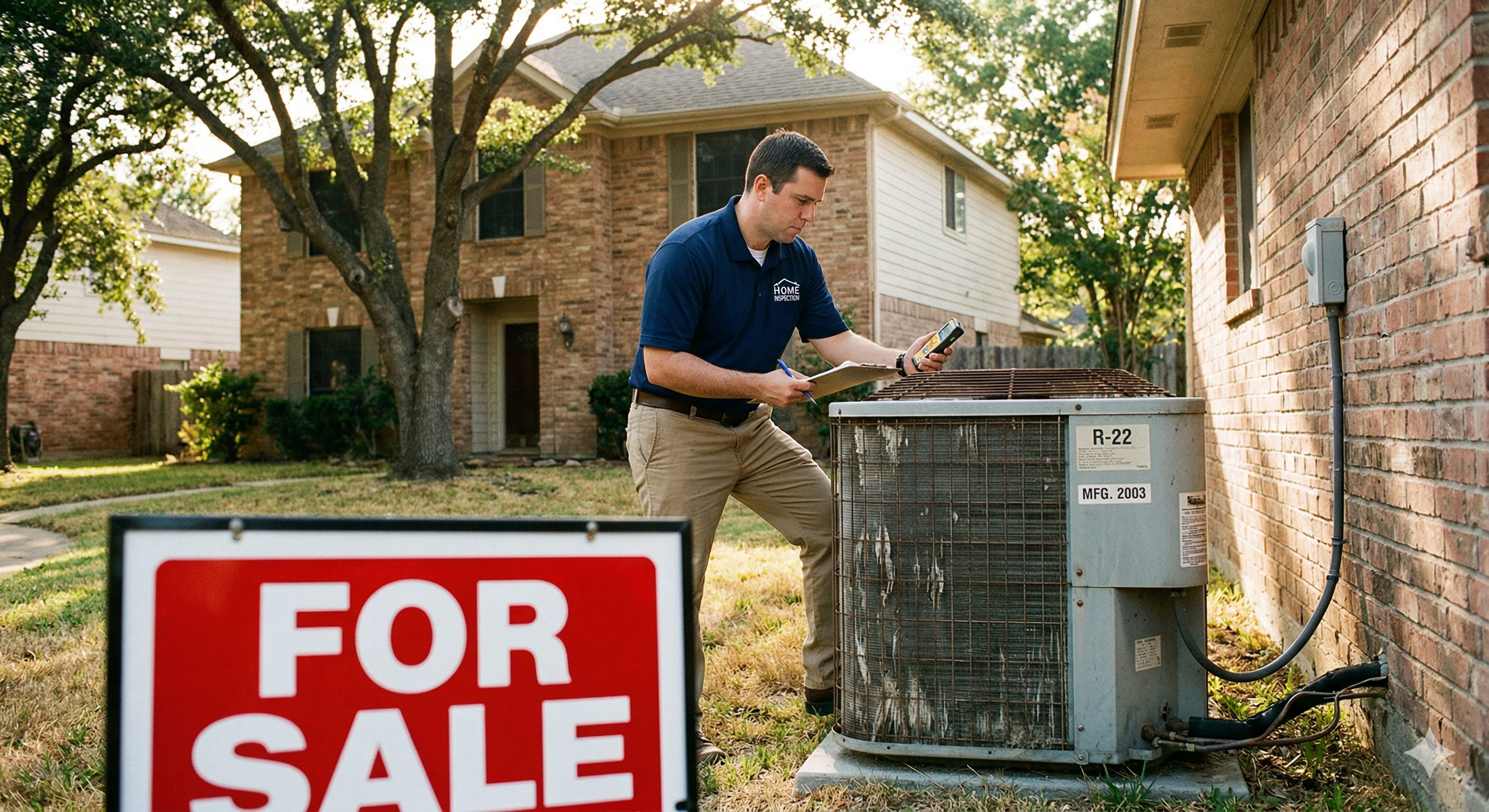
Selling a home in the Greater Houston area is a high-stakes game, and the stakes get even higher when you’re dealing with an aging HVAC system. If you have lived through a single July in Texas, you know that air conditioning isn’t a luxury—it’s a survival tool. When a potential buyer walks into a showing and feels even a hint of humidity or hears a clanking compressor, their internal "repair calculator" starts spinning. They aren't just looking at your granite countertops anymore; they are wondering if they’ll be stuck in a 90-degree bedroom two weeks after moving in.
If you’ve been losing sleep wondering how to handle your 15-year-old unit, you might be tempted to just sell my house fast Houston and let the next owner deal with the headache. It’s a valid strategy, especially in a market where "as-is" sales are common. However, understanding how a furnace or condenser affects your bottom line is crucial before you plant that "For Sale" sign in the yard. In this guide, we’re going to break down the technical red flags, the financial implications of repair versus replacement, and how to navigate the inevitable inspection hurdles that come with a Houston summer.
Why the Houston Climate Is an HVAC Killer
In cooler climates, a furnace might last thirty years without breaking a sweat. In Southeast Texas, our HVAC systems are the marathon runners of the appliance world. We don’t just have "warm" days; we have six months of oppressive heat coupled with humidity levels that make the air feel like a damp wool blanket. This environment puts a physical strain on mechanical components that most manufacturers simply don't account for in their standard "average lifespan" estimates.
The Humidity Factor and Evaporator Coils
Houston’s humidity doesn’t just make you miserable; it forces your AC to work twice as hard. The evaporator coil’s job is to pull moisture out of the air. In our region, these coils are constantly bathed in condensation. This leads to a phenomenon called "pitting corrosion" or "formicary corrosion." Over time, tiny holes develop in the copper, leading to refrigerant leaks. If your unit is more than a decade old, there’s a high probability that your coils are already thinning out, making it a prime target for a skeptical home inspector.
The Salt Air Struggle
If your property is on the south side of town—think Pearland, Friendswood, or closer to the coast—you have the added challenge of salt air. Salt is incredibly abrasive to the aluminum fins on your outdoor condenser. It eats away at the metal, reducing the unit's ability to shed heat. An HVAC system in Galveston or Clear Lake often has a lifespan significantly shorter than one in Conroe or The Woodlands simply because of the chemistry of the air. When selling, you need to be aware that buyers moving from inland to the coast might not realize this, but their inspectors certainly will.
Technical Red Flags: How to Spot a Failing System
Before you list your home, you need to perform an honest audit of your equipment. You don't need a technician's license to spot the most common signs that your system is on its last legs. Knowing these "tells" allows you to address them proactively rather than being blindsided during the option period.
Unusual Noises and "Short Cycling"
Does your outdoor unit sound like a jet engine taking off? Or perhaps it makes a loud "thunk" every time it kicks on? Grinding, squealing, or banging sounds usually point to a failing blower motor or a dying compressor. Another major red flag is short cycling—when the AC turns on and off every few minutes. This is often a sign that the system is overheating or that the evaporator coils are freezing up. To a buyer, these sounds are the soundtrack to a $10,000 bill.
Inconsistent Temperatures and Humidity Spikes
Walk through your house. Is the master bedroom five degrees warmer than the kitchen? While this can sometimes be an insulation or ductwork issue, it’s often a sign that the compressor can no longer maintain the necessary pressure to cool the entire home. Furthermore, if the air feels "heavy" or "sticky" despite the thermostat being set to 72, the system is failing its secondary job of dehumidification. According to the Department of Energy, an inefficient HVAC system can account for nearly half of a home's energy use, a fact that modern, budget-conscious buyers are hyper-aware of.
The Age Factor and the R-22 Problem
Locate the manufacturer's plate on your outdoor unit. If your system was manufactured before 2010, it likely uses R-22 refrigerant (often called Freon). The EPA has phased out R-22 because of its ozone-depleting properties. This means that if an old R-22 system develops a leak, the cost to recharge it is astronomical—if you can even find the gas. Most inspectors will flag an R-22 unit as "end of life" regardless of how well it’s currently cooling, simply because it cannot be economically repaired.
To Replace or Not to Replace: The Seller’s Dilemma
This is the most common question I get from Houston sellers. Should you drop $8,000 to $12,000 on a new 16-SEER unit before you list, or should you just hope for the best? The answer depends entirely on your financial goals and the specific neighborhood market.
When Replacement Makes Sense
If you are selling a "turn-key" luxury home in a neighborhood like Memorial or River Oaks, an old HVAC is a massive blemish. Buyers in this price bracket expect perfection. Installing a new, high-efficiency system allows you to market the home as "energy-efficient," which is a huge selling point in Texas. It also eliminates the risk of a deal falling through during the inspection. You might not get a dollar-for-dollar return on the investment, but you will likely sell the house faster and closer to your asking price.
When to Sell "As-Is" or Offer a Credit
If your home is a starter house or a fixer-upper, the math changes. Many buyers in the $250,000 to $350,000 range are looking for a deal. They might be willing to take on an older HVAC if the price is right. Instead of replacing the unit, you can offer a "buyer's credit" at closing. This means you agree to knock a specific amount off the price or contribute to their closing costs specifically for a future HVAC replacement. This keeps your cash in your pocket until the house actually sells.
The Danger of the "Quick Fix"
Some sellers try to "limp" the system across the finish line by adding a quick shot of refrigerant right before a showing. Be warned: this is a temporary fix that an inspector will likely catch. In Texas, the Texas Real Estate Commission (TREC) requires sellers to disclose known defects. If you know the system has a leak and you hide it, you could be liable for repairs long after the sale is final. It is always better to be honest and negotiate than to risk a post-closing lawsuit.
Navigating the Houston Home Inspection
The inspection is usually the most stressful part of the selling process. In Houston, the HVAC section of the report is often the longest. Understanding what the inspector is looking for can help you prepare your defense.
Differential Temperature (The "Delta T")
A home inspector will stick a thermometer into your supply and return vents. They are looking for a temperature difference (Delta T) of between 15 and 20 degrees. If your system is only putting out a 10-degree difference, the inspector will label the system as "deficient." Before you list, change your air filters and clean your outdoor condenser coils with a garden hose. These two simple tasks can sometimes improve your Delta T enough to pass the test.
The Condensate Drain Line
In our humid climate, an AC produces gallons of water every day. If your primary drain line clogs, the water flows into a secondary pan. If that pan is full of rusted water, it’s a sign of poor maintenance. Inspectors will check to see if you have a "float switch" installed—a safety device that shuts off the AC if the drain clogs. If you don't have one, it’s a $50 fix that can prevent a "red flag" on your report.
Ductwork and Air Flow
It’s not just about the machine; it’s about the delivery. Houston attics are notoriously hot, often reaching 140 degrees. If your silver flex ducts are kinked, torn, or have "sweat" marks, the inspector will note it. Rodents often find their way into Houston attics and chew through ductwork, leading to cooled air blowing into your attic instead of your living room. A quick trip into the attic to tape up any loose connections can save you a lot of grief during negotiations.
Marketing Your Home with an Older HVAC
If you decide not to replace the system, you have to be strategic about how you present the home. You want to shift the focus from the age of the unit to the overall value of the property.
Provide a Maintenance History
If you have had your system serviced twice a year by a licensed Houston HVAC company, show the receipts! A well-maintained 12-year-old unit is often more reliable than a 5-year-old unit that has been ignored. Providing a folder full of service records proves to the buyer that you’ve been a responsible steward of the home. It builds trust, and trust is the most valuable currency in a real estate transaction.
Offer a Home Warranty
One of the most effective ways to ease a buyer's mind is to provide a one-year home warranty that specifically covers the HVAC system. These typically cost between $500 and $800. If the AC dies three months after the buyer moves in, they can get it repaired or replaced for the cost of a small service fee. This "insurance policy" often costs a fraction of a full replacement but provides enough peace of mind to keep a deal moving forward.
Be Realistic with Your Pricing
You cannot expect to get "top of market" pricing if your two biggest mechanical systems (roof and HVAC) are at the end of their lives. Work with your agent to look at "comps" (comparable sales) in your neighborhood. If your neighbor’s house sold for $400,000 with a brand-new AC, and yours is 18 years old, you should probably list closer to $390,000. By pricing in the defect, you attract buyers who are looking for a deal and are prepared for future maintenance.
FAQ: Selling a Houston Home with an Aging HVAC
Can a buyer get a mortgage if the HVAC doesn't work?
For most conventional loans, the HVAC must be "functional." If it’s old but still blowing cold air, you’re usually fine. However, FHA and VA loans have stricter requirements. If the system cannot maintain a healthful temperature in the home, the lender may require a repair or replacement before they will fund the loan.
What is the average cost of a full HVAC replacement in Houston?
While prices vary based on the size of your home and the efficiency rating (SEER2), a typical 3-ton to 5-ton system in the Houston area usually ranges from $7,000 to $13,000. This includes the outdoor condenser, the indoor evaporator coil, and the furnace or air handler.
Should I just top off the Freon before a showing?
While tempting, this is generally a bad idea. First, R-22 is incredibly expensive. Second, it doesn't fix the underlying leak. If the buyer's inspector sees a frozen coil or a low Delta T, they will know exactly what you did. It's better to spend that money on a professional inspection and a minor repair that you can document.
Does a home warranty actually cover an old AC?
Yes, most reputable home warranties will cover an older system as long as it is in good working order at the time the policy starts. This is why having a clean inspection report is so important. If the inspector says it's working on the day of the sale, the warranty company generally has to honor the coverage.
Is it better to replace the furnace or the condenser?
In Houston, the condenser (the outdoor unit) and the evaporator coil usually fail first because they do the heavy lifting for cooling. However, if you are replacing the cooling components, it's often more cost-effective to replace the furnace at the same time. A "matched system" operates much more efficiently and comes with a better manufacturer's warranty.
How much does an old HVAC actually lower a home's value?
There isn't a fixed percentage, but buyers will typically try to negotiate a price drop equal to the cost of a new system plus a "hassle factor." If a new AC costs $10,000, don't be surprised if a buyer asks for a $12,000 to $15,000 reduction to account for their time and the risk of taking on the project.
Conclusion: Weighing Your Options in the Bayou City
At the end of the day, selling a house with an old HVAC in Houston is about managing risk and expectations. If you have the liquid cash and want the highest possible sales price, replacement is your best bet. It removes the largest hurdle in the transaction and makes your home stand out in a crowded market.
However, if you need to move quickly or don't want to deal with contractors, selling to an investor or offering a substantial credit is a perfectly viable path. The key is transparency. By being upfront about the system's age and providing maintenance records or a home warranty, you can navigate the heat of the Houston market without getting burned. Whether you decide to fix it or list it "as-is," understanding the technical and financial reality of your HVAC system puts the power back in your hands.

How Absolute Properties Helps Houston Sellers
Absolute Properties makes it easy for Houston homeowners to sell fast - even when facing challenges like financial difficulties, inherited properties, troublesome tenants, or repairs.
If you’re thinking, “I need to sell my house fast in Houston…” We buy houses in Houston in any situation or condition!
As-is, fast cash offers with clear terms
Many closing costs covered; no realtor commissions in most cases
You choose the closing date (as little as 7 days, case-dependent)
Coordination with experienced title company for a compliant sale process
Call or text: (713) 230-8059
Email address: info@absolutepropertieshtx.com
Share your street address and timeline for a free consultation and a straightforward number no pressure.
Know someone else who needs to sell? We Also Pay a $1000 Referral Fee!
Helpful Houston Blog Articles
How To Sell Your House in Houston Without Sinking Any More Money Into It
6 Tips For First Time Home Sellers in Houston
Hiring an Agent Vs. A Direct Sale to Absolute Properties When Selling Your House in Houston
Who Pays Closing Costs in Texas
The True Costs of An FSBO Listing for Houston Investors
What To Do With Your Expired Listing in Houston
Also check out our Free Guides & Education & FAQ for more education on how to sell your house for cash quickly to a local home buyer.