What Notices Do You Receive Before Foreclosure in Texas?
Reviewed by Mark Lee
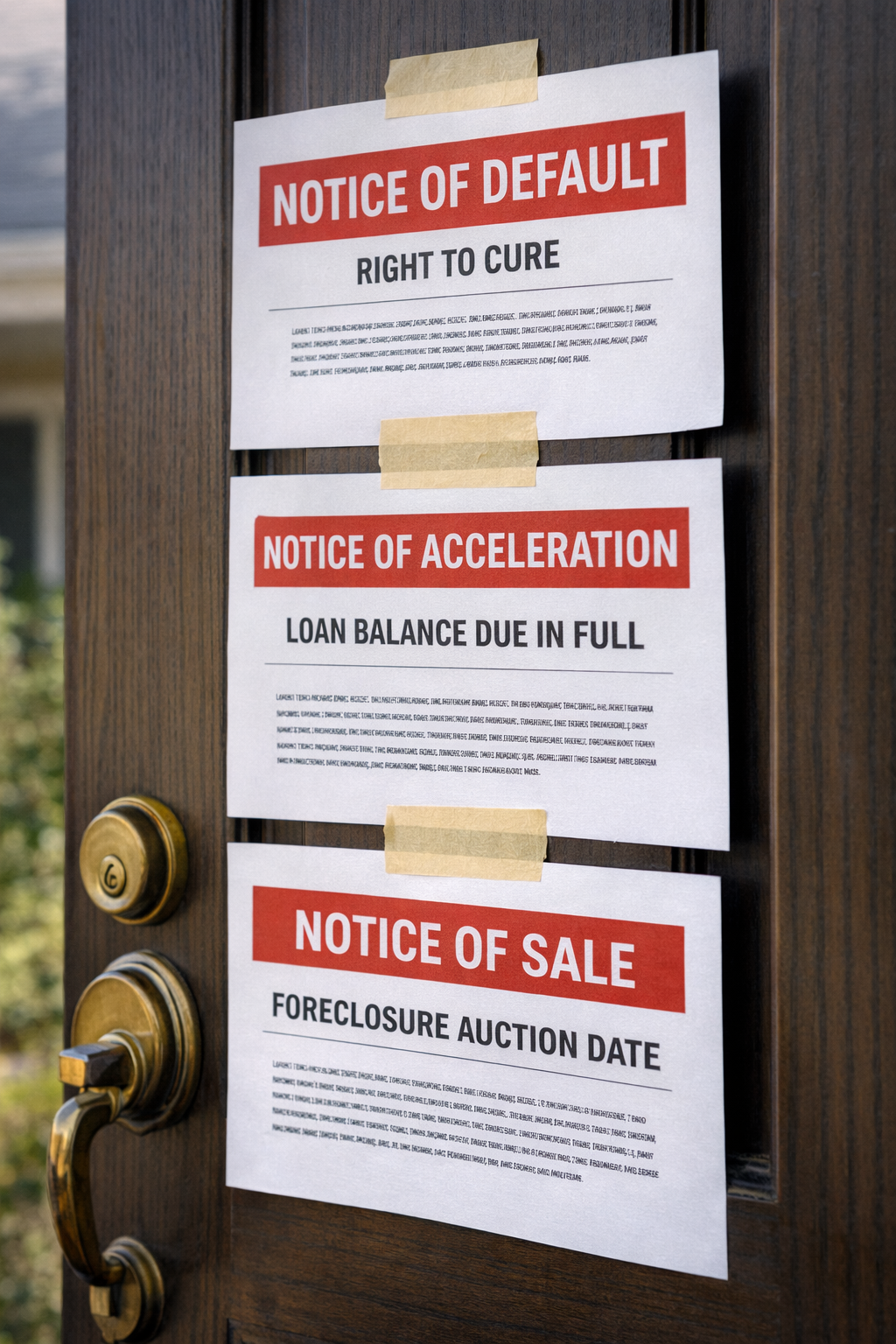
When homeowners fall behind on mortgage payments, foreclosure in Houston, Texas does not happen without warning—but the notices come quickly and follow strict legal rules. Many property owners in Houston are surprised by how fast the process moves because Texas uses a non-judicial foreclosure system, meaning the courts are usually not involved. Unlike other states where a judge must oversee the proceedings, the Texas system is designed to be efficient and notice-driven, putting the burden of action squarely on the homeowner.
Before a home can be sold at a foreclosure auction, lenders must send specific notices in a specific order. Each notice serves a legal purpose and signals how close the homeowner is to foreclosure. Understanding these notices helps homeowners recognize where they are in the process and why deadlines matter. Some homeowners choose to exit the situation early by working with we buy houses Houston solutions to avoid having a foreclosure sale on their public record, but regardless of the path taken, the notices below are required under Texas law before foreclosure can occur.
This guide explains every notice you receive before foreclosure in Texas, what each one means, and when it arrives.
Late Payment Notices and Collection Letters
The first communications homeowners receive are not legal foreclosure notices. These are standard lender collection efforts that begin after a missed mortgage payment. Most Texas deeds of trust include a grace period—usually 15 days—before a payment is officially considered late. Once that grace period passes, the servicer’s "loss mitigation" department begins a series of increasingly urgent communications.
The Delinquency Phase
These notices typically include:
Late payment reminders: Often sent via mail or email around day 16 of the month.
Past-due balance statements: Monthly statements that now include late fees (usually 4–5% of the payment).
Phone calls or emails from the loan servicer: These are meant to verify if you are still living in the property and to ask when the payment will be made.
The Federal 120-Day Rule
Under the Real Estate Settlement Procedures Act (RESPA), most mortgage servicers are prohibited by federal law from starting the formal foreclosure process until a homeowner is more than 120 days delinquent. During this time, you will receive "breach letters" or "demand letters" that are not yet the formal Texas state notices, but they indicate the loan is delinquent. Continued nonpayment leads to formal default under the mortgage agreement, at which point the file is handed over to a foreclosure attorney or a Substitute Trustee.
At this stage, the communications are designed to encourage you to reach out for a "repayment plan" or "forbearance." If you ignore these, the lender will eventually stop sending "reminders" and start sending the legal notices that trigger the actual foreclosure timeline.
Notice of Default (Demand Letter)
The Notice of Default is the first legally required foreclosure notice in Texas. According to Texas Property Code Section 51.002, if the property is the borrower's primary residence, the lender must provide a specific window for the homeowner to fix the problem before the loan can be called due in full.
What the Notice Communicates
This notice informs the homeowner that:
The loan is officially in default: You have breached the terms of the contract by failing to make payments.
Specific payments are past due: It provides an itemized list of principal, interest, and accumulated late fees.
Foreclosure may occur if the default is not cured: It serves as a formal warning of the impending legal action.
The 20-Day Cure Period
Texas law requires lenders to give homeowners at least 20 days to cure the default. This means the lender must give you a chance to pay the total past-due amount to bring the loan current. The notice must be sent by certified mail, return receipt requested, and clearly state the amount needed to "reinstate" the loan. This notice is critical because foreclosure cannot proceed until this cure period expires. If you pay the amount requested within those 20 days, the lender must accept it and restore the loan to good standing. If you do not pay, the lender moves to the next step: acceleration.
Notice of Intent to Accelerate
In many cases, lenders include a Notice of Intent to Accelerate with or shortly after the Notice of Default. Sometimes they are combined into a single document known as a "Notice of Default and Intent to Accelerate."
The Warning of Full Repayment
This notice explains that:
The lender plans to demand full repayment of the loan: This is the warning that the "acceleration clause" in your mortgage contract is about to be triggered.
Acceleration will occur if the default is not resolved: If the 20-day window closes without payment, the option to just "pay the arrears" vanishes.
Foreclosure will follow acceleration: It outlines the next step in the legal chain.
Acceleration changes the loan from past-due payments to the entire remaining balance being due immediately. While it does not schedule the sale, it moves the process forward legally. It signals to the homeowner that the bank is moving from a collection mindset to a liquidation mindset. This is often the point where homeowners realize they cannot simply send a single missed payment to stop the process; the lender is now looking for the whole debt.
Notice of Acceleration
Once the cure period ends and the homeowner has not paid or reached a loss mitigation agreement (like a loan modification), the lender proceeds to the next phase. The homeowner receives a formal Notice of Acceleration.
The Point of No Return
This notice confirms:
The loan has been accelerated: The bank has officially called the debt due.
The full loan balance is now due: You no longer owe $5,000 in back payments; you now owe the full $250,000 (or whatever your balance is).
The lender may schedule a foreclosure sale: The legal barriers to selling the home have been removed.
Acceleration is a major legal step. At this point, the lender no longer seeks monthly payments but repayment of the entire debt. In many cases, once acceleration has occurred, the bank's attorney will refuse to accept anything less than a full payoff or a completed short sale. After acceleration, the lender can issue the most public of all notices: the Notice of Sale.
Notice of Foreclosure Sale
The Notice of Sale is the final notice before foreclosure occurs. This is the document that makes the situation a matter of public record, often resulting in a flood of mail from investors and "foreclosure rescue" companies.
Requirements Under Texas Law
Texas law is very specific about how this notice must be handled to ensure the sale is valid:
At least 21 days’ notice before the sale: The notice must be issued at least three weeks before the auction.
Written notice mailed to the homeowner: Sent via certified mail to each person obligated on the debt.
Public posting at the county courthouse: The notice must be physically tacked to a board or placed in the clerk's office.
Filing with the county clerk: It is officially recorded in the county’s real property records.
The notice includes the auction date, time, location, and property description. In Texas, foreclosure sales are held on the first Tuesday of each month between 10:00 AM and 4:00 PM at the county courthouse (or a designated location nearby). Once this notice is issued, foreclosure is imminent unless the loan is reinstated through a special agreement, the property is sold to a third party, or the homeowner files for bankruptcy.
Notice to Vacate (After Sale)
Although technically sent after foreclosure, many homeowners confuse this notice with pre-foreclosure documents. It is important to realize that the foreclosure sale itself does not automatically grant the new owner the right to physically remove you that same day. However, it does end your legal ownership.
The Demand for Possession
A Notice to Vacate is sent by the new owner after the foreclosure sale and demands possession of the property.
If the bank wins the auction: They may offer "cash for keys" (money to move out) to get you to move out peacefully without a messy eviction.
If an investor wins: They usually send a 3-day Notice to Vacate. This is not a foreclosure notice but a step toward eviction if the occupants do not leave voluntarily. If you receive this, the legal ownership of the home has already changed hands, and you are now technically a "tenant at sufferance."
How Texas Foreclosure Notices Differ From Other States
Texas is unique in the world of real estate law because of its emphasis on speed and the "Trustee" system. Because Texas is a non-judicial state, the timeline is significantly compressed compared to states like Florida or New York.
Key Differences
Foreclosure is typically non-judicial: There is no judge, no jury, and no court hearing required to take your home if you miss payments on a standard mortgage.
Court hearings are not required: Unless you have a Home Equity Loan (Texas 50(a)(6)), the lender doesn't need to file a lawsuit to foreclose.
Notice timelines are shorter than many states: In some states, foreclosure can take years. In Texas, it can happen in a few months from the time the legal notices start.
Homeowners do receive multiple notices, but the law prioritizes speed. Missing a deadline by even one day can move the process forward with little room for delay. For more information on the specific nuances of Texas real estate law, you can visit the Texas Real Estate Commission (TREC).
Timeline of Foreclosure Notices in Texas
While timing varies by lender, the notice sequence usually follows this order based on the number of days past due:
Days 1–30: Late payment notices and collection letters.
Days 31–120: Continued collection and federal "Early Intervention" notices.
Day 121+: Notice of Default sent (this starts the 20-day cure period).
Day 142+: Notice of Intent to Accelerate is sent or finalized.
Day 145+: Notice of Acceleration and Notice of Foreclosure Sale (21-day notice) are issued.
First Tuesday of the next month: Foreclosure Auction.
From the first missed payment to the foreclosure sale, the process often takes 6 months due to federal rules, but the "legal" Texas portion happens in just the last 41–60 days. This means the pressure intensifies significantly toward the end.
Official Texas Foreclosure Notice Laws
For homeowners who want to review the statutory requirements, these resources explain notice rules in detail. Knowing the law can help you identify if a lender has missed a required step.
Texas Property Code – Foreclosure Procedures: Chapter 51 contains the "meat" of the laws regarding how notices must be sent and sales conducted.
HUD Housing Counseling and Foreclosure Information: Find a Counselor to get free professional advice on how to respond to these notices.
Both provide authoritative, non-commercial explanations of foreclosure requirements.
FAQ: Frequently Asked Questions About Texas Foreclosure Notices
How many notices are required before foreclosure in Texas?
At minimum, Texas law requires two primary notices for a residential homestead: the Notice of Default (20-day cure) and the Notice of Sale (21-day notice). However, lenders almost always send a Notice of Acceleration as well to fulfill their contractual obligations and demand the full balance.
Can foreclosure happen without written notice?
No. Texas law requires written notice via certified mail. If a lender sells your house without following the mailing requirements of the Texas Property Code, the sale may be "voidable," and you could potentially sue for wrongful foreclosure to have the sale set aside.
Do notices come by mail or email?
Foreclosure notices must be sent by mail (specifically certified mail). While some lenders may also send electronic copies or post them to your online portal for convenience, the physical certified mail is what satisfies the legal requirement for a non-judicial sale in Texas.
What is the most important foreclosure notice?
The Notice of Default is arguably the most important for saving the home because it represents your final chance to pay the arrears (the missed payments) rather than the whole loan. The Notice of Sale is the most critical for your move-out timeline because it sets a hard date for the auction.
Can foreclosure proceed if I never open the mail?
Yes. Under Texas law, notice is considered "given" when the lender deposits the certified mail in the USPS receptacle, addressed to your last known address. Refusing to sign for the mail or leaving it unopened does not stop the clock or invalidate the foreclosure.
Final Explanation
Before foreclosure in Texas, homeowners receive a series of legally required notices that move the process forward step by step. These notices begin with default warnings, progress through acceleration, and end with a public Notice of Sale. Because Texas foreclosures move quickly and do not require court approval, understanding each notice—and when it arrives—is essential.
Recognizing where you are in the notice sequence helps explain why timing matters so much under Texas law. If you are receiving these notices, the most important thing you can do is engage with your lender or a real estate professional immediately. In the Texas system, the time between receiving your first legal notice and losing the home is often shorter than you expect.

How Absolute Properties Helps Houston Sellers
Absolute Properties makes it easy for Houston homeowners to sell fast - even when facing challenges like financial difficulties, inherited properties, troublesome tenants, or repairs.
If you’re thinking, “I need to sell my house fast in Houston…” We buy houses in Houston in any situation or condition!
As-is, fast cash offers with clear terms
Many closing costs covered; no realtor commissions in most cases
You choose the closing date (as little as 7 days, case-dependent)
Coordination with experienced title company for a compliant sale process
Call or text: (713) 230-8059
Email address: info@absolutepropertieshtx.com
Share your street address and timeline for a free consultation and a straightforward number no pressure.
Helpful Houston Blog Articles
How To Sell Your House in Houston Without Sinking Any More Money Into It
6 Tips For First Time Home Sellers in Houston
Hiring an Agent Vs. A Direct Sale to Absolute Properties When Selling Your House in Houston
Who Pays Closing Costs in Texas
The True Costs of An FSBO Listing for Houston Investors
What To Do With Your Expired Listing in Houston
Also check out our Free Guides & Education & FAQ for more education on how to sell your house for cash quickly to a local home buyer.