Reviewed by Mark Lee
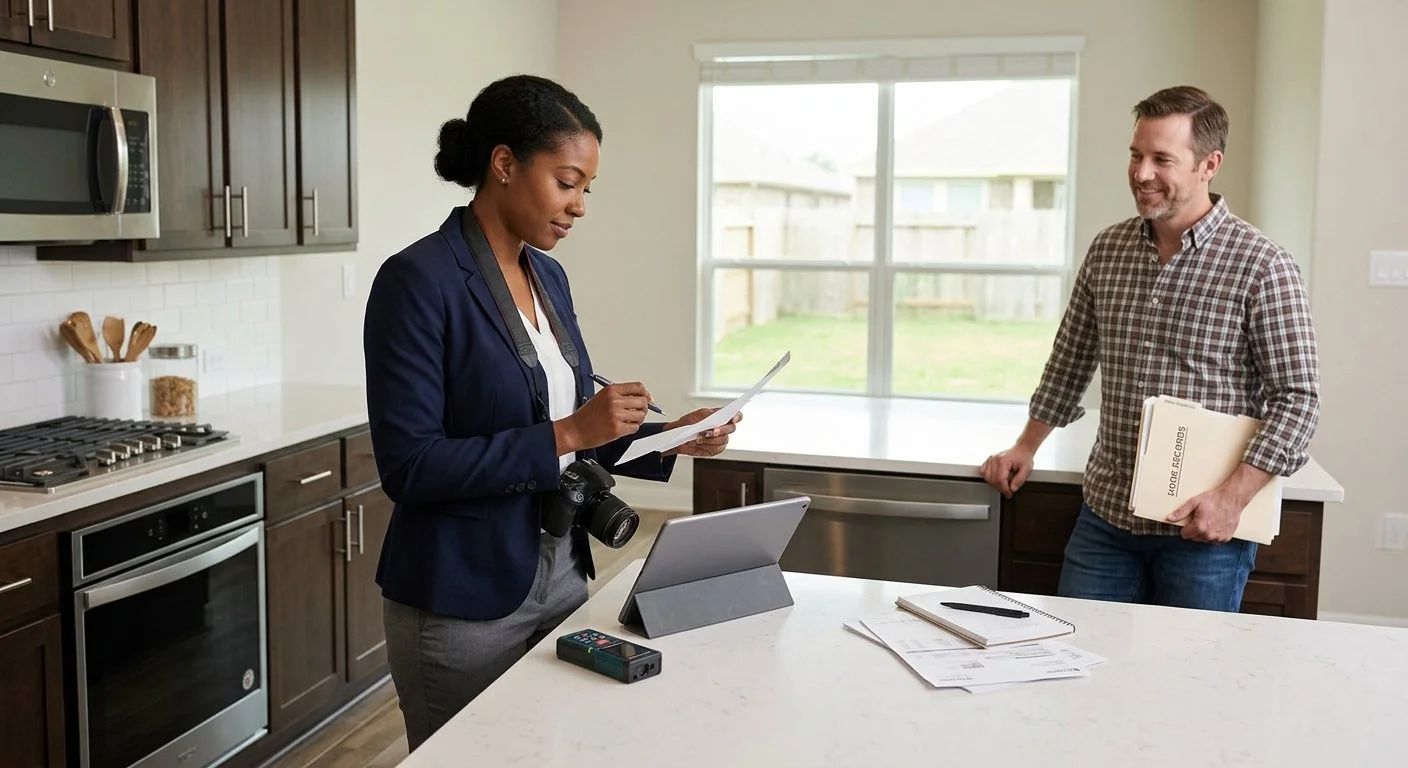
Figuring out what your property is actually worth in the Bayou City can feel like trying to hit a moving target in the middle of a Gulf Coast thunderstorm. Between rapid neighborhood gentrification, fluctuating interest rates, and Texas’s unique property laws, relying on a generic online algorithm won't give you the real picture. Whether you are refinancing your mortgage, settling an estate, challenging a skyrocketing Harris County tax assessment, or preparing to list on the open market, a formal valuation puts cold, hard data in your corner. If you want to skip the traditional listing process altogether and work directly with Cash Home Buyers Houston, knowing your baseline equity is still the smartest first move you can make.
Getting an accurate valuation in Southeast Texas requires a slightly different playbook than in most other states. Because Texas is a non-disclosure state, sales prices aren't plastered across public county websites for just anyone to scrape. That makes a licensed, boots-on-the-ground appraiser essential—and it means you need to know how to prepare for their visit. Here is the exact, step-by-step process to get your house appraised in Houston without leaving money on the table.
Step 1: Define Your Purpose and Understand the Texas Non-Disclosure Advantage
Before you pick up the phone or pull out your credit card, you need to nail down why you need the appraisal. Not all valuations are created equal, and telling an appraiser the wrong purpose can result in a report that your lender, attorney, or tax board won't accept.
If you are refinancing or removing Private Mortgage Insurance (PMI), you cannot hire the appraiser yourself. Federal regulations require your mortgage lender to order the report through an independent Appraisal Management Company (AMC) to prevent bias. On the other hand, if you are pricing your home for a private sale, dividing assets in a divorce, settling a probate estate, or protesting your annual property taxes with the Harris Central Appraisal District (HCAD), you are in the driver's seat and can hire a professional directly.
Understanding how Texas real estate operates will also help you appreciate what you are paying for. Because Texas is a non-disclosure state, final closing prices are kept private between the buyer, seller, and title company. Online estimators like Zillow or Redfin are essentially guessing based on public tax assessments and asking prices, which often miss the mark by tens of thousands of dollars in neighborhoods like The Heights, Montrose, or Katy. A licensed Houston appraiser pays for direct access to the Houston Association of Realtors (HAR) Multiple Listing Service (MLS), giving them the actual sold data needed to establish true market value.
Step 2: Vet and Hire a State-Certified Houston Appraiser
Once you confirm that you are ordering the appraisal yourself, don't just pick the first name that pops up on a search engine. Houston is a massive, sprawling metro area where property values can shift dramatically from one block to the next. A property inside the 610 Loop behaves very differently on paper than a master-planned home out in Cypress, Sugar Land, or Pearland.
Start by verifying credentials through the Texas Appraiser Licensing and Certification Board (TALCB), which regulates real estate appraisers across the state. You want a "Certified Residential Real Estate Appraiser" who actively works within your specific submarket. When you call around for quotes, ask a few pointed questions to separate the seasoned pros from the generalists:
Neighborhood familiarity: How many homes have you appraised in my specific zip code over the last six months?
Property type experience: Have you handled properties similar to mine (e.g., historic bungalows, townhomes with zero lot lines, acreage properties, or homes with recent major renovations)?
Turnaround time and fee structure: What is your current lead time from inspection to final PDF delivery, and is your quote an all-inclusive flat fee?
Expect to pay anywhere from $450 to $750 for a standard single-family home appraisal in the Greater Houston area. If you own a sprawling custom estate in Memorial, a waterfront property in Clear Lake, or a multi-family duplex, fees can easily climb above $1,000 due to the complexity of finding comparable sales.
Step 3: Tackle Strategic Prep Work and Curb Appeal
An appraiser isn't a home inspector—they aren't going to crawl into your attic with a thermal camera or run a scope down your main sewer line. However, they are trained to evaluate the overall condition, livability, and market appeal of your property on a standardized scale (usually C1 through C6). Visible neglect drags your condition rating down, which directly reduces the dollar adjustments made against comparable homes.
Spend a weekend knocking out the high-visibility, low-cost items that signal a well-maintained home. Mow the St. Augustine grass, edge the sidewalks, trim back overgrown live oaks or palm fronds, and lay down fresh mulch in the flower beds. Inside, focus on basic functionality and cleanliness:
Test every mechanical system: Make sure your HVAC blows ice-cold air—in Houston, a sluggish AC unit is an immediate red flag—and verify that all ceiling fans, light switches, and faucets work properly.
Fix minor deferred maintenance: Replace burnt-out bulbs, patch small drywall dings, fix running toilets, and re-caulk around tubs and kitchen backsplashes.
Ensure clear access: Appraisers must physically measure the exterior perimeter of your home and photograph every interior room, the garage, and the backyard. Unlock side gates, secure pets, and move boxes away from walls so they can take accurate laser measurements.
Check safety requirements: If your appraisal is for an FHA or VA loan, ensure smoke detectors and carbon monoxide alarms are installed and working, and verify there is no peeling exterior paint on homes built before 1978.
You don't need to stage the home like an HGTV showcase, nor do you need to do a deep spring clean. Just make the space uncluttered, bright, and easy to walk through.
Step 4: Build a Houston-Specific "Brag Sheet" for the Appraiser
Never assume an appraiser will automatically notice every dollar you poured into your house behind the walls. While granite countertops and new LVP flooring are obvious, high-value infrastructure upgrades—the exact things Houston buyers care about most—are easy to miss during a 30-minute walkthrough.
Put together a clean, one-page summary sheet and hand it to the appraiser when they arrive. Keep it strictly factual, stick to bullet points, and attach receipts or permits if you have them handy. In Southeast Texas, the upgrades that carry the most weight include:
Roof and exterior protection: Note the exact year you installed a new architectural shingle or standing-seam metal roof, and mention windstorm certifications if you are closer to the coast.
HVAC and ductwork: List the installation date, tonnage, and SEER rating of new air conditioning condensers, furnaces, and replaced attic ductwork.
Plumbing and electrical overhauls: Highlight if you repiped old galvanized or polybutylene pipes with PEX, upgraded to a 200-amp electrical panel, or installed a tankless water heater.
Foundation and drainage: If you had foundation piers installed, include the transferable lifetime warranty and engineer's report. Mention French drains, sump pumps, or whole-home standby generators (like a Generac), which hold real value in a hurricane-prone region.
Recent renovations: Break down kitchen and bathroom remodels by year and scope, distinguishing between cosmetic refreshes and down-to-the-studs rebuilds.
Appraisers love this kind of documentation because it saves them research time and gives them hard proof to justify a higher condition rating to their underwriting reviewers.
Step 5: Navigate the On-Site Walkthrough Like a Pro
On the day of the appointment, plan to be home—or have your real estate agent there—to greet the appraiser, hand over your upgrade sheet, and provide access to locked spaces. Once you have answered their initial questions, step back and let them work.
Following an appraiser from room to room while explaining why you think your house is worth $500,000 usually backfires. Appraisers are bound by strict ethics rules under the Uniform Standards of Professional Appraisal Practice (USPAP) to remain completely impartial. Hovering slows them down and can come across as an attempt to pressure their valuation.
Instead, let them know you will be out on the patio or in the home office if they need anything, and let them complete their loop. A typical Houston walkthrough takes anywhere from 20 to 45 minutes depending on the square footage and layout complexity. Before they leave, politely ask when you can expect the completed report so you can plan your next steps accordingly.
Step 6: Understand How the Appraiser Calculates Your Value
After leaving your driveway, the appraiser heads back to their office to do the heavy analytical lifting. They don't just pull a price-per-square-foot average out of thin air; they rely primarily on the Sales Comparison Approach.
To build this analysis, the appraiser searches HAR MLS for at least three to six recently closed sales—ideally within the last 90 to 180 days—that closely match your home's square footage, age, lot size, construction style, and neighborhood boundaries. In Houston, crossing a major thoroughfare like Westheimer, I-10, or Highway 290, or crossing into a different school district like Katy ISD versus Cy-Fair ISD, can completely change the buyer pool. Good appraisers keep comps tightly clustered within your immediate subdivision whenever possible.
Once they select the best comparable sales, they make dollar adjustments to account for differences between those properties and yours:
If a comparable home sold for $420,000 but has a swimming pool and you don't, the appraiser subtracts the market value of that pool (often $20,000 to $35,000 in Houston, rather than the $80,000 it cost to build) from the comp's price.
If your home has 300 more square feet of living space and a newly renovated primary bath, the appraiser adds positive value adjustments to the comparable properties to bring them in line with your house.
They also consider the Cost Approach (what it would cost to rebuild your home from scratch today, minus depreciation, plus land value) and, for rental properties, the Income Approach. They reconcile all of this data into a final opinion of market value, backed by photos, floor plan sketches, and flood zone maps.
Step 7: Review the Report and Handle a Low Valuation
Within three to seven business days after the walkthrough, you (or your lender) will receive the final Uniform Residential Appraisal Report (URAR). Don't just flip to the bottom of page two to look at the final number—read through the entire document carefully to verify its accuracy.
Check the gross living area (GLA) square footage against your county records, verify the bedroom and bathroom counts, and confirm that your major upgrades were noted in the condition commentary. Look closely at the comparable sales grid to see if the appraiser missed a closer, more relevant sale in your subdivision or accidentally pulled comps from an inferior pocket nearby.
If the valuation comes in lower than you expected, you aren't necessarily stuck with it. If you ordered the appraisal privately, you can reach out directly to the appraiser with factual corrections and ask them to review additional comps. If the appraisal was ordered through a mortgage lender, you can ask your loan officer to submit a formal Reconsideration of Value (ROV). To succeed with an ROV, leave emotion out of it and submit objective evidence:
Point out factual errors: Wrong square footage, missed half-bath, or misclassified lot size.
Provide better comps: Submit three recent closed sales from the same neighborhood that share your home's style and condition, which the appraiser overlooked.
Include permit records: Show official city permits proving your garage conversion or addition is legal, heated, and cooled living space.
According to the Consumer Financial Protection Bureau (CFPB), borrowers have the legal right to receive a copy of the appraisal report promptly and challenge errors or bias through their lender's review process. Even if the number holds firm, you now have an objective baseline to renegotiate a purchase price, adjust your listing strategy, or explore alternative selling options without guessing what the market will bear.
Frequently Asked Questions
How much does a house appraisal cost in Houston?
For a standard single-family home in the Greater Houston area, expect to pay between $450 and $750. Complex properties—such as luxury custom homes in River Oaks or Memorial, acreage properties in Waller or Montgomery County, or waterfront homes—typically range from $800 to $1,500+ due to the extra research required.
How long does the appraisal process take from start to finish?
Once you book an appraiser, getting them out to the property usually takes 2 to 5 business days, depending on seasonal demand. The on-site walkthrough takes less than an hour, and the final written report is typically delivered 3 to 7 business days after the inspection.
Can I use my Harris Central Appraisal District (HCAD) value instead of hiring an appraiser?
No. Your annual HCAD notice reflects a mass-appraisal estimate used solely to calculate property taxes as of January 1 each year. It does not account for interior renovations, deferred maintenance, or real-time market shifts, so mortgage lenders, courts, and serious buyers will not accept it as proof of fair market value.
Does flooding history affect my Houston home appraisal?
Yes. Appraisers check FEMA flood maps (Zone X, AE, or VE) and must disclose if a property sits in a high-risk floodplain. If your home flooded during Hurricane Harvey or another storm event, a properly documented remediation with elevated mechanicals and modern finishes will protect much of your value, though properties in Zone AE often carry slightly higher market resistance than comparable homes in Zone X.
What is the difference between a home appraisal and a CMA?
A Comparative Market Analysis (CMA) is an informal price estimate prepared by a licensed real estate agent to help you set a listing price or make an offer. A home appraisal is a formal, legally binding valuation performed by a state-licensed or certified appraiser following strict USPAP guidelines, making it the only valuation accepted by banks, courts, and the IRS.

How Absolute Properties Helps Houston Sellers
Absolute Properties makes it easy for Houston homeowners to sell fast - even when facing challenges like financial difficulties, inherited properties, troublesome tenants, or repairs.
If you’re thinking, “I need to sell my house fast in Houston…” We buy houses in Houston in any situation or condition!
As-is, fast cash offers with clear terms
Many closing costs covered; no realtor commissions in most cases
You choose the closing date (as little as 7 days, case-dependent)
Coordination with experienced title company for a compliant sale process
Call or text: (713) 230-8059
Email address: info@absolutepropertieshtx.com
Share your street address and timeline for a free consultation and a straightforward number no pressure.
Know someone else who needs to sell? We Also Pay a $1000 Referral Fee!
Helpful Houston Blog Articles
How To Sell Your House in Houston Without Sinking Any More Money Into It
6 Tips For First Time Home Sellers in Houston
Hiring an Agent Vs. A Direct Sale to Absolute Properties When Selling Your House in Houston
Who Pays Closing Costs in Texas
The True Costs of An FSBO Listing for Houston Investors
What To Do With Your Expired Listing in Houston
Also check out our Free Guides & Education & FAQ for more education on how to sell your house for cash quickly to a local home buyer.