How Fire History Affects Your Home’s Resale Value in Houston
Reviewed by Mark Lee
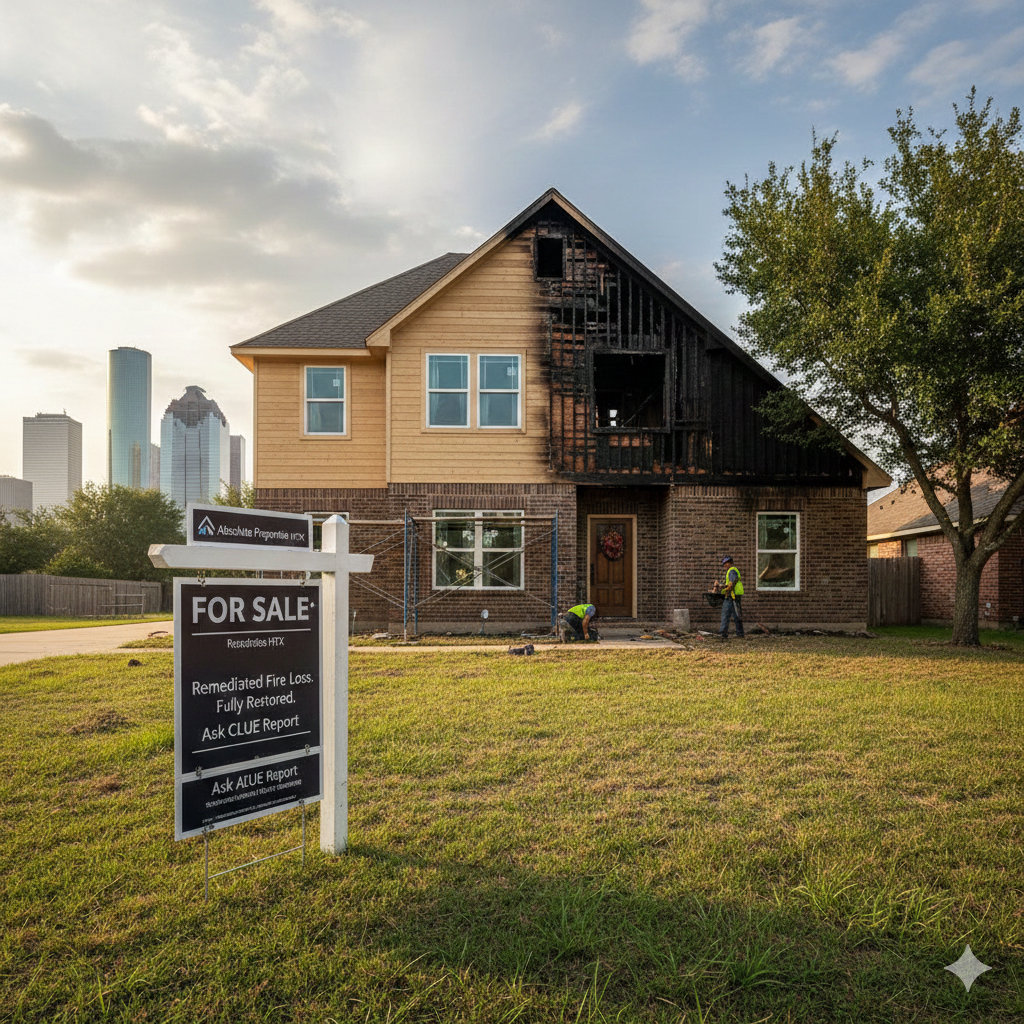
Look, nobody wants to think about their house catching fire. It’s a nightmare scenario. But as a real estate expert here in Houston, I have to talk about the "after." Once the sirens fade and the insurance adjusters leave, you're left with a property that has a history. And in the Houston real estate market, history matters—a lot.
Whether you’re dealing with a kitchen flare-up in a Heights bungalow or a major structural incident in a Katy suburban home, that fire record is going to follow the deed. If you're sitting there wondering how this affects your bottom line, or if you just need to sell my house fast Houston because the repair process is becoming a money pit, you need the raw truth about resale value.
The Invisible Scar: Why Fire History Haunts Property Value
In Texas, we have some pretty clear-cut disclosure laws. You can’t just slap a fresh coat of Sherwin-Williams over charred studs and call it a day. When a house has a fire history, it’s not just the physical damage that lowers the price; it’s the "stigma" and the perceived risk.
Buyers are naturally skittish. When they see "fire damage" or "remediated fire loss" on a Seller’s Disclosure, their brains immediately go to the worst-case scenario: Is there hidden structural weakness? Is there lingering smoke smell? Is the electrical wiring still a ticking time bomb?
In Houston’s humid climate, fire damage is actually a double-edged sword. To put out a fire, the fire department uses thousands of gallons of water. If that water isn't dried out perfectly within 48 hours, you aren’t just fighting fire damage—you’re fighting mold. This "secondary damage" is often what kills the resale value more than the actual flames.
The "CLUE" Report and the Paper Trail You Can't Hide
Most homeowners don't realize that insurance companies share a massive database called the Comprehensive Loss Underwriting Exchange (CLUE). Think of it like a Carfax, but for your house.
Even if you fix the damage perfectly, the insurance claim is a permanent mark on the property's record for seven years. When a prospective buyer goes to get a homeowners insurance quote, their agent will pull this report. If they see a massive payout for a fire, two things happen:
The buyer gets scared.
The insurance premium for the new owner might skyrocket.
If the house is more expensive to insure, it’s effectively more expensive to own. That math usually leads to a lower offer price. You might see a value dip of anywhere from 10% to 25% depending on how extensive the damage was and how well it was documented during the rebuild.
Structural Integrity vs. Cosmetic Damage
Not all fires are created equal. A "grease fire" that stayed contained to the stove is a completely different animal than a "whole-structure" fire that licked the rafters.
Cosmetic Scars
If the fire was strictly cosmetic—meaning it only affected the drywall, flooring, and cabinetry—you can usually recover most of your home value through high-quality renovation. The key here is documentation. You need receipts, permits, and "before and after" photos. Show the buyer that you didn't just scrub the soot; you replaced the materials entirely.
Structural Concerns
If the fire was hot enough to warp steel beams or char the load-bearing 2x4s in the attic, you’re in a different league of trouble. In Houston, where we already deal with foundation shifts due to gumbo soil, any compromise to the "bones" of the house makes buyers run for the hills. According to the National Fire Protection Association (NFPA), the heat from a standard house fire can easily exceed 1,100°F, which is more than enough to degrade the strength of wood and even some masonry.
The Smell That Never Dies: Smoke Remediation
Ask any local Realtor: the "sniff test" is real. You can have the most beautiful granite countertops and luxury vinyl plank flooring, but if a buyer walks in and catches a faint whiff of campfire, the deal is dead.
Smoke particles are microscopic. They get into the insulation, the HVAC ductwork, and even the pores of the concrete slab. If you don't use professional-grade ozone generators or thermal fogging, that smell will reappear every time the Houston humidity hits 90% (which is basically every Tuesday).
To protect your resale value, you have to prove that the remediation was done by a certified professional. If you tried to DIY the smoke cleaning with a bottle of Febreze and some vinegar, the market will punish you for it.
Market Timing and the "As-Is" Alternative
The Houston market is fast-paced. In neighborhoods like Memorial or River Oaks, land value is so high that a fire-damaged house might just be viewed as a "tear-down." In those cases, the fire history barely matters because the value is in the dirt.
However, in middle-class neighborhoods like Spring, Cypress, or Pearland, the house is the primary asset. If you don't have the $50,000 to $100,000 out-of-pocket to properly restore a fire-damaged home to "market ready" condition, you might be better off selling it "as-is" to a professional buyer.
Selling to a cash buyer removes the need for traditional financing. Why does that matter? Because many mortgage lenders are hesitant to fund a loan on a house with significant, unaddressed fire damage. By selling to an investor, you bypass the inspection hurdles and the insurance headaches that usually tank a traditional sale.
Local Regulations and Houston Building Codes
Texas is generally "pro-property owner," but Houston has specific building codes that trigger when a house is significantly damaged. If the damage exceeds a certain percentage of the home’s value, the City of Houston may require you to bring the entire house up to current building codes, not just the part that burned.
This can include:
Upgrading your entire electrical panel to AFCI breakers.
Installing modern insulation.
Updating plumbing to PEX or copper.
While these upgrades actually increase value, the cost of doing them all at once can be overwhelming. If you don't follow these codes, you won't get a Certificate of Occupancy, and you literally cannot sell the home to a traditional buyer. You can check the latest local requirements at the City of Houston Permitting Center.
FAQ: Common Concerns About Fire History
Does a small kitchen fire have to be disclosed in Texas?
Yes. The Texas Seller’s Disclosure Notice specifically asks about fire damage. Even if it was small and you fixed it yourself, failing to disclose it can lead to a lawsuit for "Deceptive Trade Practices" later on. It’s always better to be honest and show proof of repair.
How much does fire history actually drop a home's price?
On average, expect a 10% to 15% reduction if the home has been fully repaired by professionals. If the home is still damaged and being sold "as-is," the price drop can be 30% to 50% or more, as the buyer is taking on all the risk and construction management.
Can I get a mortgage on a house with past fire damage?
If the repairs are complete and the home passes a professional inspection, yes. However, if there are any signs of structural compromise or if the HVAC system wasn't properly cleaned, the appraiser might flag it, which could stall the loan.
Will my neighbors' house fire affect my value?
Surprisingly, it can. If a neighboring house remains charred and unrepaired for months, it creates "blight," which can temporarily pull down the "comparable sales" prices in the immediate area. Fortunately, Houston's lack of zoning and active code enforcement usually keeps these eyesores from staying that way forever.
Is it better to repair the fire damage or sell as-is?
That depends on your "holding power." If you have the time and money to manage contractors for 6 months, repairing will net you more money. If you’re paying a mortgage on a house you can't live in, selling for cash and moving on is often the smarter financial move to stop the bleeding.
Conclusion: The Path Forward
Dealing with a fire is exhausting. It’s emotional, it’s messy, and it’s expensive. But a fire history doesn't mean your property is worthless. It just means you have to be more strategic. You have to be the "over-sharer"—provide more documentation, more warranties, and more proof than the average seller.
If you find yourself stuck with a property that feels like a charred albatross around your neck, don't feel like you have to rebuild just to get out. There are plenty of folks in the Houston area who specialize in these types of properties and can help you turn that "history" into a fresh start.

How Absolute Properties Helps Houston Sellers
Absolute Properties makes it easy for Houston homeowners to sell fast - even when facing challenges like financial difficulties, inherited properties, troublesome tenants, or repairs.
If you’re thinking, “I need to sell my house fast in Houston…” We buy houses in Houston in any situation or condition!
As-is, fast cash offers with clear terms
Many closing costs covered; no realtor commissions in most cases
You choose the closing date (as little as 7 days, case-dependent)
Coordination with experienced title company for a compliant sale process
Call or text: (713) 230-8059
Email address: info@absolutepropertieshtx.com
Share your street address and timeline for a free consultation and a straightforward number no pressure.
Helpful Houston Blog Articles
How To Sell Your House in Houston Without Sinking Any More Money Into It
6 Tips For First Time Home Sellers in Houston
Hiring an Agent Vs. A Direct Sale to Absolute Properties When Selling Your House in Houston
Who Pays Closing Costs in Texas
The True Costs of An FSBO Listing for Houston Investors
What To Do With Your Expired Listing in Houston
Also check out our Free Guides & Education & FAQ for more education on how to sell your house for cash quickly to a local home buyer.