How Much Does Fire Damage Restoration Really Cost in Houston? (2026 Price Breakdown)
Reviewed by Mark Lee
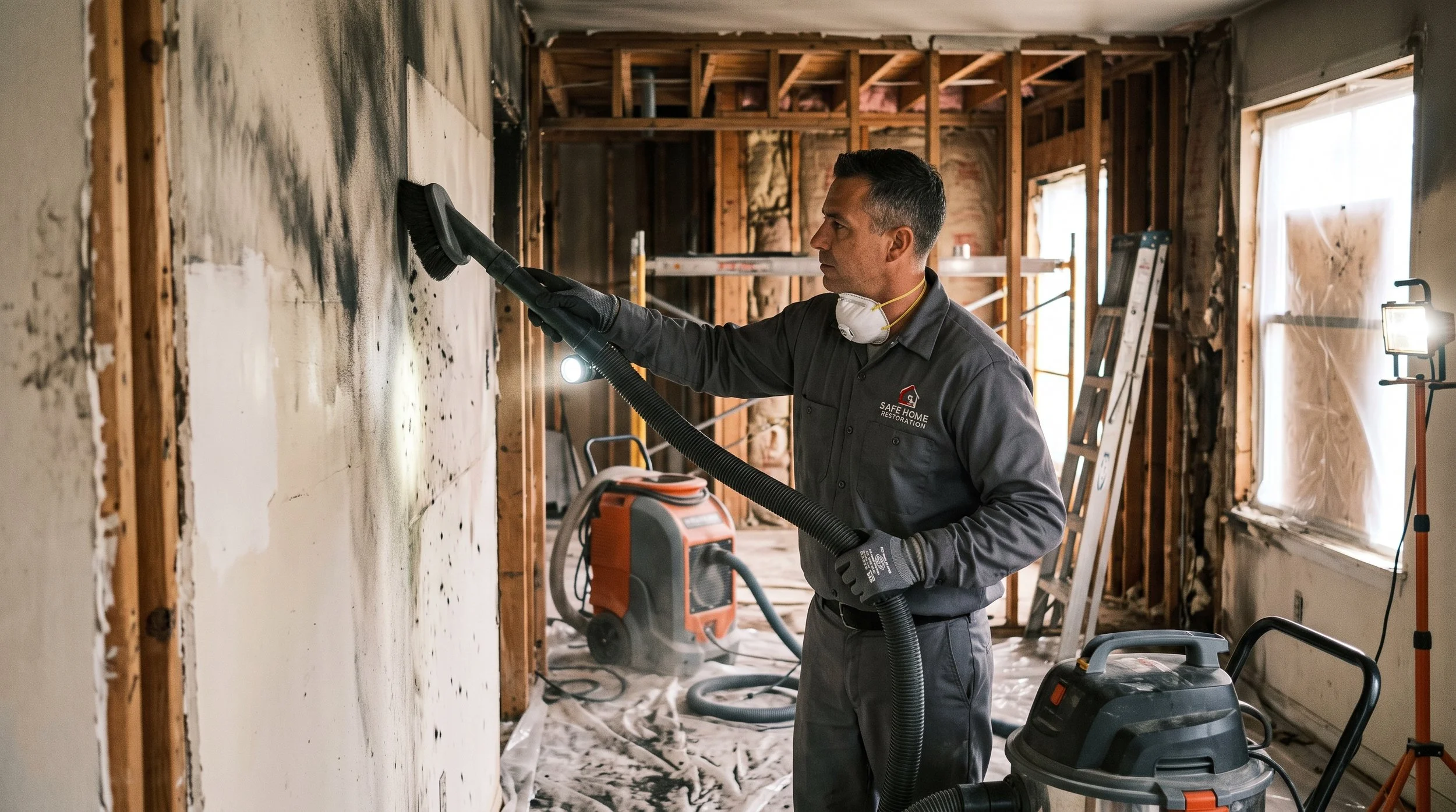
A house fire changes everything in an instant. Once the fire trucks leave and the initial shock wears off, you face a daunting question: how much is this going to cost to fix?
The short answer? The average fire damage restoration cost ranges from $3,000 to $50,000+ nationally, with most major structural restorations settling around $39,000. However, if you are looking to sell my house fast Houston homeowners often realize that total reconstruction following a major burn easily pushes costs into six figures.
Fire damage is rarely just about burned wood. It involves a destructive combination of flame, corrosive soot, smoke migration, and thousands of gallons of water from firefighting efforts.
Whether you are dealing with a minor grease flare-up in the kitchen or severe structural destruction across multiple rooms, this comprehensive 2026 guide breaks down exact line-item costs, per-square-foot rates, hidden expenses, and your best paths forward.
National vs. Houston & Texas Fire Restoration Costs
To budget accurately, you need to understand how local market dynamics impact your final bill. Nationwide, homeowners pay between $4 and $7 per square foot for basic fire cleanup and smoke remediation. When you factor in full structural rebuilding, framing, electrical rewiring, and cosmetic finishing, that number jumps to $15–$50+ per square foot.
In Texas—and specifically within the Greater Houston area—restoration costs closely align with national averages but carry unique regional risk factors. Local labor rates, building permit fees, and environmental conditions alter the bottom line.
Minor / Tier 1 (500–1,000 sq. ft.): $3,000 – $8,000 (National) | $3,950 – $8,500 (Houston)
Moderate / Tier 2 (1,000–2,000 sq. ft.): $8,000 – $25,000 (National) | $10,000 – $28,000 (Houston)
Major / Tier 3 (2,000–3,500+ sq. ft.): $30,000 – $75,000+ (National) | $39,000 – $85,000+ (Houston)
Total Loss / Full Rebuild: $150,000 – $400,000+ (National) | $180,000 – $450,000+ (Houston)
Why does Houston often skew slightly higher on moderate-to-severe claims? Humidity.
When firefighters dump thousands of gallons of water onto a burning roof in Southeast Texas, the extreme ambient heat and humidity create an immediate greenhouse effect inside the property. If structural drying does not start within 24 to 48 hours, aggressive mold growth takes hold inside wall cavities, adding thousands of dollars in water damage restoration to your bill.
Line-Item Breakdown: Where Does the Money Actually Go?
When a licensed restoration contractor hands you an estimate—usually generated through industry-standard software like Xactimate—it will not be a single flat figure. Instead, it breaks down into distinct phases of recovery.
1. Emergency Board-Up and Tarping ($500 – $2,500)
Before any cleaning starts, the property must be secured against weather, trespassers, and wildlife. Contractors charge between $500 and $2,500 to board up broken windows, secure compromised doorways, and place heavy-duty tarps over damaged roofs.
2. Water Extraction and Structural Drying ($2,000 – $6,000)
Water damage from fire hoses is often more destructive to floors and subfloors than the actual flames. Commercial water extractors, industrial air movers, and dehumidifiers must run for several days to bring moisture levels back down to safe thresholds.
3. Smoke and Soot Removal ($2,000 – $6,000)
Soot is highly acidic and chemically corrosive. Left untreated, it permanently stains kitchen appliances, corrodes metal fixtures, and deeply embeds into drywall. Technicians utilize specialized chemical sponges, HEPA vacuuming systems, and alkaline wash solutions to lift the film.
4. Advanced Odor Elimination ($1,000 – $3,000)
Standard room sprays or simple surface cleaning will not eliminate severe smoke odor. Smoke particles penetrate deep inside wood framing, insulation, and concrete subfloors. Contractors rely on high-grade equipment:
Thermal Fogging ($200 – $600 per treatment): Replicates the particle size of smoke to penetrate porous surfaces and neutralize odor molecules at a structural level.
Ozone Generator Shock Treatments ($300 – $1,000): Uses $O_3$ gas to break down organic odor molecules. (Note: The home must be completely evacuated of people, plants, and pets during ozone processing.)
Hydroxyl Generators ($400 – $1,200): Uses UV waves and ambient humidity to safely process air while workers remain on-site.
5. Contents Pack-Out and Personal Property Cleaning ($3,000 – $10,000+)
If your furniture, clothing, and electronics are salvageable, contractors pack them up, transport them to a climate-controlled facility, clean and deodorize them, and store them until structural repairs are complete. Storage fees and textile dry cleaning scale rapidly depending on volume.
6. Structural Reconstruction ($10,000 – $100,000+)
Reconstruction involves traditional trade labor:
Drywall Installation: $1.50 – $3.50 per sq. ft.
Roof Repair/Replacement: $3,000 – $15,000+
Electrical Rewiring: $3,000 – $9,000+ (mandatory if fire melted wire insulation behind walls)
Framing/Sistering Joists: $5,000 – $20,000+
Key Factors That Drive Restoration Prices Up or Down
Why does one homeowner receive a $12,000 bill while their neighbor faces a $75,000 estimate for a fire of similar size? Several critical variables dictate where your quote falls:
Type of Fire and Burning Material
Different fuel sources leave drastically different chemical residues:
Class A (Wood/Paper): Leaves dry, powdery soot that is relatively easy to vacuum and wipe clean.
Class B (Grease/Oil): Common in kitchen fires. Produces sticky, smeary soot that coats surfaces and requires heavy-duty chemical solvents to dissolve.
Class C (Electrical): Releases toxic, highly pungent plastic residue that melts into wall cavities and ductwork.
Response Time
Secondary damage compounds exponentially with every hour of delay. Unaddressed soot permanently etches glass and metal within 72 hours. Standing water creates toxic black mold colonies inside warm Texas homes within 48 hours. Fast response times keep totals at the lower end of the spectrum.
Age of the Property
Older homes constructed prior to 1980 often harbor asbestos insulation, acoustic popcorn ceilings, or lead-based paint. If fire or water damages these materials, standard cleanup halts immediately. You will need certified hazardous material abatement teams, which can instantly add $5,000 to $15,000 to project costs.
Local Building Permit and Code Upgrade Requirements
When you rebuild a heavily damaged home, municipal code enforcement officers do not let you rebuild to 1970s standards. You must bring affected electrical systems, plumbing, insulation, and structural framing up to 2026 building codes. If your insurance policy lacks explicit "Ordinance or Law" coverage, these out-of-pocket code upgrades fall entirely on you.
Navigating Insurance Claims and Hidden Out-of-Pocket Expenses
For most homeowners, standard homeowners insurance (HO-3 policies) covers accidental fire damage. However, the process is rarely seamless, and hidden expenses quickly surface.
Replacement Cost Value (RCV) vs. Actual Cash Value (ACV)
If your policy pays RCV, the insurer covers the actual cost to repair or replace damaged property at current 2026 market rates (minus your deductible).
If your policy pays ACV, the adjuster subtracts years of depreciation from your payout. If your ten-year-old roof burned, the insurer will only pay what a ten-year-old roof was worth—leaving you to pay the difference out of pocket for a new one.
Additional Living Expenses (ALE)
If your home is uninhabitable, your policy's ALE coverage pays for temporary housing, hotel bills, and restaurant meals. However, ALE has strict time limits (often 12 months) and financial caps (usually 20% of your total dwelling coverage limit). If contractor delays or permit backlogs drag the restoration past your coverage window, you pay rent and mortgage simultaneously.
To review official consumer guidance regarding insurance claim rights and claims handling in Texas, consult the Texas Department of Insurance Fire Claim Resource Page.
The Hard Decision: Restore or Sell As-Is?
After evaluating a $60,000 to $120,000 restoration estimate, many homeowners ask a crucial question: Is repairing this property actually worth my time, energy, and capital?
Restoring a heavily burned home takes anywhere from three months to over a year. It involves managing contractors, fighting insurance adjusters over line items, pulling permits, and floating out-of-pocket funds. Furthermore, even after immaculate repairs, Texas seller disclosure laws require you to declare past fire damage to future buyers, which can depress market value by 10% to 20%.
For deeper insights into navigating real estate sales during unexpected life events, explore the comprehensive property guides available through the U.S. Small Business Administration Disaster Assistance Portal.
If you do not have the time, capital, or desire to oversee a multi-month construction project, you have options.
When you choose to sell the property as-is, you can collect your insurance payout for the structure and contents, bypass contractor management entirely, and sell the home directly to an off-market investor who assumes full responsibility for the cleanup and rebuild.
Frequently Asked Questions (FAQ)
How long does the fire damage restoration process take?
Minor smoke and soot cleanup takes 3 to 7 days. Moderate repairs involving drywall replacement and partial framing take 2 to 6 weeks. Major structural restoration or full home rebuilds typically take 6 to 12+ months due to permitting, engineering assessments, and trade labor schedules.
Can I clean up smoke and fire damage myself to save money?
You can clean up minor cosmetic soot from non-porous surfaces, but DIY fire restoration is strongly discouraged. Burning plastics and synthetic building materials release toxic chemicals, including dioxins and formaldehyde. Additionally, consumer-grade vacuums re-circulate microscopic soot into the air, and household air fresheners simply mask odors without neutralizing deep-set smoke particles.
What is the difference between fire remediation and structural reconstruction?
Remediation focuses strictly on cleanup, water extraction, soot removal, deodorization, and demucking. Reconstruction is the actual carpentry and trade work required to rebuild destroyed walls, roofs, electrical grids, and interior finishes back to a livable condition. Remediation typically runs $4–$7 per sq. ft., whereas reconstruction costs vary widely based on materials.
Should I pay my deductible directly to the restoration company?
Yes. Your insurance policy deductible is your financial responsibility. Restoration companies typically collect your deductible amount at the start of the project or split it into progress payments alongside insurance draft releases.
What happens if the cost to repair exceeds the value of my home?
If repair costs plus salvage value exceed the home's pre-fire market value, your insurance company will declare the home a "total loss." In this scenario, the insurer pays out the maximum policy limit for the dwelling, minus your deductible, allowing you to pay off any remaining mortgage and decide whether to rebuild from scratch or buy elsewhere.

How Absolute Properties Helps Houston Sellers
Absolute Properties makes it easy for Houston homeowners to sell fast - even when facing challenges like financial difficulties, inherited properties, troublesome tenants, or repairs.
If you’re thinking, “I need to sell my house fast in Houston…” We buy houses in Houston in any situation or condition!
As-is, fast cash offers with clear terms
Many closing costs covered; no realtor commissions in most cases
You choose the closing date (as little as 7 days, case-dependent)
Coordination with experienced title company for a compliant sale process
Call or text: (713) 230-8059
Email address: info@absolutepropertieshtx.com
Share your street address and timeline for a free consultation and a straightforward number no pressure.
Know someone else who needs to sell? We Also Pay a $1000 Referral Fee!
Helpful Houston Blog Articles
How To Sell Your House in Houston Without Sinking Any More Money Into It
6 Tips For First Time Home Sellers in Houston
Hiring an Agent Vs. A Direct Sale to Absolute Properties When Selling Your House in Houston
Who Pays Closing Costs in Texas
The True Costs of An FSBO Listing for Houston Investors
What To Do With Your Expired Listing in Houston
Also check out our Free Guides & Education & FAQ for more education on how to sell your house for cash quickly to a local home buyer.