Can’t Sell My House in Houston? 4 Reasons & How to Fix It (2026)
Reviewed by Mark Lee
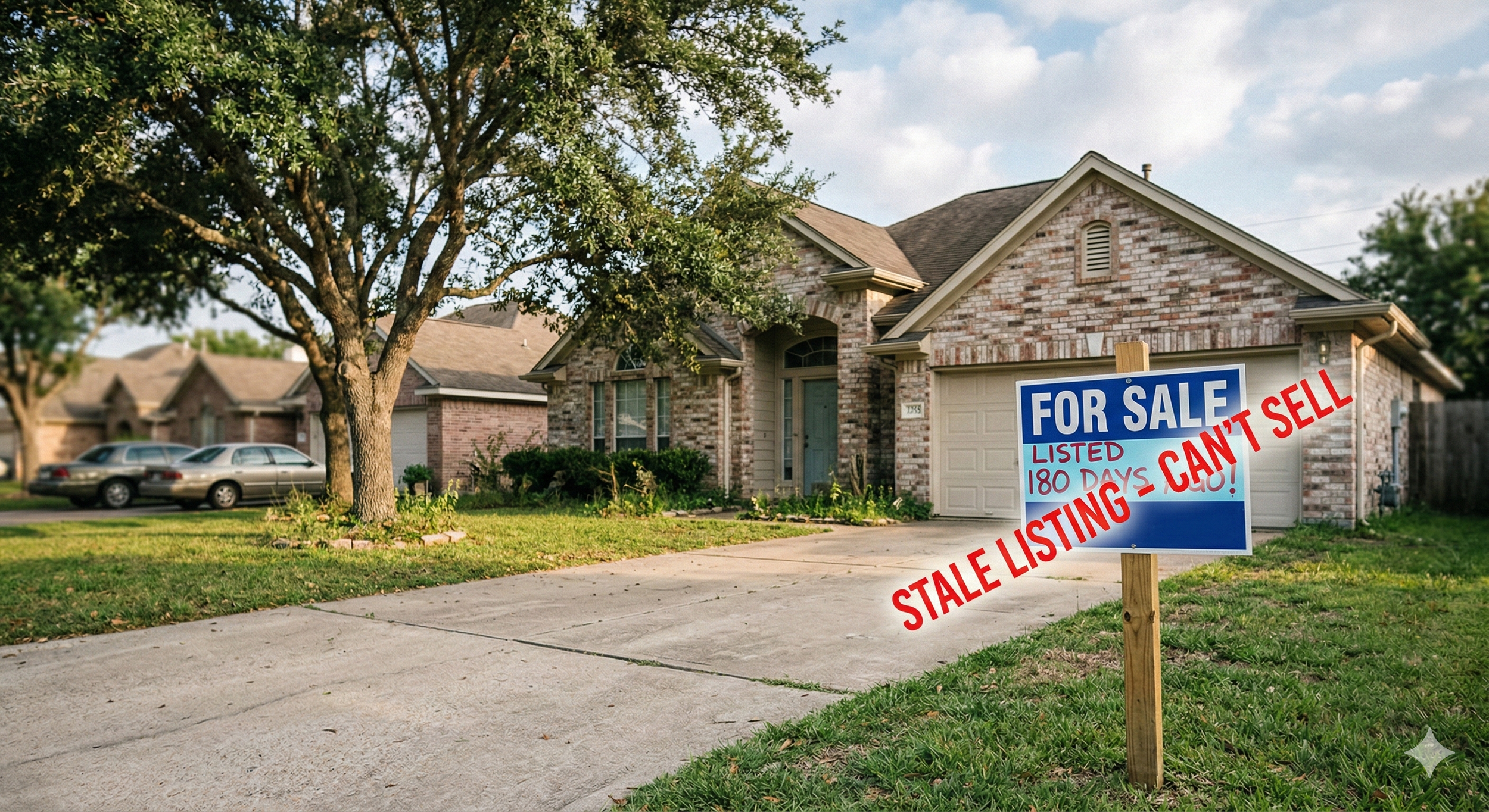
It’s the kind of quiet that feels heavy. You’ve had the sign in the yard for weeks—maybe months. You’ve done the showings, kept the house immaculate, and held your breath every time your phone buzzed, only to realize it was just a notification or a telemarketer. If you’re feeling frustrated and asking, “Why can’t I sell my house in Houston?” you aren't alone, and more importantly, you aren't doing anything inherently wrong.
The Houston market has shifted significantly as we move through 2026. The days of putting a sign in the yard on Friday and having multiple offers by Monday—the era of the "unconditional frenzy"—are largely behind us. We are currently in a more balanced, strategic market. Buyers have more inventory to choose from, which means they are no longer feeling the desperate need to overpay or overlook issues.
If you are looking for a way out of this stalemate and need a fresh start, sometimes you have to change the game entirely. Many homeowners in your position decide to Sell my house fast Houston to avoid the endless cycle of listing, waiting, and hoping.
But if you still want to navigate the traditional route, you need to understand the new rules. Let’s pull back the curtain on why homes are sitting on the market right now and exactly how to fix the trajectory.
The 2026 Market Reset: Why Your Home Isn't Moving
It is easy to blame your agent, the weather, or even the neighborhood. But in 2026, the primary reason many homes sit is that the market has undergone a fundamental "reset." We’ve reached a higher supply level than we’ve seen in years—around a 4.5-month inventory in many parts of Greater Houston.
When inventory is low, the seller holds all the cards. When inventory is balanced or high, the buyer holds the leverage. In this environment, buyers aren't just looking for a roof over their heads; they are looking for a deal that makes financial sense. If your home has been listed for 45 or 60 days, the market has essentially given you its feedback. It’s not necessarily that your home is "bad"—it’s that your current strategy isn't aligning with what today’s buyer is willing to commit to.
Is the Houston Market "Frozen"?
Short answer: No. It’s just rebalancing. A frozen market implies that nobody is buying or selling, which simply isn't true for Houston. We have a robust economy, steady job growth, and a constant influx of people relocating to Texas. However, the pace has slowed. Homes that are priced perfectly and marketed beautifully are still moving. Homes that ignore the current reality of interest rates and buyer expectations, however, are hitting a wall.
The "Emotional Pricing" Trap
The most common mistake I see homeowners make in a shifting market is "emotional pricing." You likely have a number in your head based on what your neighbor sold for in 2024 or perhaps what you need to net to pay off your mortgage and move to your next place.
Unfortunately, the market doesn't care about what you need—it only cares about what the competition looks like right now.
Why Your List Price Might Be Costing You Thousands
When you list too high, you miss the "new listing" bump. Every home has a window of maximum exposure—usually the first two weeks it hits the MLS. If you miss that window because the price was too optimistic, you end up sitting on the market for months.
Once a home has been "on market" for a long time, it develops a stigma. Buyers (and their agents) start to wonder: What’s wrong with it? Did a deal fall through? Is there a foundation issue? By the time you eventually lower the price to where it should have been in the first place, you’ve lost the most motivated buyers, and you’re now chasing the market downward rather than leading it.
The Strategy: Pricing for the "Comp" Reality
To fix this, look at the "sold" comps from the last 90 days, not the "active" listings. Active listings are just other sellers' hopes and dreams; sold listings are the actual reality. If your home isn't getting showings at your current price, you aren't "holding out"—you are effectively invisible to the people who are actually writing checks.
The Condition Snobbery Factor
There is no getting around it: Buyers in 2026 are "condition snobs." In the frenzy of the early 2020s, buyers were so worried about getting any house that they were willing to overlook peeling paint, outdated bathrooms, or tired landscaping. That era is over.
Because buyers have more options today, they are subconsciously looking for reasons to say "no." When they walk into a home that clearly shows deferred maintenance, they don't just see a few scuffed baseboards. They see a home that hasn't been cared for, and they immediately assume there are hidden, expensive problems behind the walls (like plumbing, electrical, or foundation issues).
High-Impact Improvements vs. Over-Improving
You don't need to do a $50,000 renovation to sell your home. In fact, doing so is often a bad financial move because you rarely recoup 100% of the cost. Instead, focus on "high-impact" maintenance.
Neutrality: If you have bold wallpaper or highly personalized wall colors, paint them a neutral "greige" or white. It costs a few hundred dollars and makes the space feel larger and more inviting.
The "Clean" Effect: Deep cleaning is the cheapest way to increase your home's value. Steam clean the carpets, wash the windows, and clear out the clutter.
Curb Appeal: In Texas, the exterior of your home is the first thing a buyer sees. If your lawn is patchy or the front door is chipped, they’ve already decided to be skeptical before they even get out of their car.
According to market data from HAR.com, properties that prioritize strong presentation and accurate pricing remain attractive even when the broader market slows down.
Marketing: The "Lifestyle" Sell
In a high-inventory market, your home is competing against new construction builds and professionally staged renovations. If your listing photos are dark, blurry, or show piles of laundry, you are losing the battle before it begins.
Why "Good Enough" Isn't Cutting It
Most buyers today start their search on their phones, swiping through photos faster than they scroll through social media. If your photos don't look like they belong in a magazine, they are going to keep swiping.
Professional Photography: If your agent didn't hire a professional photographer with wide-angle lenses and high-end lighting, you are underselling your home.
The Story: Great marketing doesn't just show the square footage; it shows the lifestyle. A good listing description highlights the morning coffee on the back patio, the proximity to the best schools, or the quiet cul-de-sac.
The "Alternative" Solution: Exploring a Direct Sale
Sometimes, no matter how much you clean, price, or market, the traditional path simply isn't the right fit for your situation. Maybe you’re dealing with an inherited property that needs significant structural work, or perhaps you’re going through a divorce and need a clean break without the hassle of repairs.
This is where the concept of "as-is" selling comes in.
Traditional buyers are looking for a home they can move into on day one. They want a home warranty, they want a 30-day inspection period, and they want you to fix the roof and the HVAC before they close. If your house doesn't meet that "turnkey" standard, it can be an exhausting process.
A direct cash buyer, however, looks at the potential of the property rather than its current state. By opting for a direct sale, you eliminate:
The need for staging and cleaning.
The endless flow of strangers touring your house.
The risk of the deal falling apart due to a buyer’s financing or inspection woes.
It’s about weighing the trade-off. You might get a slightly higher "sticker price" on the MLS, but once you subtract the realtor commissions, the repair costs, the staging fees, and the months of carrying costs (mortgage, insurance, taxes) while the house sits, the net proceeds of a direct sale often look significantly more attractive.
Frequently Asked Questions (FAQ)
Why is my house sitting on the market while my neighbor’s sold in two weeks?
It usually comes down to one of three things: price, presentation, or positioning. Your neighbor’s home may have had better curb appeal, a more modern interior, or—most likely—it was priced at a "sweet spot" that triggered immediate demand. Comparing your home to theirs is helpful, but be honest about the differences in condition and layout.
Should I lower my price or make repairs?
If you have the time and the budget, repairs that improve the "move-in ready" feel (paint, cleaning, minor fixes) usually offer the best return. However, if you are strapped for time or money, lowering the price is the most honest way to signal to the market that you are ready to sell. A strategic price drop can often re-ignite interest from buyers who previously overlooked the listing.
What if I just don't want to deal with showings?
This is a very common frustration. If the disruption of showings is a major issue for you, you should look into a direct sale or a "cash offer" model. These buyers visit once, make an offer, and allow you to close on your timeline without the pressure of keeping the house showroom-ready for months.
Is the 2026 Houston market going to get worse?
Most indicators suggest we are in a period of stabilization rather than a crash. Houston is a resilient market due to its diverse economy and job growth. While we aren't seeing the explosive appreciation of 2021, we aren't seeing a total collapse either. The best strategy is to act based on today's data, not tomorrow's guesses.
Final Thoughts
Selling a home is one of the most stressful experiences you can go through, especially when the market doesn't seem to be cooperating. But remember: a "stale" listing is not a permanent state. You have options. Whether you choose to re-strategize your traditional listing by adjusting your price and refreshing your staging, or you decide to take the direct route and bypass the traditional headaches, you can regain control of your timeline.
The goal isn't just to sell—it's to move on to your next chapter without looking back. Take a hard look at your numbers, be honest about your home's current condition, and choose the strategy that aligns with your goals, not just your hopes.

How Absolute Properties Helps Houston Sellers
Absolute Properties makes it easy for Houston homeowners to sell fast - even when facing challenges like financial difficulties, inherited properties, troublesome tenants, or repairs.
If you’re thinking, “I need to sell my house fast in Houston…” We buy houses in Houston in any situation or condition!
As-is, fast cash offers with clear terms
Many closing costs covered; no realtor commissions in most cases
You choose the closing date (as little as 7 days, case-dependent)
Coordination with experienced title company for a compliant sale process
Call or text: (713) 230-8059
Email address: info@absolutepropertieshtx.com
Share your street address and timeline for a free consultation and a straightforward number no pressure.
Helpful Houston Blog Articles
How To Sell Your House in Houston Without Sinking Any More Money Into It
6 Tips For First Time Home Sellers in Houston
Hiring an Agent Vs. A Direct Sale to Absolute Properties When Selling Your House in Houston
Who Pays Closing Costs in Texas
The True Costs of An FSBO Listing for Houston Investors
What To Do With Your Expired Listing in Houston
Also check out our Free Guides & Education & FAQ for more education on how to sell your house for cash quickly to a local home buyer.