Texas SB 1333: The New 2025 Houston Squatter Laws Explained
Reviewed by Mark Lee
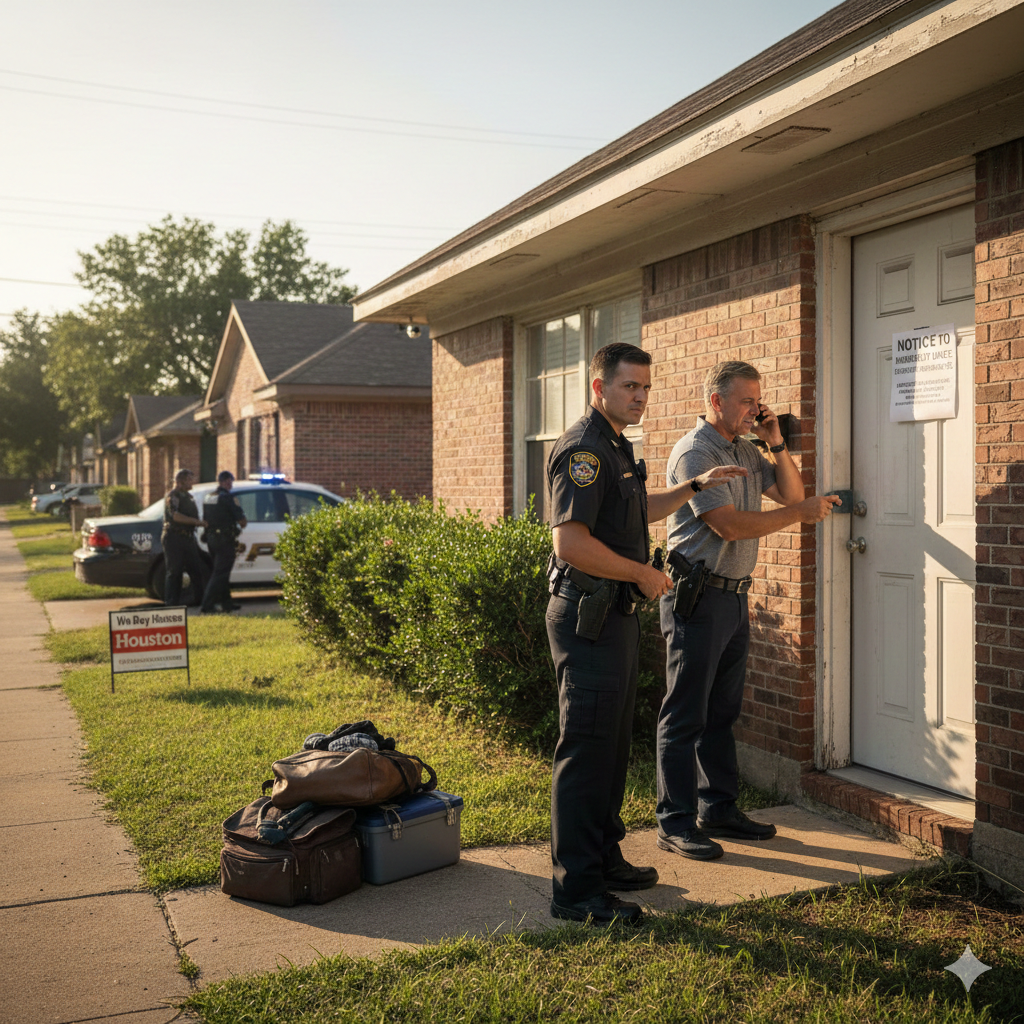
For years, Houston property owners faced a legal nightmare when discovering unauthorized occupants in their homes. The "squatter loophole" often forced landlords into the same months-long eviction process used for legitimate tenants who simply fell behind on rent. However, as of September 1, 2025, the landscape has shifted dramatically. Texas Senate Bill 1333 (SB 1333) has officially gone into effect, providing a streamlined, law-enforcement-led path to reclaim private property without the traditional court delays.
If you are currently struggling with an unauthorized occupant and want to avoid the legal fees and headaches of a Harris County courtroom, you might be looking for we buy houses Houston experts who can take the property off your hands—squatter and all. But for those who want to fight back using the new law, understanding the nuances of SB 1333 is essential to reclaiming your investment safely and legally.
What is Texas SB 1333?
Passed during the 89th Legislative Session and signed into law by Governor Greg Abbott, SB 1333 was designed specifically to separate "true squatters" from "tenants." Historically, Texas law made it difficult for police to intervene in residential disputes. If an occupant produced even a poorly forged lease, officers were trained to declare the situation a "civil matter," effectively forcing the homeowner to spend thousands on legal fees and wait months for a court date in a local Justice of the Peace court.
SB 1333 changes this by creating Chapter 24B of the Texas Property Code, titled "Removal of Certain Unauthorized Occupants." This new chapter allows a property owner or their authorized agent to bypass the judicial eviction process entirely under specific, narrow circumstances. Instead of waiting for a judge’s signature on a Writ of Possession, owners can now work directly with the County Sheriff or Constable to remove trespassers.
The bill’s primary author, Senator Bryan Hughes, noted that the intent was to provide a "speedy resolution via law enforcement action" rather than leaving owners with costly litigation as their only recourse. For Houstonians, this means the Precinct Constables—who are already deeply familiar with the local eviction landscape—now have a specific mandate to act when a trespasser is identified.
The New "Immediate Removal" Process in Houston
The core of SB 1333 is the Sworn Complaint. To trigger an immediate removal in Harris County, an owner must submit a formal, notarized complaint to the sheriff or constable. This isn't just a standard police report; it is a legal document where the owner must verify several key facts under penalty of perjury.
Requirements for Law Enforcement Intervention
To use the SB 1333 expedited removal path, the following conditions must be met:
Non-Public Entry: The property was not open to the public at the time the person entered (i.e., it wasn't an open house or a public building).
No Pending Litigation: There isn't an ongoing lawsuit between the owner and the occupant regarding the property.
No Lease or Family Tie: The occupant is not a current tenant, a former tenant holding over (someone whose lease expired but stayed), or a family member of the owner.
Formal Request to Leave: The owner must have already directed the person to leave, and they refused.
Once the sheriff or constable receives this complaint, they are required to verify the record owner of the property. This is typically done through the Harris County Appraisal District (HCAD) records or by reviewing a recorded deed. Once ownership is verified, the officer must act "without delay."
The Role of the Harris County Constable
In Houston, the local Precinct Constables (such as Precinct 1, 4, or 5) are often the primary boots on the ground for these removals. Under SB 1333, the officer serves a "Notice to Immediately Vacate" on the occupants. This can be done by hand delivery or by affixing the notice to the front door.
Crucially, the law empowers the officer to stay on-site while the owner changes the locks and moves the squatter's belongings to the property line. This "standby" service ensures that the owner is not physically threatened while re-securing the home. Law enforcement is also authorized to arrest any occupant for outstanding warrants or for criminal trespass discovered during the removal.
Increased Criminal Penalties for Property Fraud
SB 1333 doesn't just focus on the removal process; it targets the fraudulent "squatter industry" that has plagued Houston neighborhoods. Many squatters use "Grey Market" leases—fake documents sold online—to trick police into thinking a dispute is civil. The 89th Legislature recognized that squatting is often a premeditated criminal act, not just a misunderstanding.
1. Fraudulent Deeds and Leases
The new law makes it a Class A Misdemeanor (punishable by up to one year in jail and a $4,000 fine) to knowingly present false, fraudulent, or fictitious documents—such as a fake lease or deed—with the intent to enter or remain on real property. This gives police the authority to make arrests on the spot rather than telling the owner, "it's a civil matter."
2. Illegal Real Estate Transactions
A major win for Houston property owners is the new felony classification for "fake landlords." Scammers often break into vacant homes, change the locks, and "rent" the property to unsuspecting families on platforms like Facebook Marketplace or Craigslist.
Under the new Texas Penal Code Section 32.57, if a person knowingly lists, rents, or sells a property they do not own or have the authority to manage, they can now be charged with a first-degree felony. This carries a potential sentence of 5 to 99 years in prison, reflecting the severity of the financial and emotional damage these scams cause.
3. Enhanced Criminal Mischief
If a squatter causes damage to the home (such as stripping copper pipes, damaging HVAC units, or destroying drywall), the penalties are now significantly higher. Property damage between $1,000 and $300,000 committed during a trespass is now a second-degree felony under the amended Penal Code. This provides a much stronger deterrent than previous "vandalism" charges.
Civil Protections and Wrongful Removal
While the law is a massive victory for property owners, it includes strict "fail-safes" to prevent abuse. The Legislature wanted to ensure that landlords don't use SB 1333 as a "shortcut" to bypass the standard Texas Property Code Chapter 24 rules for legitimate tenants who are simply behind on rent.
The Consequences of Filing a False Complaint
Because the removal happens without a court hearing, the burden of truth is entirely on the owner. If an owner uses the SB 1333 process to wrongfully remove someone who actually had a legal right to be there (like a legitimate tenant or a family member), the legal backlash is severe.
A person wrongfully removed can sue the owner for:
Actual damages (moving costs, hotel stays, etc.).
Exemplary damages equal to three times the fair market rent of the dwelling.
Court costs and reasonable attorney’s fees.
The law requires Harris County courts to set hearings for these "wrongful removal" claims at the "earliest practicable date," meaning a landlord who lies on the sworn complaint could find themselves in front of a judge within days, facing massive financial penalties. According to the Texas Public Policy Foundation, these protections are vital to balancing property rights with due process for legitimate residents.
SB 1333 vs. SB 38: Which One Should You Use?
It is easy to get SB 1333 confused with Senate Bill 38, which was passed in the same session. While both aim to help property owners, they serve very different purposes.
SB 1333 (Effective Sept 1, 2025): This is for "True Squatters." Use this when the person in your house is a complete stranger who broke in and has never had a lease. It involves the police and happens almost immediately.
SB 38 (Effective Jan 1, 2026): This is for "Tenants and Holdovers." If you have a tenant who stopped paying, or a tenant whose lease ended but they won't leave, you must use SB 38. This bill speeds up the court process (authorizing summary dispositions so you don't always need a full trial), but it still requires a legal filing in Justice Court.
For most Houston landlords, the distinction is simple: if they were ever your tenant, use the court (SB 38). If they are an intruder, use the Constable (SB 1333).
Frequently Asked Questions (FAQ)
What defines a squatter in Houston under the new law?
Under SB 1333, a squatter is an "unauthorized occupant" who entered the property without the owner's consent, is not a family member, and has no prior landlord-tenant relationship. If you allowed them to stay for even one night as a guest, they may fall outside the "unauthorized occupant" definition and require a traditional eviction.
Can I still remove a squatter if I don’t have a deed on hand?
Law enforcement is required to verify ownership before acting. While they can often look this up in Harris County Appraisal District (HCAD) records, having your deed or title documents ready will significantly speed up the process. We recommend keeping a digital copy of your recorded deed on your phone if you manage vacant properties.
Does SB 1333 apply to commercial properties?
Currently, SB 1333 focuses primarily on "dwellings" (residential property). Commercial owners in Houston still largely rely on traditional trespass and forcible entry and detainer laws, though the criminal penalties for property damage still apply.
What if the squatter claims they have a lease?
If the squatter presents a lease, the officer must determine if it appears legitimate. However, under SB 1333, presenting a fake lease is now a Class A misdemeanor. If the owner can provide proof (like a copy of the actual current lease or proof the home has been vacant for months), the officer can proceed. If there is a "genuine dispute," the officer may still refer you to civil court.
How much does the expedited removal cost?
The law authorizes the sheriff or constable to collect a fee for serving the notice to vacate and restoring possession. This fee is typically equivalent to the cost of a Writ of Possession in Harris County (usually between $150 and $250). Additionally, if you ask the officer to stay while you change locks and move furniture, they may charge an hourly rate.
Is it better to evict or sell the house with the squatter?
Even with these new laws, removing a squatter is a stressful, potentially dangerous process. Many Houston homeowners choose to avoid the confrontation entirely by selling to a professional cash buyer. Professional buyers have the legal teams and experience to handle the removal process themselves, allowing you to walk away with cash immediately without ever having to step foot in the property again.
Reclaiming Your Property and Peace of Mind
The enactment of SB 1333 marks a turning point for Houston real estate. For too long, "professional squatters" exploited the slow-moving court system to live rent-free while destroying property value. Now, the law is firmly on the side of the owner.
By understanding the requirements of Chapter 24B, maintaining clear ownership records, and building relationships with your local Precinct Constable's office, you can protect your investment. However, if the legal hurdles and the threat of property damage still feel overwhelming, remember that you don't have to fight this battle alone.
Additional Resources for Houston Landlords
If you want to see how these laws are being applied in real-time across the state, you can watch this detailed breakdown of Texas squatter removals which highlights the practical steps law enforcement takes during a lockout. Understanding the "boots on the ground" reality can help you prepare your sworn complaint more effectively.
Reclaiming a home is about more than just a legal victory; it's about restoring safety to our Houston neighborhoods. Whether you choose to use the new SB 1333 process or decide to sell your property as-is to a professional, you now have the tools to end the squatter nightmare once and for all.

How Absolute Properties Helps Houston Sellers
Absolute Properties makes it easy for Houston homeowners to sell fast - even when facing challenges like financial difficulties, inherited properties, troublesome tenants, or repairs.
If you’re thinking, “I need to sell my house fast in Houston…” We buy houses in Houston in any situation or condition!
As-is, fast cash offers with clear terms
Many closing costs covered; no realtor commissions in most cases
You choose the closing date (as little as 7 days, case-dependent)
Coordination with experienced title company for a compliant sale process
Call or text: (713) 230-8059
Email address: info@absolutepropertieshtx.com
Share your street address and timeline for a free consultation and a straightforward number no pressure.
Helpful Houston Blog Articles
How To Sell Your House in Houston Without Sinking Any More Money Into It
6 Tips For First Time Home Sellers in Houston
Hiring an Agent Vs. A Direct Sale to Absolute Properties When Selling Your House in Houston
Who Pays Closing Costs in Texas
The True Costs of An FSBO Listing for Houston Investors
What To Do With Your Expired Listing in Houston
Also check out our Free Guides & Education & FAQ for more education on how to sell your house for cash quickly to a local home buyer.