Can My Tenant Refuse Showings? Navigating Texas Property Code §92.0081
Reviewed by Mark Lee
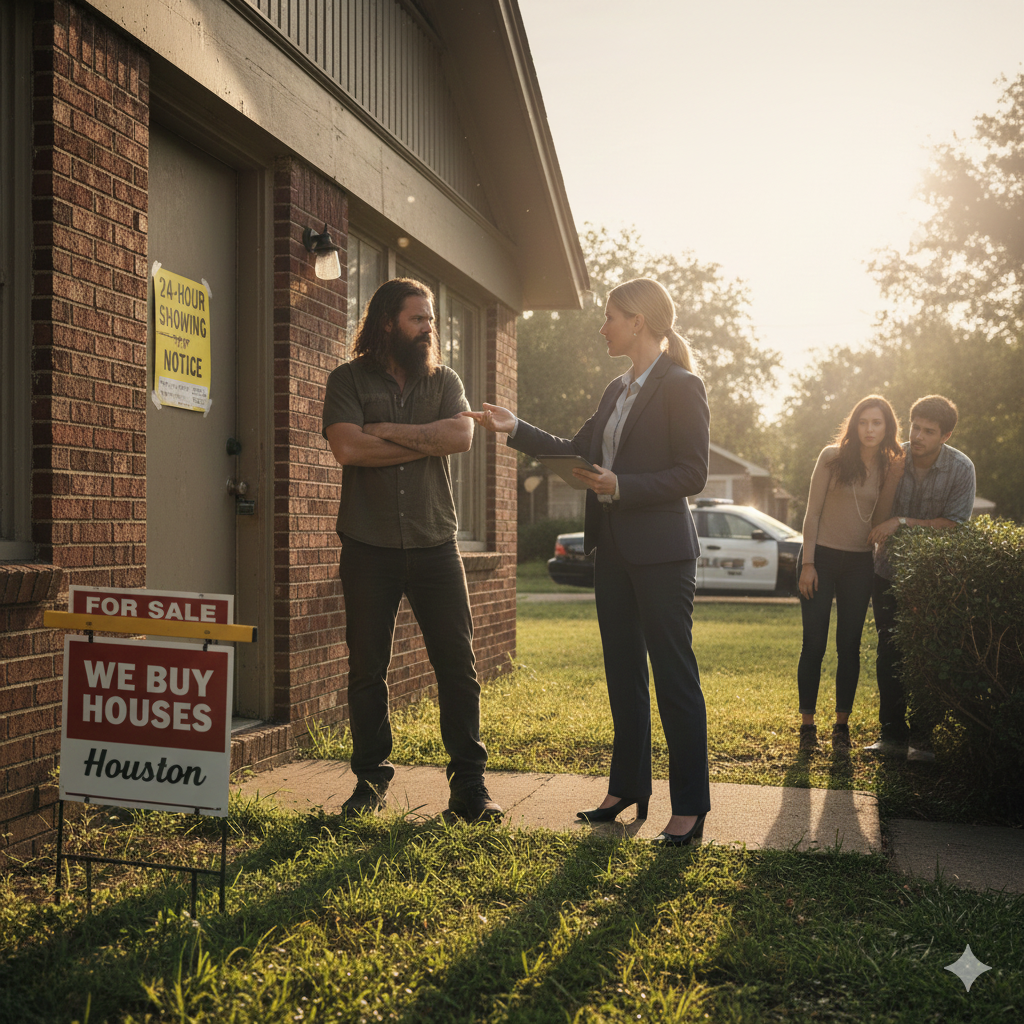
Selling a rental property in Houston is often a high-stakes balancing act. You want to showcase the home to as many qualified buyers as possible to drive up the price, but you are currently housing a tenant who may feel like their privacy is being invaded. In the heat of a dispute over access, many Houston landlords and tenants mistakenly point to Texas Property Code §92.0081 as the rulebook for showings.
The reality is more complex. While §92.0081 is a critical piece of legislation, it actually governs lockouts and the removal of property, not the day-to-day scheduling of real estate tours. If you are struggling with a difficult occupant, you might be looking for Cash Home Buyers who can take the property off your hands without requiring a single public showing. But if you are committed to the retail market, you need to know exactly where the law stands on "Right of Entry."
In this guide, we will debunk the myths surrounding §92.0081 and explain how the Texas Property Code and your specific lease agreement dictate when you can—and can’t—bring a buyer through the front door.
The §92.0081 Misconception: Lockouts vs. Access
When a tenant refuses a showing, they often cite "tenant rights" found in Chapter 92. However, Section 92.0081 is specifically titled “Removal of Property and Exclusion of Residential Tenant.” It is a defensive statute designed to prevent landlords from taking the law into their own hands when a tenant stops paying rent.
What §92.0081 Actually Covers
This statute protects tenants from "self-help" evictions. It strictly prohibits a landlord from:
Physical Obstruction: Removing doors, windows, or attic hatchway covers to force a tenant out through discomfort.
Illegal Lockouts: Changing the locks on a tenant who is behind on rent without following a very specific, multi-day notice process.
Seizing Belongings: Removing furniture, fixtures, or appliances provided by the landlord as a way to "encourage" the tenant to leave.
Why It Doesn't Apply to Showings
Showing a house to a prospective buyer is not an "exclusion" or a "removal." Therefore, §92.0081 doesn't grant a tenant the right to refuse a showing, nor does it give a landlord the right to lock a tenant out for being uncooperative with a Realtor. If a landlord were to change the locks because a tenant refused a showing, the landlord would be in direct violation of §92.0081, potentially owing the tenant one month's rent plus $1,000 in civil penalties, regardless of how much rent the tenant owes.
The Real Rulebook: The Lease Agreement
In Texas, there is no state statute that mandates a "24-hour notice" for entry. While many states have a law requiring a specific notice period, Texas leaves this almost entirely to the written lease agreement. This is why reading the fine print of your contract is the most important step in resolving an access dispute.
The Texas Association of Realtors (TAR) Lease
Most Houston homes are rented using the standard TAR or TAA (Texas Apartment Association) lease forms. These contracts include an "Access" clause—usually Paragraph 14—which explicitly allows the landlord or their agent to enter at "reasonable times" for specific purposes.
Permitted Reasons: These typically include making repairs, performing inspections, and—most importantly—showing the property to prospective buyers or tenants.
The Notice Requirement: Most standard leases state that the landlord will attempt to give notice, but notice is not always a hard requirement unless written into a custom addendum. However, the TAA lease specifically states that a landlord can enter for "showing the dwelling to prospective residents, buyers, or lenders."
When the Lease is Silent
If you have a verbal lease or a "handshake deal" that doesn't address entry, the law defaults to the Covenant of Quiet Enjoyment. Texas courts have held that a tenant has an implied right to exclusive possession. Without a lease provision allowing entry for showings, you may technically have no right to enter the property for non-emergencies without the tenant’s express permission. This is a common pitfall for "mom-and-pop" landlords in Harris County who use outdated or generic lease templates.
"Reasonable Times" and the Houston Housing Market
Even if your lease gives you the right to show the property, Texas law expects landlords to act "reasonably." If you are trying to schedule twelve showings a day or bringing people through at 9:00 PM on a Sunday, a Harris County judge may view this as harassment or a breach of the tenant’s privacy.
Defining "Reasonable" in Houston
Business Hours: Generally, 9:00 AM to 7:00 PM is considered the standard window for showings in the Houston area.
Notice Periods: While not legally required by statute, providing 24 hours' notice is the industry standard. Failure to provide this notice makes it much harder to win a "breach of lease" case against a tenant who refuses access.
Frequency: Expecting a tenant to keep a house "show-ready" every single day is often considered unreasonable. Many successful sellers limit showings to specific "windows," such as Tuesdays and Thursdays or Saturday afternoons.
According to the Texas State Law Library, while there is no "24-hour law," the "Quiet Enjoyment" of the property is a protected right. This means the tenant has the right to live in the home without "unwarranted intrusions." If a landlord enters the property more often than necessary or at unreasonable times, it could constitute a breach of contract.
Tactical Solutions: Dealing with a Hostile Tenant
If your lease allows for showings and your tenant still refuses to open the door, you are facing a "hostile occupancy." Before you call a lawyer, try these three Houston-proven tactics to get the keys turning again.
1. The "Notice of Lease Violation"
Send a formal, written notice (via certified mail and email) stating that the tenant is in violation of the "Access" paragraph of their lease. In Texas, a lease is a binding contract. Remind them that repeated violations can lead to lease termination or a lawsuit for damages—such as the loss of a potential sale. Often, the threat of an eviction filing on their public record is enough to make a tenant more cooperative.
2. The "Carrot" Approach: Financial Incentives
Often, a tenant is uncooperative because they feel inconvenienced or fearful of losing their home. Offering a one-time rent credit of $100 or a gift card to a local Houston favorite like The Pit Room or Ninfa's can turn a "hostile" tenant into a helpful ally. You might also offer to pay for a professional cleaning service once a week. This benefits you (the house looks great for buyers) and the tenant (they don't have to clean).
3. The "No-Showing" Exit Strategy
If the tenant is truly combative—refusing to crate pets, leaving the house in shambles, or bad-mouthing the property to buyers—listing the home on the MLS is a recipe for disaster. One bad interaction between a tenant and a potential buyer can kill your property's reputation and lead to "days on market" bloat.
This is where selling to a professional property investor becomes a strategic move. Many cash buyers in Houston specialize in "tenant-occupied" sales. They often buy houses "sight unseen" based on photos or a single walkthrough, allowing you to bypass the public showing circus entirely.
Frequently Asked Questions (FAQ)
Can I put a lockbox on the door without the tenant's permission?
If the lease allows for a lockbox (which the TAR lease explicitly does in Paragraph 14), you generally have the right to install one. However, the tenant still has the right to privacy, and you must still provide the notice required by the lease before an agent uses that lockbox to enter. If you install a lockbox against a tenant's wishes, be prepared for them to cover it with tape or block the door from the inside.
Does the tenant have to be gone during the showing?
No. In Texas, there is no law requiring a tenant to leave their home during a showing. In fact, many tenants choose to stay to ensure their belongings are safe. While it is awkward for the buyer, you cannot legally force a tenant to vacate the premises for a tour. The best you can do is politely ask or provide an incentive for them to take a walk during the appointment.
What if the tenant has a "reactive" pet?
This is a major liability issue in Houston. If a tenant has a dog that might bite a prospective buyer, the "reasonable access" rule becomes even more complicated. You should work with the tenant to find a time when the pet can be crated or removed from the home. If the tenant refuses to secure the animal, they are likely in violation of the "safety" or "conduct" clauses of their lease.
Can a tenant take down my "For Sale" sign?
Usually, no. Standard Texas leases include a provision allowing the landlord to place signs on the property for sale or lease purposes. Removing a sign is a lease violation, but it is rarely worth a full eviction filing on its own. It’s better to discuss the placement with the tenant to find a spot that doesn't interfere with their daily life.
Can I evict a tenant just for refusing a showing?
Yes, technically. Refusing access as required by the lease is a "material breach." However, the eviction process in Harris County can take 60–90 days depending on the court backlog. By the time you get the tenant out, your "hot" buyer may have moved on to another property. Eviction should be your last resort.
How much notice is legally required in Houston?
Unless your lease specifies a timeframe, zero hours is technically the "legal" minimum. However, as discussed, most courts will not uphold a landlord's right to enter with zero notice for a non-emergency. Stick to the 24-hour rule to stay on the safe side of the law and maintain a professional relationship.
Balancing Rights and Results
Navigating the friction between a landlord's right to sell and a tenant's right to privacy is never easy. While Texas Property Code §92.0081 protects the tenant from being locked out, it doesn't give them a "veto" over your ability to show the home to buyers.
The most successful Houston landlords are those who treat their tenants as partners in the sale process rather than obstacles. However, when communication breaks down, you must be prepared to stand on your legal rights. For more information on your responsibilities, the Office of the Attorney General provides an overview of tenant rights that every landlord should read before listing their property.
Reclaiming your investment shouldn't feel like a war. Whether you choose to fight it out in the Justice of the Peace courts or opt for a fast, "as-is" sale to a cash buyer who handles the tenants for you, knowing the law is your first step toward a successful closing.

How Absolute Properties Helps Houston Sellers
Absolute Properties makes it easy for Houston homeowners to sell fast - even when facing challenges like financial difficulties, inherited properties, troublesome tenants, or repairs.
If you’re thinking, “I need to sell my house fast in Houston…” We buy houses in Houston in any situation or condition!
As-is, fast cash offers with clear terms
Many closing costs covered; no realtor commissions in most cases
You choose the closing date (as little as 7 days, case-dependent)
Coordination with experienced title company for a compliant sale process
Call or text: (713) 230-8059
Email address: info@absolutepropertieshtx.com
Share your street address and timeline for a free consultation and a straightforward number no pressure.
Helpful Houston Blog Articles
How To Sell Your House in Houston Without Sinking Any More Money Into It
6 Tips For First Time Home Sellers in Houston
Hiring an Agent Vs. A Direct Sale to Absolute Properties When Selling Your House in Houston
Who Pays Closing Costs in Texas
The True Costs of An FSBO Listing for Houston Investors
What To Do With Your Expired Listing in Houston
Also check out our Free Guides & Education & FAQ for more education on how to sell your house for cash quickly to a local home buyer.