Rent to Own Mobile Homes in Texas: Full Pros & Cons Guide
Reviewed by Mark Lee
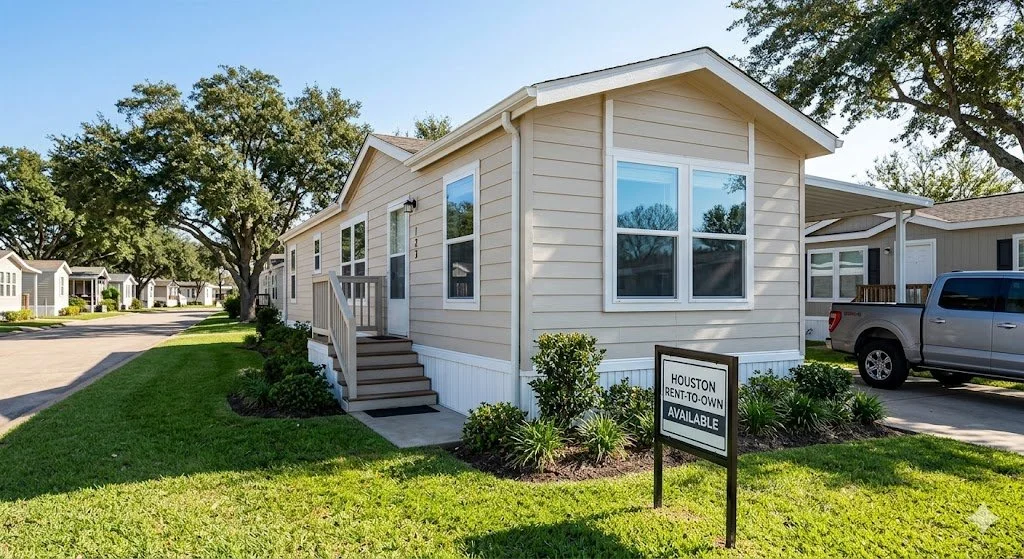
Finding an affordable path to homeownership in the Greater Houston area is becoming increasingly difficult. With traditional housing prices climbing across Harris County and mortgage interest rates keeping many buyers on the sidelines, alternative financing strategies are exploding in popularity. One pathway that frequently surfaces for buyers with less-than-perfect credit or minimal down payment savings is renting to own a manufactured home.
This hybrid arrangement sounds incredibly enticing on paper: you move into a property today, pay monthly rent, and eventually transition into the legal owner of the home. However, while it opens doors for some Texas families, it also introduces substantial financial risks and legal complexities. If you are currently dealing with a problematic property or find that navigating these complex real estate frameworks is simply too overwhelming, you can skip the retail market headaches entirely and sell to experienced Cash Home Buyers Houston investors who buy properties completely as-is. For those determined to explore alternative purchasing pathways, understanding the specific pros and cons of mobile home rent-to-own agreements in Texas is absolutely essential before signing any paperwork.
Understanding Mobile Home Rent-to-Own in Texas
Before analyzing the advantages and disadvantages, we must clarify exactly how a rent-to-own transaction operates under Texas law. These contracts are legally distinct from standard residential leases, and they require a deep understanding of what you are actually paying for.
The Anatomy of an Executory Contract
In Texas, a rent-to-own contract is legally classified as an "executory contract" or a lease with an option to purchase. Under the standard framework, the transaction is split into two distinct elements: a lease agreement that establishes your tenancy, and an option agreement that grants you the right to purchase the mobile home at a specified price before the lease term expires. You typically pay an upfront, non-refundable "option fee" to secure this right, and a portion of your monthly rent may be credited toward the ultimate purchase price.
Personal Property vs. Real Property Realities
One of the most critical nuances regarding mobile and manufactured homes in Texas is their legal classification. According to the Texas Manufactured Housing Association, a mobile home is initially titled as personal property—much like a car or a boat—rather than real property. It only transforms into real property if it is permanently attached to land that you own, and the Statement of Ownership (SO) is officially converted through the state. If you are entering a rent-to-own contract for a mobile home sitting in a managed community, you are only purchasing the physical structure, not the dirt beneath it.
The Pros: Why Buyers Choose Rent-to-Own Mobile Homes
For the right buyer in the right financial scenario, a mobile home rent-to-own agreement can serve as an invaluable stepping stone to stability. It offers distinct flexibilities that traditional bank financing simply cannot match.
A Viable Pathway to Homeownership with Poor Credit
The primary benefit of a rent-to-own arrangement is the accessibility it provides. Traditional mortgage lenders maintain stringent credit score requirements and debt-to-income ratios that lock out millions of hard-working Texans. Rent-to-own sellers and park owners are typically much more flexible. They often look past low credit scores, past bankruptcies, or non-traditional income streams, focusing instead on your current employment history and your ability to make the monthly payments.
The Opportunity to Test-Drive the Home and Neighborhood
Committing to a 30-year mortgage on a site-built home is an immense, unyielding obligation. A rent-to-own structure allows you to live in the mobile home and experience the specific neighborhood environment before finalizing the purchase. If you discover structural flaws in the home, realize the park management is overly restrictive, or find that the local school district doesn't fit your family's needs, you can choose not to exercise your option to buy. While you will forfeit your upfront option fee, you can walk away at the end of the lease without a foreclosure ruining your credit.
Locked-In Purchase Pricing in a Rising Market
When you sign a lease-option agreement, the final purchase price of the manufactured home is usually locked in at the very beginning of the contract. In a rapidly expanding real estate market like Houston—where suburban and rural land values consistently face upward pressure—this freeze on pricing works heavily to the buyer's advantage. If the market value of the mobile home appreciates significantly over your three-year lease term, you still get to buy it at the lower price agreed upon years prior.
The Cons: The Hidden Risks and Downsides
While the advantages of rent-to-own agreements can be highly compelling, the disadvantages are severe and heavily documented. Texas has some of the strictest consumer protection laws regarding executory contracts precisely because buyers have historically been taken advantage of by predatory sellers.
The Risk of Forfeiting All Accumulated Equity
The single most dangerous aspect of a rent-to-own contract is the default clause. In a traditional home purchase, if you miss a few payments after several years, the home must go through a formal foreclosure process, and you may recoup some of your equity. In many rent-to-own structures, missing a single payment can result in an immediate eviction. If you are evicted, the contract is canceled, and you legally forfeit your upfront option fee, your monthly rent premiums, and every dollar you invested into repairing or maintaining the home.
Double Housing Costs: Lot Rent vs. Home Payments
If the mobile home is located inside a manufactured home community, you must realize that you are entering into two entirely separate financial obligations. You will make your monthly rent-to-own payment to the seller of the home, but you must also pay monthly "lot rent" to the park owner for the space the home occupies. According to consumer advocacy resources like Texas Law Help, park owners retain the right to increase lot fees, alter community regulations, or even sell the entire park, which could force you to relocate the home at your own expense before you even own it.
High Interest Rates and Hidden Maintenance Costs
Sellers who offer rent-to-own options are taking on substantial financial risk by bypassing traditional bank screening. To compensate for this risk, they build incredibly high interest rates and inflated purchase prices into the contracts. Furthermore, unlike a standard rental property where the landlord handles plumbing disasters and roof leaks, most rent-to-own contracts shift all maintenance and repair responsibilities directly onto the tenant from day one. You could easily end up pouring thousands of dollars into fixing a home you do not legally own yet.
Strict Texas Legal Protections You Must Know
Because of historical abuses in the contract-for-deed and rent-to-own industries, the Texas Legislature enacted incredibly robust consumer protections under Chapter 5 of the Texas Property Code. If a seller fails to adhere to these strict statutory requirements, the penalties are severe, and the contract may even be deemed void.
Mandatory Annual Accounting Statements
Under Texas Property Code Section 5.077, any seller utilizing an executory contract must provide the buyer with a highly detailed, written annual accounting statement every January. This document must explicitly state the total amount paid under the contract, the remaining balance owed, the number of payments left, and the amounts paid to taxing authorities or insurance companies. If a seller fails to provide this annual statement, they can be held liable for statutory damages reaching hundreds of dollars per day.
The Right to Convert to a Deed at Any Time
Many buyers do not realize that Texas law gives them the unilateral right to convert their rent-to-own contract into a traditional deed and promissory note. Under Texas Property Code Section 5.081, a buyer who has paid a portion of the purchase price can demand that the seller transfer a general warranty deed to the property in exchange for a vendor's lien matching the remaining balance. This effectively transitions you into a traditional homeowner and protects you from standard landlord evictions.
Key Strategies for Safely Navigating a Rent-to-Own Deal
If you weigh the pros and cons and decide that a mobile home rent-to-own arrangement is still the absolute best path for your family, you must protect yourself aggressively. Do not rely on verbal agreements or handshake promises; a real estate transaction is only as good as its written contract.
Order an Independent Inspection and Title Search: Never take a seller's word regarding the condition of a mobile home or the ownership status of the land. Hire a licensed inspector to check the structural integrity, electrical wiring, and plumbing. Concurrently, run a title search to ensure there are no tax liens or outstanding mortgages tied to the home's serial number.
Insist on Recording the Contract: Texas law requires sellers to officially record executory contracts with the county clerk's office within 30 days of signing. Recording the contract publicly establishes your legal interest in the property and prevents the seller from secretly taking out loans against the home or selling it out from underneath you to another unsuspecting buyer.
Review Community Park Rules Thoroughly: If the home resides within a park, apply for park residency and obtain a copy of the community guidelines before signing the rent-to-own deal. Ensure you fully understand the pet policies, parking limitations, utility billing structures, and historical lot rent increases.
FAQ
Can I do a rent-to-own contract on a mobile home that needs to be moved?
Yes, you can structure a rent-to-own contract on a mobile home located on private land or a park with the intention of moving it later. However, relocating a manufactured home requires specialized transport permits, professional installers, and utility reconnects, which easily costs between $5,000 and $12,000+. You must explicitly clarify in writing who is responsible for these structural moving expenses before signing.
What happens if the seller of the mobile home still owes money on it?
If the seller has an active chattel loan or mortgage on the mobile home, entering into a rent-to-own agreement is incredibly risky. If the seller takes your monthly payments but fails to pay their underlying lender, the bank can foreclose on the mobile home and evict you, completely wiping out your contract and your option fee. Always insist on seeing proof that the title is clear or that the underlying lender has formally consented to the transaction.
Is an option fee refundable if I decide not to buy the mobile home?
No, in almost all standard Texas real estate contracts, option fees are completely non-refundable. This fee is paid to the seller in exchange for taking the home off the market and giving you the exclusive right to purchase it over a multi-year period. If you choose not to exercise your option to buy, the seller keeps the fee as compensation for keeping the property tied up.
How does eviction work if I fall behind on a rent-to-own mobile home?
In Texas, if you default on a properly recorded rent-to-own contract after paying a significant portion of the purchase price or making more than 48 monthly payments, the seller cannot simply throw you out via standard landlord eviction. They must follow formal foreclosure procedures. However, if the contract is unrecorded or you are early in the contract term, the seller may attempt to file a standard eviction lawsuit in a local Justice of the Peace court, which can move incredibly fast.
Can I get traditional financing to pay off my rent-to-own mobile home early?
Absolutely. If your credit score improves or you save up enough cash during the lease term, you can apply for a specialized manufactured housing loan through traditional lenders or specialized chattel lenders. Once approved, the lender will pay off the remaining balance stated in your rent-to-own contract, and the seller will sign over the official Statement of Ownership directly to you and your new financial institution.

How Absolute Properties Helps Houston Sellers
Absolute Properties makes it easy for Houston homeowners to sell fast - even when facing challenges like financial difficulties, inherited properties, troublesome tenants, or repairs.
If you’re thinking, “I need to sell my house fast in Houston…” We buy houses in Houston in any situation or condition!
As-is, fast cash offers with clear terms
Many closing costs covered; no realtor commissions in most cases
You choose the closing date (as little as 7 days, case-dependent)
Coordination with experienced title company for a compliant sale process
Call or text: (713) 230-8059
Email address: info@absolutepropertieshtx.com
Share your street address and timeline for a free consultation and a straightforward number no pressure.
Know someone else who needs to sell? We Also Pay a $1000 Referral Fee!
Helpful Houston Blog Articles
How To Sell Your House in Houston Without Sinking Any More Money Into It
6 Tips For First Time Home Sellers in Houston
Hiring an Agent Vs. A Direct Sale to Absolute Properties When Selling Your House in Houston
Who Pays Closing Costs in Texas
The True Costs of An FSBO Listing for Houston Investors
What To Do With Your Expired Listing in Houston
Also check out our Free Guides & Education & FAQ for more education on how to sell your house for cash quickly to a local home buyer.