Reviewed by Mark Lee
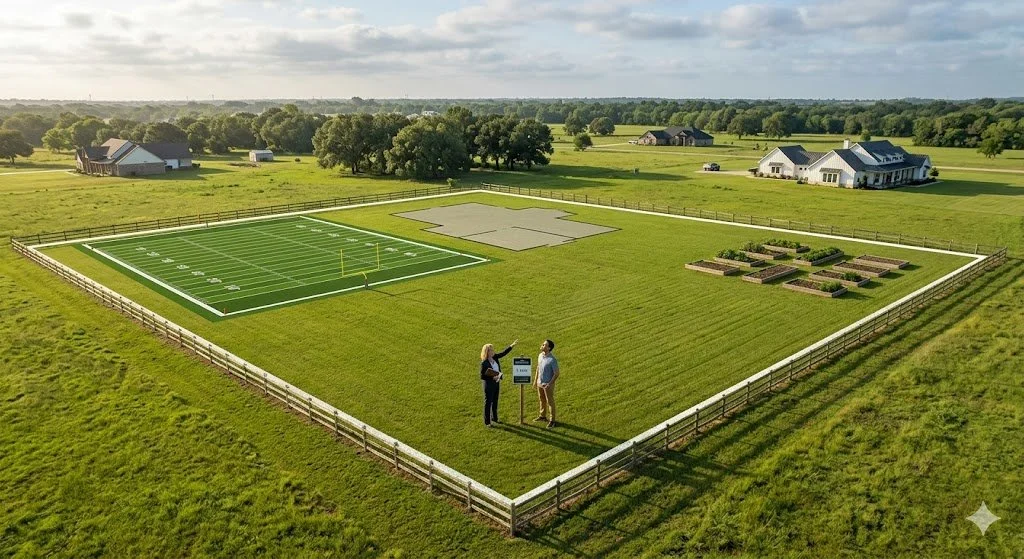
If you’re scouting for property in the Greater Houston area, you’ve likely seen the word "acre" tossed around more than a pigskin at an Aggies game. Whether you are looking at a sprawling ranch in Katy or a cozy lot in the Heights, understanding land measurement is vital. If you find yourself overwhelmed by land sizes while trying to sell my house fast Houston to upgrade to something larger, you aren’t alone. Most people struggle to visualize exactly what an acre looks like until they are standing in the middle of one.
In Texas, land is our legacy. But an acre in the dense urban pockets of Harris County feels very different than an acre in the open plains of Liberty County. This guide will break down the math, provide real-world visualizations, and help you navigate the Houston real estate market with confidence.
Visualizing an Acre: The American Football Field Method
The most common way to explain an acre is by comparing it to a football field. Since we are in Texas, this is a language we all speak fluently. However, there is a small catch that most people miss: a standard American football field (including the end zones) is actually about 1.32 acres.
The Standard Measurements
Mathematically, one acre equals 43,560 square feet. To visualize this without the end zones, imagine a football field from one goal line to the opposite 10-yard line. That roughly covers the space of a single acre. If you were to walk the perimeter of a perfect square acre, each side would be approximately 208.7 feet long.
Why Square Footage Matters in Houston
In Houston’s inner loop, many residential lots are around 5,000 to 7,000 square feet. That means you would need about six to eight of those standard city lots to comprise a single acre. When you move out to areas like Cypress or Fulshear, "acreage homesites" become more common. Understanding this scale helps you realize that a one-acre lot offers significant breathing room—enough for a main house, a pool, a detached workshop, and a sizable garden without feeling cramped.
Comparing Acres to City Blocks
Another way to look at it is through city blocks. While block sizes vary by city, a standard Houston city block is often around 2 to 2.5 acres. So, half a city block is roughly one acre. If you can imagine standing on a street corner and looking halfway down the block and halfway across the street, you’re looking at the footprint of an acre.
What Can You Actually Fit on a One-Acre Lot?
Size is one thing, but utility is another. When homebuyers in Texas look for an acre, they usually have specific dreams in mind. An acre is the "sweet spot" for many families because it provides privacy without the overwhelming maintenance of a massive ranch.
Residential Structures and Outbuildings
On a single acre, you can easily fit a 4,000-square-foot luxury home and still have 90% of your land left over. This leaves ample space for a "Texas-sized" three-car garage and perhaps a secondary "mother-in-law" suite or an ADU (Accessory Dwelling Unit). Many Houstonians use this extra space to build dedicated workshops or "barndominiums" which have surged in popularity across the Lone Star State.
Outdoor Living and Amenities
Houston summers demand a way to cool off. A one-acre lot allows for a massive resort-style pool, a covered outdoor kitchen, and a fire pit area while maintaining plenty of green space for kids or dogs to run. You aren't just limited to a small patio; you can create distinct "zones" for entertainment, relaxation, and play.
Micro-Farming and Gardening
Ever thought about having a few chickens or a sprawling vegetable garden? According to the Texas Department of Agriculture, small-scale farming is a growing trend among suburban homeowners. An acre provides more than enough room for several raised garden beds, a small orchard of citrus trees (which thrive in our humid subtropical climate), and even a small chicken coop, all while staying within the zoning laws of many Houston-area ETJs (Extraterritorial Jurisdictions).
The Practicalities of Buying Acreage in the Houston Area
Buying a plot of land or a home on an acre involves different due diligence than buying a standard suburban lot. In Houston, our geography and local regulations play a massive role in how "usable" that acre actually is.
Flooding and Topography
We can't talk about Houston real estate without mentioning water. When you buy an acre, you need to look closely at the FEMA Flood Maps. An acre that sits in a low-lying area or a floodway might only have a small portion of "buildable" land. You also have to consider drainage. On a larger lot, you are responsible for managing how rainwater flows off your property so it doesn't impact your neighbors.
Easements and Setbacks
Just because you own 43,560 square feet doesn't mean you can build on every inch of it. Utility easements, oil and gas pipelines (very common in Texas), and municipal setbacks can "shrink" your usable space. Always check the survey to see where power lines or underground pipes might restrict your construction plans.
Well and Septic Systems
In many parts of rural or semi-rural Houston—like parts of Magnolia, Waller, or Hockley—an acre is often the minimum size required to install a private septic system and a water well. If the property isn't connected to city "wet" utilities, you'll need to account for the space these systems occupy, as they require specific distances (setbacks) from the house and from each other to meet health codes.
The Cost of an Acre: Houston vs. Surrounding Suburbs
Location is the primary driver of land value in Texas. An acre in River Oaks (if you could even find one) would cost millions, whereas an acre in Liberty County might cost the same as a used SUV.
Inner Loop vs. Outer Loop
In the heart of Houston, land is a premium. Developers often buy a single acre and subdivide it into 15 or 20 "townhome" lots. Because of this, the "land value" is incredibly high. As you move outside the Sam Houston Tollway (Beltway 8), prices begin to drop, and the feasibility of owning a full acre becomes a reality for the average family.
Emerging Markets for Acreage
Communities like Montgomery, Conroe, and Richmond have seen an explosion in "acreage estates." These neighborhoods offer the "best of both worlds"—the space of the country with the amenities of the city. When evaluating the price of an acre, don't just look at the listing price; look at the "improved" vs "unimproved" status. Improved land already has electricity, water, and road access, which can save you tens of thousands of dollars.
Maintenance and Property Taxes
Owning more land means more responsibility. You’ll need a riding lawnmower (or a local landscaping crew) to keep a full acre from turning into a jungle. Additionally, Texas property taxes are based on the assessed value of the land and structures. While land itself is often taxed lower than the home, a large lot in a high-tax MUD (Municipal Utility District) can lead to a surprising annual bill.
Is an Acre Right for You? Pros and Cons
Before you sign on the dotted line for that beautiful green expanse, weigh the lifestyle changes that come with it.
The Advantages of Large Lots
The primary benefit is privacy. On an acre, your neighbors aren't peering through your kitchen window. You have the freedom to customize your property, whether that’s building a massive workshop or planting a forest of oak trees. It’s a buffer against the noise and hustle of Houston life.
The Challenges to Consider
The "Texas-sized" lifestyle comes with "Texas-sized" chores. Beyond mowing, you have more fence line to maintain and more area to treat for pests (fire ants are a real concern on Houston acreage). If you are on a well and septic, you are essentially your own utility company, responsible for any repairs when the pump goes out or the septic needs pumping.
FAQ: Common Questions About Land in Texas
How many houses can you build on one acre?
In many Houston suburbs, zoning or deed restrictions limit you to one primary residence per lot. However, in unincorporated areas of Harris or Montgomery County, you might have more flexibility. Always check the specific "Covenants, Conditions, and Restrictions" (CC&Rs) of the neighborhood.
Is an acre enough for a horse?
Generally, the rule of thumb in Texas is one acre of "pasture" land per horse. However, many counties have specific ordinances regarding livestock. If you plan on having horses, you usually want at least two acres to allow for grazing rotation and to prevent the land from being over-grazed and turned into a mud pit.
What is the difference between a gross acre and a net acre?
A "gross acre" includes the total area within the property lines, which might include parts of a public road or an easement. A "net acre" is the actual usable land after subtracting those unusable portions. When buying land in Houston, always ask for the net acreage to know what you can actually build on.
How long does it take to mow an acre?
With a standard push mower, you're looking at a 2-hour workout. With a 42-inch riding mower, you can usually knock it out in about 45 minutes to an hour, depending on the number of trees and obstacles you have to navigate.
Does an acre increase property value faster than smaller lots?
Land is a finite resource. In a fast-growing metroplex like Houston, larger parcels of land often appreciate significantly as the city "creeps" outward. Developers are constantly looking for acreage to turn into subdivisions, which can make a well-placed acre a very smart long-term investment.

How Absolute Properties Helps Houston Sellers
Absolute Properties makes it easy for Houston homeowners to sell fast - even when facing challenges like financial difficulties, inherited properties, troublesome tenants, or repairs.
If you’re thinking, “I need to sell my house fast in Houston…” We buy houses in Houston in any situation or condition!
As-is, fast cash offers with clear terms
Many closing costs covered; no realtor commissions in most cases
You choose the closing date (as little as 7 days, case-dependent)
Coordination with experienced title company for a compliant sale process
Call or text: (713) 230-8059
Email address: info@absolutepropertieshtx.com
Share your street address and timeline for a free consultation and a straightforward number no pressure.
Know someone else who needs to sell? We Also Pay a $1000 Referral Fee!
Helpful Houston Blog Articles
How To Sell Your House in Houston Without Sinking Any More Money Into It
6 Tips For First Time Home Sellers in Houston
Hiring an Agent Vs. A Direct Sale to Absolute Properties When Selling Your House in Houston
Who Pays Closing Costs in Texas
The True Costs of An FSBO Listing for Houston Investors
What To Do With Your Expired Listing in Houston
Also check out our Free Guides & Education & FAQ for more education on how to sell your house for cash quickly to a local home buyer.