How to Buy a House Contingent on Selling Yours (2026 Guide)
Reviewed by Mark Lee
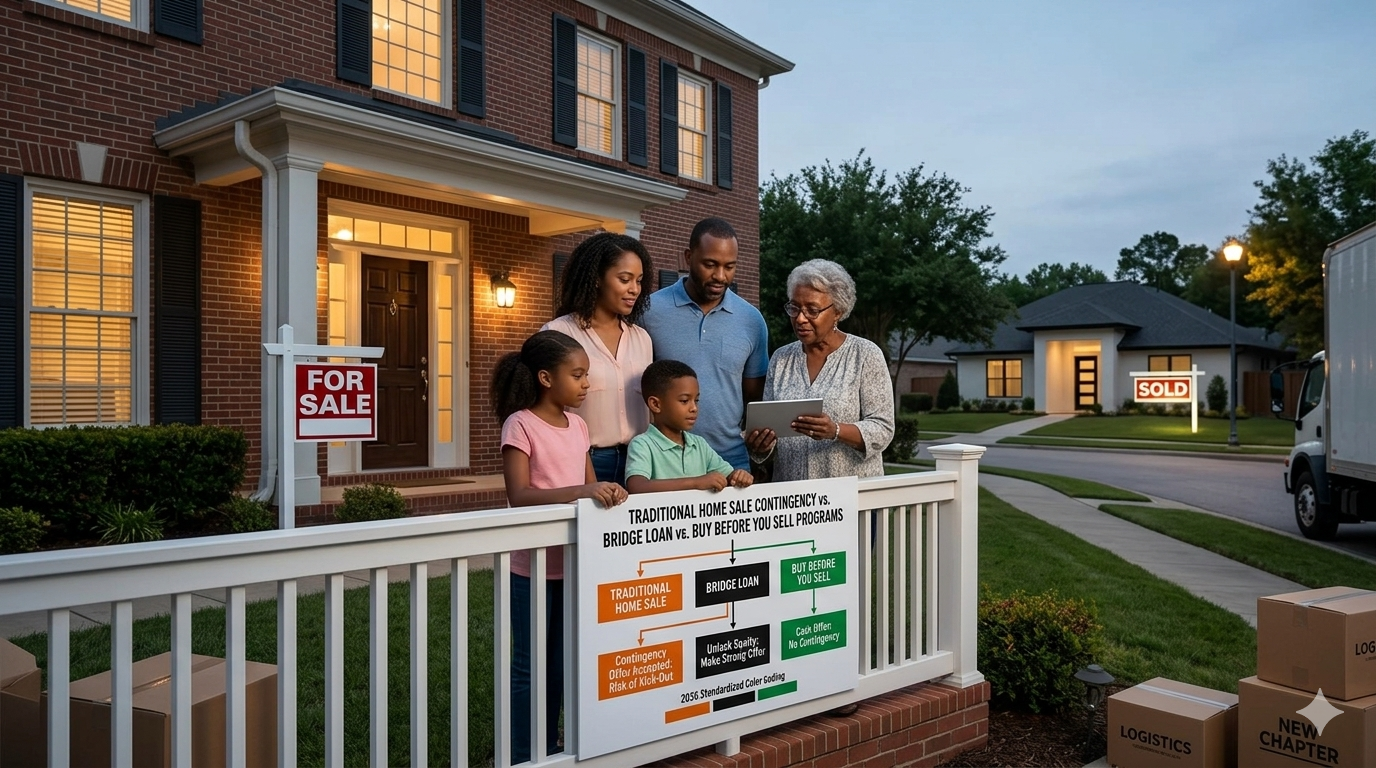
How to Buy a House Contingent on Selling Yours: 4 Paths to Success
In the 2026 housing market, the "double-move" is more common than ever. According to recent data, 61% of buyers are repeat owners, and nearly half (45%) rely on the equity from their current residence to fund their next down payment. However, coordinating these two major transactions simultaneously is a logistical marathon.
If you are looking to sell my house fast Houston while securing a new dream home, you need to understand the mechanics of the home sale contingency. This clause protects you from the financial burden of paying two mortgages at once, but it also requires a strategic approach to get your offer accepted in a competitive environment.
What is a Home Sale Contingency?
A "contingency" is a condition that must be met before a real estate contract becomes legally binding. In the case of a home sale contingency, the buyer is under no obligation to purchase the new house unless their current home sells.
As of February 2026, there are two distinct versions of this contingency used in Texas:
- Home Settlement Contingency: This is used when your home is already under contract. Since the inspections are usually done and a closing date is set, this is very attractive to sellers because the risk of the deal falling through is low.
- Sale and Settlement Contingency: This is used when your home is not yet under contract. Because the seller has no guarantee of how long it will take you to find a buyer, this is a "weaker" offer and often includes a kick-out clause.
How a "Kick-Out Clause" Works in 2026
A kick-out clause is an addendum that allows the seller to keep their home on the active market even after accepting your contingent offer. If they receive a non-contingent offer from another buyer, they give you a set timeframe (typically 72 hours) to either waive your contingency and move forward or step aside so they can sell to the new party.
The Pros and Cons of Buying Contingently
While only about 5% of real estate contracts were terminated in early 2026, the home sale contingency remains a double-edged sword.
The Advantages (Pros)
- Financial Safety Net: You avoid the risk of owning two homes and paying two mortgages simultaneously.
- One Move Only: You can coordinate your move-out and move-in dates, avoiding the cost of temporary storage or short-term rentals.
- Reduced Stress: You aren't forced to accept a "lowball" offer on your current home just to satisfy a closing deadline on the new one.
The Disadvantages (Cons)
- Weaker Negotiating Position: In a hot market, sellers almost always prefer a "clean" offer without sale contingencies.
- Higher Costs: To entice a seller to take your contingent offer, you may have to offer a higher purchase price than a non-contingent buyer would.
- Market Delays: If your home takes longer to sell than the 30-60 days specified in the contract, you could lose the house you want.
Choosing Your Adventure: 4 Scenarios for Success
The path you take depends entirely on where you are in the selling process right now.
Scenario A: Your Home is Under Contract
This is the strongest position to be in. Since you already have a buyer, you can present a Home Settlement Contingency. Your focus here is hyper-local research. In 2026, tools like WalkScore and GreatSchools are essential for narrowing down neighborhoods that match your lifestyle. If you can't find the right home fast enough, consider a "rent-back" agreement with your current buyer to buy yourself extra time.
Scenario B: Your Home is on the Market (But Not Sold)
You are in a "wait and see" mode. If you find your dream home today, you'll need to submit a Sale and Settlement Contingency. To make this work, your agent must prove to the seller that your current home is priced aggressively and is likely to sell within the next 14–21 days.
Scenario C: You’ve Found the Dream Home (But Haven't Sold Yours)
This is the most high-pressure scenario. To win the house, you must make your offer irresistible.
- Price High: Offer slightly above asking price to compensate the seller for the risk of waiting.
- Stage Aggressively: Professional staging in 2026 can speed up your own sale by one to two weeks.
- Shorten Timelines: Offer to have your current home under contract within 15 days rather than the standard 30.
Scenario D: You Found the Home (But Haven't Listed Yours)
Most 2026 sellers are "trigger-shy" about accepting offers from buyers who haven't even listed their property. To be successful, you must get your home on the market within 48 hours of submitting your offer. If you can't move that fast, you should explore "Buy Before You Sell" modern solutions.
Modern Alternatives to a Home Sale Contingency
If the traditional contingency feels too risky or is causing you to lose out on homes, 2026 offers several "trade-in" alternatives.
1. Buy Before You Sell Programs
Services like HomeLight Buy Before You Sell allow you to unlock a portion of your current home's equity upfront. This lets you make a non-contingent, all-cash offer on your next home. Once you move into the new place, the service helps you sell your old home while it's vacant—which typically leads to a higher sale price.
2. Bridge Loans
A bridge loan is a short-term loan taken out against your current home to cover the down payment on the next one. While this carries higher interest rates, it removes the "contingency" barrier entirely, making your offer much more competitive.
3. Home Equity Line of Credit (HELOC)
If you have significant equity, a HELOC can provide the cash needed for a down payment. However, you must be able to qualify for the debt of both mortgages simultaneously, which can be difficult under 2026 lending standards.
How to Make a Contingent Offer More Attractive
If you must use a contingency, follow these three tips from top-performing agents to sweeten the deal:
- Increase the Earnest Money: Putting down a larger-than-average deposit shows the seller you are deeply committed to the transaction.
- Offer a Rent-Back: If the seller is also looking for a home, offer them a free two-week "leaseback" after closing. This gives them the flexibility they need, which can be more valuable than a higher price.
- Include a "Pre-Listing" Inspection: Show the seller a recent inspection of your own home to prove there are no hidden issues that could derail your sale.
The Bottom Line
Buying a house contingent on selling yours is a balancing act of timing and finance. In the 2026 market, success relies on having a top-tier agent who can market your current home while negotiating the complexities of your new purchase.
Whether you choose a traditional contingency or a modern "Buy Before You Sell" program, the goal remains the same: a smooth transition into your next chapter without the stress of carrying two homes.

How Absolute Properties Helps Houston Sellers
Absolute Properties makes it easy for Houston homeowners to sell fast - even when facing challenges like financial difficulties, inherited properties, troublesome tenants, or repairs.
If you’re thinking, “I need to sell my house fast in Houston…” We buy houses in Houston in any situation or condition!
As-is, fast cash offers with clear terms
Many closing costs covered; no realtor commissions in most cases
You choose the closing date (as little as 7 days, case-dependent)
Coordination with experienced title company for a compliant sale process
Call or text: (713) 230-8059
Email address: info@absolutepropertieshtx.com
Share your street address and timeline for a free consultation and a straightforward number no pressure.
Helpful Houston Blog Articles
How To Sell Your House in Houston Without Sinking Any More Money Into It
6 Tips For First Time Home Sellers in Houston
Hiring an Agent Vs. A Direct Sale to Absolute Properties When Selling Your House in Houston
Who Pays Closing Costs in Texas
The True Costs of An FSBO Listing for Houston Investors
What To Do With Your Expired Listing in Houston
Also check out our Free Guides & Education & FAQ for more education on how to sell your house for cash quickly to a local home buyer.